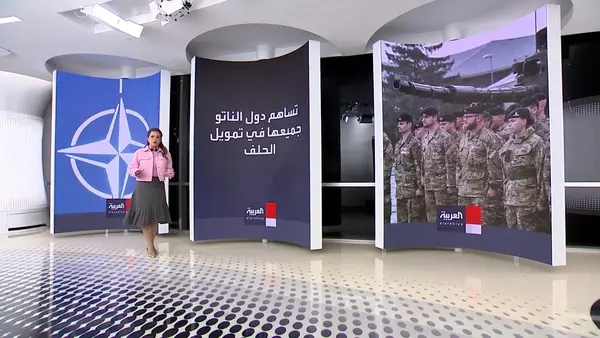
In a series of controversial statements, U.S. President Donald Trump attacked the North Atlantic Treaty Organization (NATO), describing it as a 'paper tiger' and asserting that it has offered little support to the United States in its conflict with Iran. These comments were made in a series of tweets posted on the 'Truth Social' platform, where Trump expressed his dissatisfaction with the European allies, who, according to him, have disappointed Washington.
Trump pointed out that NATO member countries have hesitated to provide support for fear of being drawn into the conflict, adding: 'NATO countries did not want to get dragged in with us, and we also do not want to get dragged into their wars.' He also mentioned that he had previously warned that NATO was merely a 'paper tiger,' considering the current situation a true test for the alliance.
Military Developments and Predictions
On the military front, Trump announced that U.S. forces are advancing faster than the scheduled timeline for the military operation against Iran, noting the complete destruction of the Iranian navy and the establishment of absolute air superiority. Trump characterized the military confrontation with Iran as a 'short stroll,' asserting that the Iranian regime is facing an impending disaster following a decisive defeat.
He also indicated that Tehran has begun reaching out to Washington, pleading for an agreement, commenting: 'Iran should have made a deal with us when I took office.' Regarding the duration of military operations, Trump predicted that the mission would take between 4 to 6 weeks only, emphasizing that the Iranian regime has effectively been eliminated.
Context and Background
These statements come at a sensitive time, as NATO member countries seek to adopt a unified stance regarding the war on Iran. NATO Secretary General Jens Stoltenberg revealed that European allies had not received any prior notice about the military attack, which delayed any potential support. He also noted that more than 30 countries, led by NATO members, have started planning to ensure the Strait of Hormuz remains open for international shipping.
Meanwhile, most European countries, including Germany, refuse to participate in any mission to protect commercial shipping in the Strait of Hormuz until an official ceasefire is announced, which contradicts Washington's desire for immediate support.
Consequences and Implications
Trump's remarks raise questions about the future of U.S. relations with its NATO allies, especially amid rising tensions in the Gulf region. Additionally, the criticisms leveled by Trump could lead to further divisions within the alliance, potentially impacting regional security strategies.
On the other hand, U.S. military operations in Iran could escalate tensions in the region, threatening the stability of neighboring countries and intensifying existing conflicts. Any failure to achieve military objectives could negatively reflect on the United States' image as a superpower.
Impact on the Arab Region
The situation in Iran and its repercussions on the Arab region is a sensitive issue, as any military escalation could affect the security and stability of Gulf countries. The deterioration of conditions in Iran could also lead to an influx of refugees and increased sectarian tensions in the region.
In conclusion, it remains to be seen how events will unfold in the coming days and weeks, and whether the United States will be able to achieve its military objectives without adversely affecting its relationships with allies or the stability of the region.