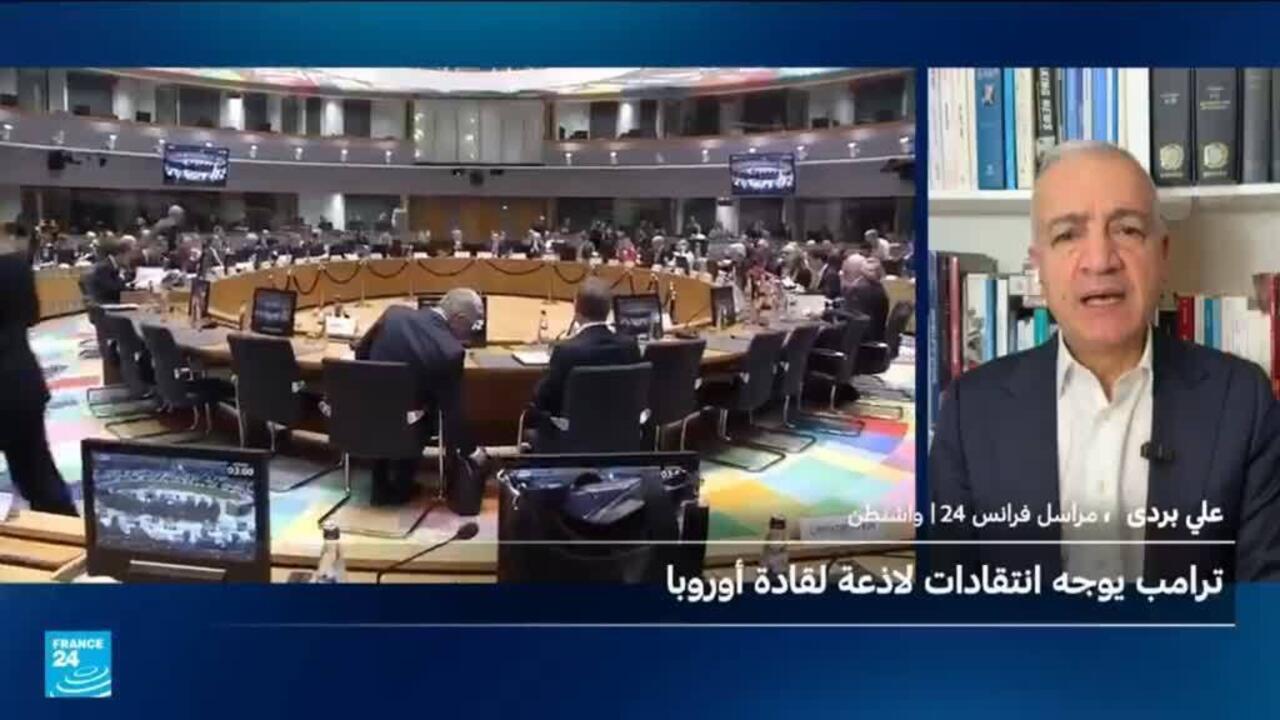
European nations face a dual challenge following U.S. President Donald Trump's criticism of their stance on the Iran war. Joining the conflict could lead to public discontent, while inaction may result in internal unrest.
These remarks come at a sensitive time as Trump seeks to bolster his international position amid rising tensions in the Middle East. Trump's statements have raised concerns among European leaders, who find themselves in a difficult position between their traditional commitments to the United States and the need to maintain internal stability.
Details of the Event
Trump indicated in his statements that European countries need to take a firmer stance towards Iran, particularly regarding the reopening of the Strait of Hormuz, which has been closed by Tehran. This strait is one of the most important waterways in the world, through which approximately 20% of the world's oil passes. If Iran continues to close it, global markets could be significantly affected, adding further pressure on European leaders.
At the same time, these leaders face pressure from their voters, who oppose any military intervention in the Middle East, placing them in a precarious position. While Trump seeks to strengthen his position ahead of the upcoming presidential elections, European nations may be forced to make difficult decisions that could impact their political stability.
Background & Context
Historically, relations between the United States and European countries have been based on close cooperation in various fields, including security and defense. However, recent tensions regarding Iran may weaken this cooperation. The United States withdrew from the nuclear agreement with Iran in 2018, leading to escalating tensions in the region.
Although European nations remain committed to the nuclear agreement, increasing U.S. pressure may make it difficult for them to maintain a unified stance. Recent years have seen a rise in regional conflicts, complicating the situation in the Middle East.
Impact & Consequences
These pressures could exacerbate political crises in European countries, where leaders may find themselves forced to choose between supporting the United States or maintaining their internal stability. If European nations decide to join the military coalition against Iran, they may face widespread protests from citizens opposing any military intervention.
On the other hand, if these countries take no action, it could worsen economic and environmental crises, as the closure of the Strait of Hormuz could impact global oil prices, negatively affecting the economies of European nations.
Regional Significance
The situations in Iran and the Strait of Hormuz are of great importance to Arab nations, many of which rely on oil exports. Therefore, any escalation in tensions could directly affect the stability of the region. Arab countries may find themselves needing to deal with the repercussions of any potential conflict between the United States and Iran.
Under these circumstances, Arab nations must be prepared to face potential challenges, either by enhancing regional cooperation or by seeking diplomatic solutions to ease tensions.
In conclusion, the situation in Iran and the Strait of Hormuz remains a focal point for the world, as pressures on European nations to take decisive stances increase. As tensions continue, new dynamics in international relations in the region may emerge.