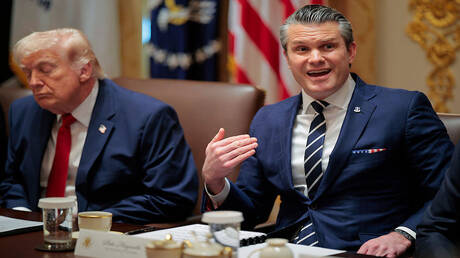
U.S. President Donald Trump has raised questions about the future of his Defense Secretary Mark Esper, after indicating that he was the first to propose the idea of war against Iran. This statement comes at a time when tensions between Washington and Tehran are escalating, placing Esper in a precarious position that could make him a scapegoat if the situation worsens.
Concerns are growing over a potential military escalation in the region, as pressures mount on the U.S. administration to take stringent actions against Iran. In this atmosphere, it seems that Trump is attempting to delineate responsibilities, raising questions about Esper's loyalty and his ability to withstand political pressures.
Details of the Event
In statements made by Trump, he confirmed that Esper was the one who suggested the idea of using military force against Iran, reflecting the instability within the U.S. administration regarding how to handle Iranian threats. This remark comes at a sensitive time, as tensions in the Gulf region are rising, especially following attacks on Saudi oil facilities.
This statement serves as a signal that Trump may be prepared to hold Esper accountable if the situation deteriorates, reflecting the complex nature of relationships within the U.S. administration. Meanwhile, observers are questioning Esper's ability to maintain his position under these changing circumstances.
Background & Context
Historically, U.S.-Iran relations have seen increasing tensions since the United States withdrew from the nuclear agreement in 2018. Since then, Washington has imposed stringent sanctions on Tehran, exacerbating the situation in the region. In this context, war with Iran is considered a viable option, but the American public strongly opposes any new military escalation.
Polls indicate that the majority of Americans do not support the idea of war, placing Trump in a difficult position as he seeks to achieve his political goals without losing voter support. This situation reflects the challenges facing the U.S. administration in its foreign policy.
Impact & Consequences
If the situation escalates into actual war, it would significantly affect stability in the Middle East. Neighboring countries to Iran would be directly impacted, potentially leading to a flow of refugees and increased sectarian tensions. Additionally, any military escalation could affect global oil prices, negatively impacting the world economy.
Furthermore, war could lead to greater division within American society, as new opponents to the war emerge, increasing pressure on the government. Trump will have to make difficult decisions under these circumstances, which could affect his political future.
Regional Significance
Arab countries would be directly affected by any military escalation between the United States and Iran. Gulf states, particularly Saudi Arabia and the UAE, would be in the line of fire, heightening their security concerns. Iraq and Syria could also be significantly impacted, potentially becoming battlegrounds for regional powers.
In this context, Arab countries must take proactive steps to protect their interests, whether through strengthening alliances or seeking diplomatic solutions to ease tensions. Stability in the region heavily depends on how major powers handle this crisis.
In conclusion, the question remains: Will the U.S. Defense Secretary become a scapegoat if tensions with Iran escalate? Or will Trump find another way to shoulder responsibility amid increasing pressures?