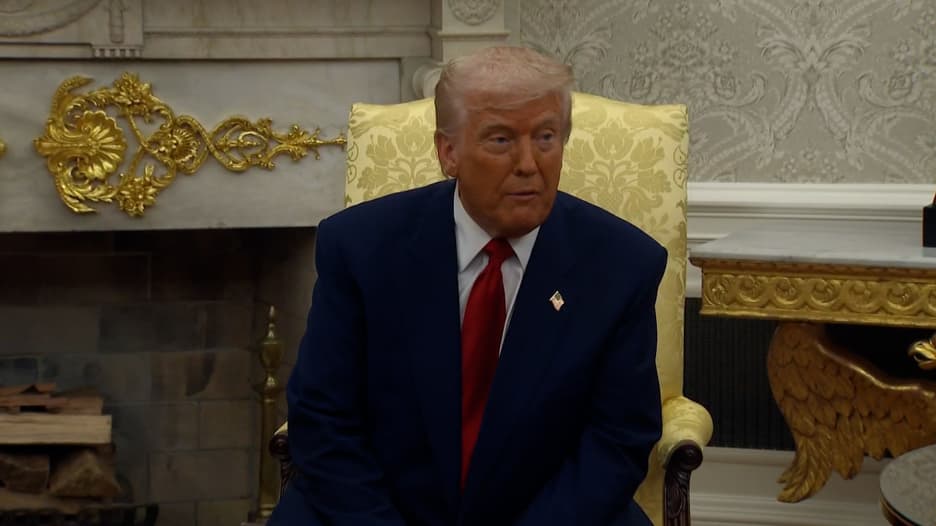
U.S. President Donald Trump announced a new delay for Iran to reach an agreement with the United States, indicating that negotiations are progressing "very well." This delay comes at a time when tensions are rising between Washington and Tehran, with expectations of potential military sanctions against Iran if an agreement is not reached.
In statements made during a press conference, Trump confirmed that negotiations with Iran are moving in the right direction, reflecting the U.S. administration's desire to avoid military escalation that could lead to a broader conflict in the region. He noted that there are positive signals from the Iranian side, which enhances hopes for a comprehensive agreement that could end the ongoing tensions.
Details of the Announcement
These statements come at a sensitive time, as Iran has faced increasing pressure from the international community due to its nuclear program and interventions in neighboring countries' affairs. The previous U.S. administration withdrew from the nuclear agreement with Iran in 2018, leading to heightened tensions between the two countries.
This delay is considered part of Trump's strategy to negotiate with Iran, as he seeks to achieve positive results before the upcoming presidential elections. Many observers have pointed out that this move may be an attempt to gain support from voters who wish to see improvements in international relations.
Context and Background
Historically, relations between the United States and Iran have been tense since the Iranian Revolution in 1979, which resulted in the severing of diplomatic ties between the two countries. Since then, the relationship has seen numerous crises, including military and economic conflicts.
In recent years, tensions have escalated significantly, especially after the U.S. withdrawal from the nuclear agreement. The economic sanctions imposed on Iran have led to a deterioration of the country's economic situation, prompting the Iranian government to take escalatory steps in its nuclear program.
Implications and Consequences
The delay in the deadline for Iran could have significant implications at both regional and international levels. If an agreement is reached, it could lead to a de-escalation of tensions in the region, contributing to the stability of global markets, particularly oil markets.
On the other hand, if negotiations fail, it could lead to potential military escalation, increasing instability in the Middle East. Many experts have warned that any military escalation could draw other countries into the conflict, threatening regional security.
Impact on the Arab Region
The relations between the United States and Iran have a direct impact on Arab countries, as any escalation in tensions could affect security and stability in the region. Gulf countries, in particular, are closely monitoring the developments of these negotiations, as any agreement could alter the balance of power in the region.
Additionally, Arab countries suffering from Iranian interventions in their internal affairs, such as Iraq, Syria, and Lebanon, may be concerned about any negative outcomes resulting from the failure of negotiations. Conversely, a potential agreement could alleviate tensions in these countries.
In conclusion, the future of U.S.-Iranian relations remains uncertain, but the delay in the deadline may open the door for further negotiations, potentially contributing to greater stability in the region.