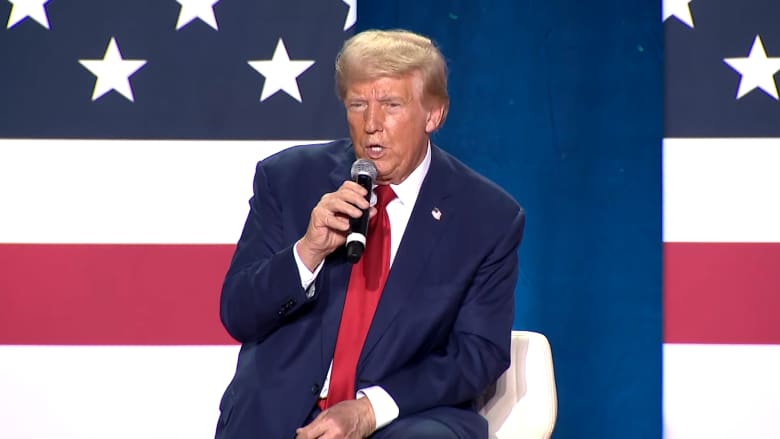
U.S. President Donald Trump announced on Thursday evening a ten-day delay of planned military strikes against Iranian energy facilities, now scheduled for April 6. This announcement was made via a post on Trump's official social media account, where he clarified that the decision was made at the request of the Iranian government.
This postponement reflects the escalating tensions between the United States and Iran, which have seen a notable increase recently. American pressure on Iran has significantly intensified, particularly following Washington's withdrawal from the nuclear agreement in 2018, leading to a deterioration of conditions in the region.
Details of the Announcement
In his post, Trump indicated that "this statement is considered an announcement of the suspension of the destruction period of the power plant," raising questions about the U.S. administration's intentions regarding the Iranian file. This decision comes at a sensitive time, as there were fears of military escalation that could lead to a full-blown conflict in the region.
It is worth noting that the economic and political pressures facing Iran due to American sanctions have resulted in a decline in the country's economic conditions, complicating the political landscape in the Middle East.
Background & Context
Historically, relations between the United States and Iran have been tense since the Iranian revolution in 1979, when diplomatic relations between the two countries were severed. Since then, the region has witnessed numerous crises and conflicts in which Iran has been a key player, making it a focal point of American policies in the Middle East.
In recent years, tensions have escalated significantly, especially after Iran targeted American interests in the region, prompting military responses from Washington. However, Trump's decision to delay military strikes may reflect a desire to avoid further escalation or perhaps an attempt to negotiate with Tehran.
Impact & Consequences
This postponement could have multiple implications for the political landscape in the Middle East. On one hand, it may be seen as a step towards de-escalating tensions, potentially opening the door for dialogue between the two sides. On the other hand, it could be interpreted as a sign of weakness from the U.S. administration, which might encourage Iran to continue its nuclear activities.
Moreover, this decision could impact America's allies in the region, who may feel concerned about Washington's inability to make decisive decisions in the face of Iranian threats. Consequently, this delay could alter the power dynamics in the region.
Regional Significance
Considering the potential impact on Arab countries, the postponement of military strikes may raise concerns among some Gulf states that view Iran as a direct threat to their security. Additionally, the situation in Iraq, Syria, and Lebanon may also be affected, as Iran plays a significant role in supporting armed groups there.
At the same time, this delay could be seen as an opportunity for Arab countries to reassess their strategies towards Iran and attempt to build new alliances to address security challenges in the region.
In conclusion, it remains to be seen how events will unfold in the coming days and whether this postponement will pave the way for serious dialogue between the United States and Iran, or if it is merely a temporary step in the trajectory of escalating tensions.