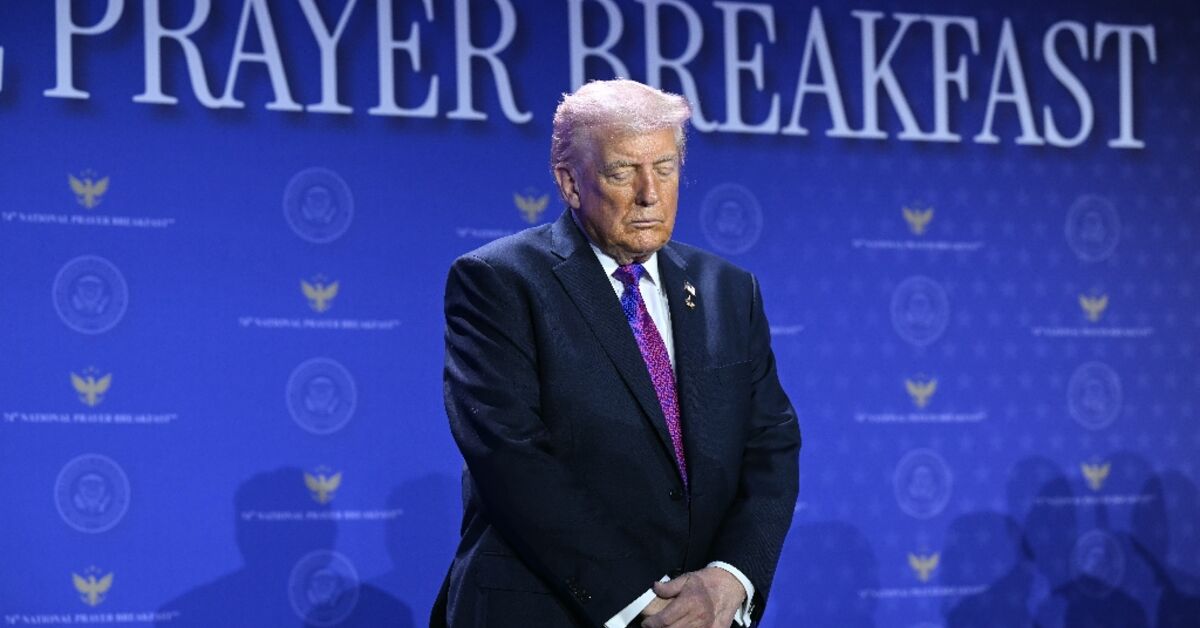
In a move reflecting the intertwining of religion with politics, several Christian pastors joined U.S. President Donald Trump in the Oval Office, where they offered him blessings and prayers during escalating tensions with Iran. This moment, which saw some pastors placing their hands on Trump's shoulder, illustrates how the U.S. administration is leveraging religion in the context of a war against a nation led by Shia clerics, raising questions about the influence of religion on American politics.
These events come at a sensitive time, as tensions between the United States and Iran intensify following a series of hostile statements from Trump and his administration. Some officials within the administration have deemed this war not merely a political struggle but a religious mission requiring spiritual support.
Details of the Event
The gathering of pastors in the Oval Office reflects the increasing overlap of religion with politics in the United States. Some of them indicated that their support for Trump at this stage is part of their religious duty, viewing the war against Iran as part of a divine plan. These statements come at a time when pressure is mounting on the U.S. administration to increase its involvement in Iranian affairs, which raises concerns among many observers.
At the same time, this collaboration between the U.S. administration and the evangelical church illustrates how religion can influence political decisions. While there is an expectation of separation between church and state in the United States, these boundaries appear to be blurring under current circumstances.
Background & Context
Historically, the relationship between religion and politics in the United States has been a contentious topic. Since the founding of the nation, there has been debate over how religion influences public policy. With the rise of religious movements, especially in recent decades, it has become evident that some political leaders seek religious support to bolster their authority.
In Trump's case, the exploitation of religion seems to reflect his strategy to attract the base of evangelical voters, who perceive the war against Iran as part of a larger struggle against what they consider a religious threat. This historical context highlights how religion can become a tool in the hands of politicians to achieve their goals.
Impact & Consequences
These events raise questions about the potential impact on international relations, particularly in the Middle East. The war against Iran could escalate conflicts in the region, negatively affecting security and stability in neighboring countries. Moreover, the use of religion as a tool in politics may exacerbate divisions among different sects, increasing sectarian tensions.
Furthermore, these dynamics may influence how other countries interact with the United States. Nations experiencing internal conflicts may find themselves in a difficult position if they perceive the U.S. as adopting a religious policy in its foreign interventions.
Regional Significance
For the Arab region, the escalation of tensions between the United States and Iran could lead to serious repercussions. Many Arab countries are directly affected by the conflicts between the U.S. and Iran, and they may find themselves forced to choose sides. Additionally, the use of religion as a political tool could worsen sectarian divisions in the region, intensifying existing conflicts.
Ultimately, this event underscores the importance of understanding the relationship between religion and politics in the contemporary world, and how these dynamics can affect international relations and regional security.