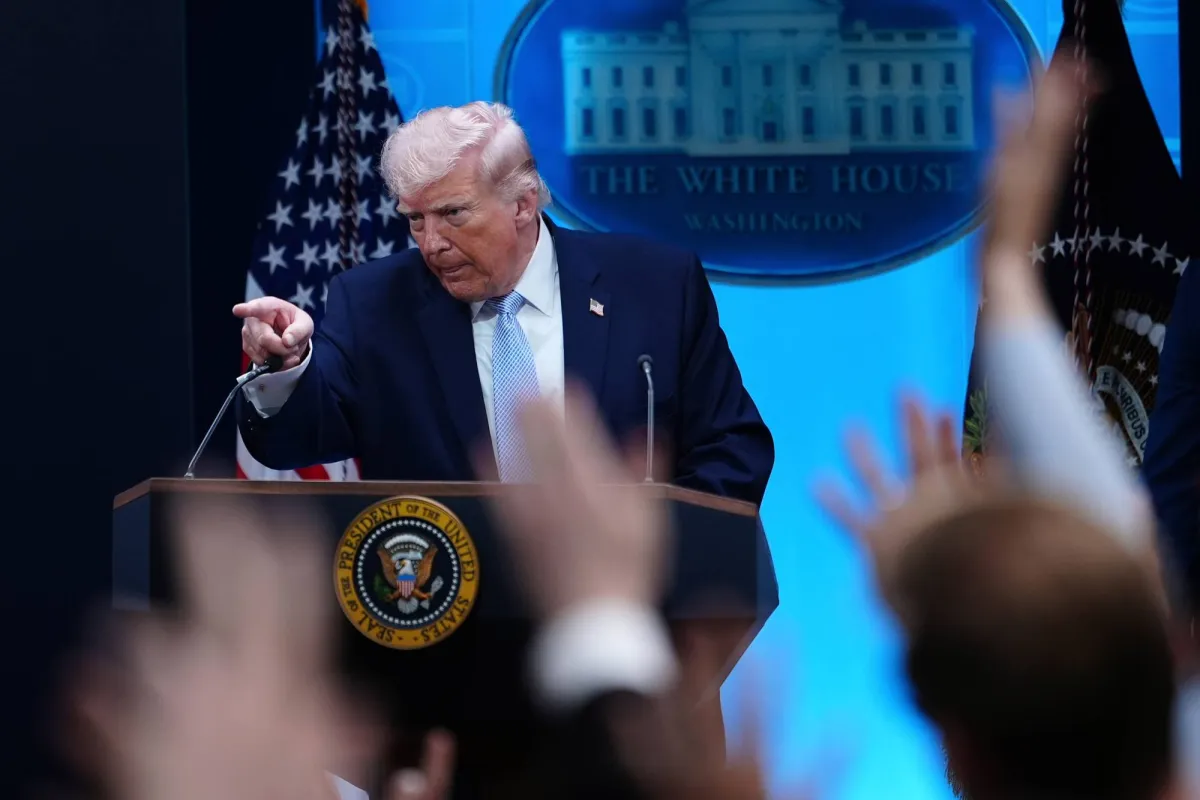
US President Donald Trump’s statement excluding Lebanon from the ceasefire agreement with Iran has sparked widespread controversy, allowing Israel to continue its attacks. This development comes amid rising tensions in the region, where Lebanon is considered a key point of contention.
Hours after ambiguity surrounded the US administration's stance on Israeli attacks on Lebanese territory, Trump announced that Lebanon is not part of the agreement due to the presence of Hezbollah. This statement enabled Israeli Prime Minister Benjamin Netanyahu to continue his aggressive policy towards the Iran-aligned organization, which has threatened to respond to any assaults.
Details of the Incident
Contrary to what Pakistani Prime Minister Shahbaz Sharif and several Iranian officials confirmed, Trump stated via PBS that Lebanon was not included in the ceasefire agreement with Iran, considering it a separate skirmish that will be addressed later. He added that "Iran knows Lebanon is not part of the agreement."
Following this statement, White House spokesperson Caroline Levitt confirmed that "Lebanon is not part of the ceasefire agreement between the United States and Iran." This position raised eyebrows in Washington and other capitals, especially after Netanyahu announced his agreement with Trump’s decision, excluding Hezbollah, making the issue sensitive and potentially leading to the collapse of the agreement if Iran launched missiles at Israel.
Background & Context
Trump did not mention Lebanon in his original statement regarding the ceasefire, where Vice President JD Vance described the agreement as a "fragile truce." Additionally, Secretary of War Pete Hegseth merely stated that US forces are "ready to defend, prepared to attack, and ready to resume fighting at any moment."
In contrast, the Pakistani mediator who contributed to the ceasefire agreement announced that it includes a halt to fighting between Israel and Hezbollah in Lebanon. Sharif wrote on the platform X: "I am pleased to announce that the Islamic Republic of Iran and the United States, along with their allies, have agreed to an immediate ceasefire everywhere, including Lebanon."
Impact & Consequences
Israel quickly rejected the inclusion of Lebanon in the agreement, with Netanyahu's office stating that the two-week ceasefire "does not include Lebanon." This rejection reflects the escalating tensions in the region, where fears of a new military escalation are growing.
Iran, for its part, demanded the inclusion of Lebanon in the agreement's terms, considering it part of its demands in negotiations regarding the ten points included in the Iranian proposals. These points include a commitment from the United States not to launch any attacks against Iran and lifting the imposed sanctions.
Regional Significance
Amid these developments, Lebanese citizens are living in a state of anticipation and anxiety, questioning the future of their country amid the ongoing Israeli assaults. Many families have begun preparing to return to their homes, but the ground reality remains unstable, making the return fraught with risks.
Warnings from Hezbollah and Amal Movement have increased, urging displaced individuals not to return until an official announcement regarding the ceasefire is made. These warnings reflect the prevailing uncertainty in the region, exacerbating the suffering of citizens.