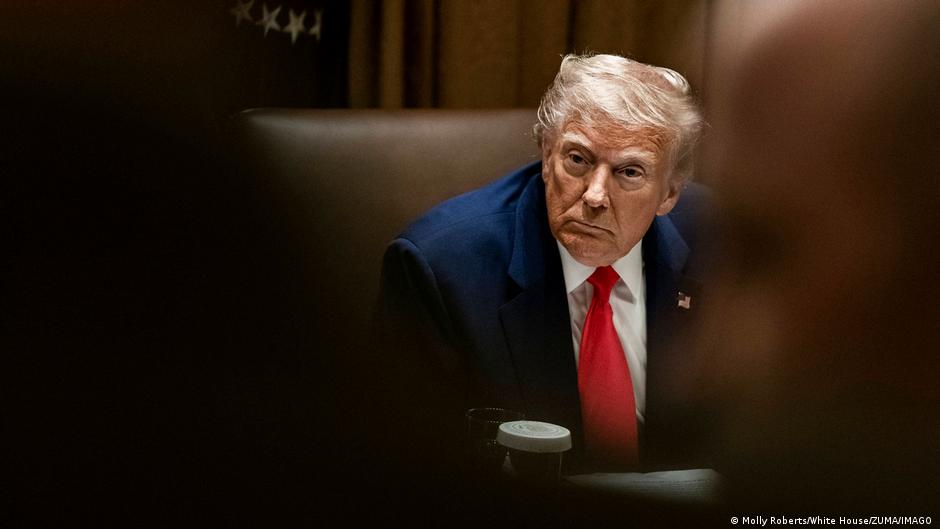
Former U.S. President Donald Trump stated he is unsure about America's desire to enter into agreements, reflecting ambiguity in U.S. foreign policy. These comments come at a sensitive time marked by increasing tensions in international relations, particularly with major powers such as China and Russia.
Trump's remarks were made during a television interview, where he indicated that the current situation requires further thought and reflection before taking any steps towards new agreements. He added that there are complex issues related to trade and national security that must be considered, complicating the political landscape.
Details of the Event
During the interview, Trump discussed the challenges facing the current U.S. administration, emphasizing the urgent need to assess relationships with other countries. He asserted that any agreement must be in the best interest of the United States first, and that decisions should not be rushed if they could negatively impact the country.
Trump also touched on economic issues, stating that the U.S. needs to reevaluate its trade strategies with other nations, especially in light of rapid changes in the global economy. These remarks raise questions about the future of American trade relations with its traditional partners.
Background & Context
Trump's statements come at a time when the world is experiencing radical changes in the international system, with increasing tensions among major powers. U.S. relations with China are under strain due to trade and human rights issues, while concerns are rising over Russian expansion in Europe.
In recent years, there have been numerous attempts to establish new trade agreements, but these efforts often face political and economic obstacles. Trump, who served as president from 2017 to 2021, took bold steps in his trade policy, leading to significant changes in international relations.
Impact & Consequences
The uncertainty surrounding America's willingness to enter into new agreements could exacerbate international tensions. Other nations may begin to reevaluate their strategies based on this ambiguity, potentially leading to shifts in international alliances.
Additionally, this situation may affect financial markets, as investors seek stability in trade policies. Instability could lead to fluctuations in the markets, impacting the global economy as a whole.
Regional Significance
For the Arab region, uncertainty in U.S. policy could impact economic and security relations. Arab countries that rely on American support may find themselves in a difficult position if this state of ambiguity continues.
This situation could also lead to increased tensions in conflict areas, as some countries may seek to exploit the vacuum created by uncertainty in U.S. policy. It is crucial for Arab nations to closely monitor these developments and be prepared to adapt to any changes that may arise on the international stage.
In conclusion, Trump's statements serve as a reminder that international politics is complex, and any decision can significantly affect relations between countries. Decision-makers in the Arab region must be cautious in navigating these developments.