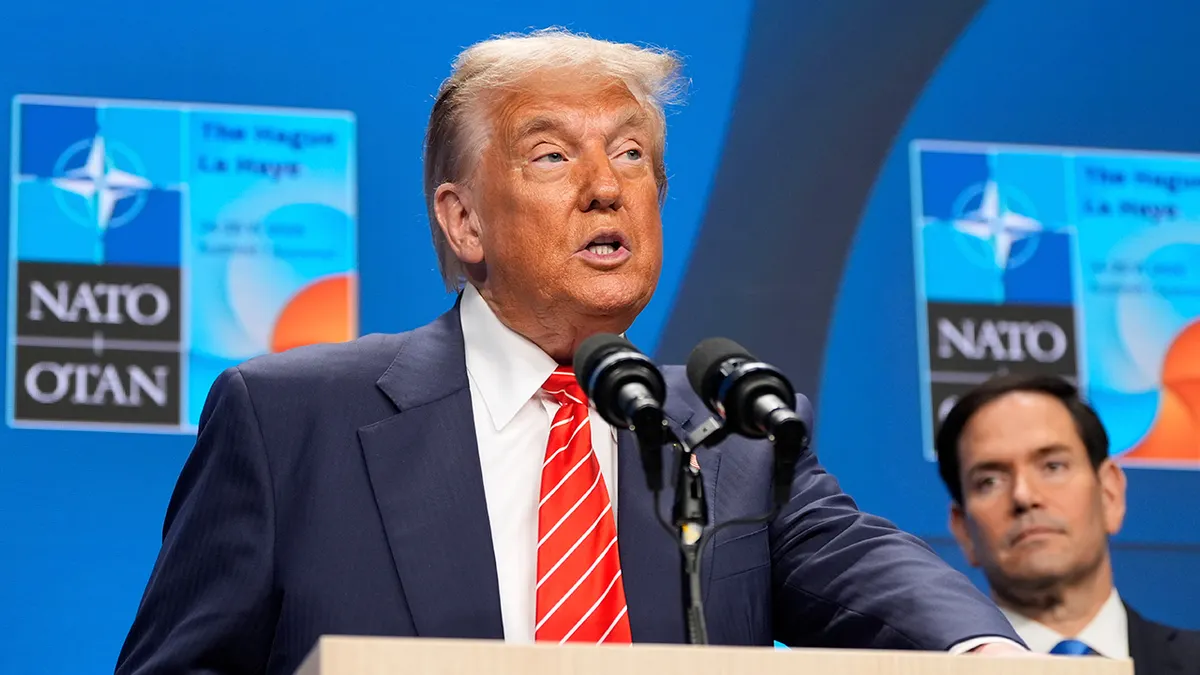
U.S. President Donald Trump is facing a major challenge in executing his threat to withdraw from NATO, as reports indicate that his Secretary of State Marco Rubio opposes this decision. This threat comes as a reaction to what Trump considers NATO's failure to provide sufficient support for the reopening of the Strait of Hormuz, one of the world's most crucial maritime passages.
Pressure is mounting on Trump after he expressed dissatisfaction with NATO's stance on security issues in the region, prompting him to consider drastic steps that could impact the United States' traditional military alliances. This move represents a significant shift in U.S. foreign policy, which has long relied on NATO as a key ally in addressing global challenges.
Details of the Event
Reports indicate that Trump is frustrated with NATO's inability to effectively contribute to securing the Strait of Hormuz, which he views as a threat to U.S. national security. In this context, Rubio commented on the necessity of maintaining international alliances, suggesting that withdrawal from NATO could have dire consequences for international security.
These statements come at a sensitive time, as tensions in the Gulf region are escalating, and the United States considers its military presence in the area essential for protecting its interests and those of its allies. However, Rubio's stance reflects a division within the U.S. administration regarding how to address security threats.
Background & Context
NATO was established in 1949 as a military alliance aimed at countering Soviet threats, and since then, it has evolved to encompass a wide range of security issues. With increasing global tensions, NATO has become central to U.S. security policy, with the White House relying on it for military strategies.
In recent years, NATO has faced new challenges, including threats from Russia and crises in the Middle East, prompting some leaders to reassess the alliance's role. In this context, Trump's threat is part of a broader strategy to emphasize the financial burdens borne by allies in supporting military operations.
Impact & Consequences
If Trump decides to proceed with his threat to withdraw, it could destabilize traditional military alliances, opening the door for other powers to enhance their influence in the region. Additionally, this decision may weaken NATO's capacity to address global security challenges, increasing risks to both European and American security.
Moreover, withdrawal from NATO could provoke negative reactions from allies, who may feel that the United States is abandoning its international commitments. This could lead to a erosion of trust among member states and exacerbate divisions within the alliance.
Regional Significance
The Gulf region is one of the areas most affected by U.S. policies, with the United States playing a pivotal role in securing maritime navigation and protecting economic interests. If relations between the United States and NATO are affected, it could heighten tensions in the region, as regional powers like Iran might seize the opportunity to bolster their influence.
Under these circumstances, the future of U.S. relations with its allies in the region remains uncertain, which could impact regional stability and complicate existing crises.
In conclusion, the question of NATO's future and its impact on U.S. policy in the region remains open, as challenges and pressures on the U.S. administration to make decisive decisions continue to grow.