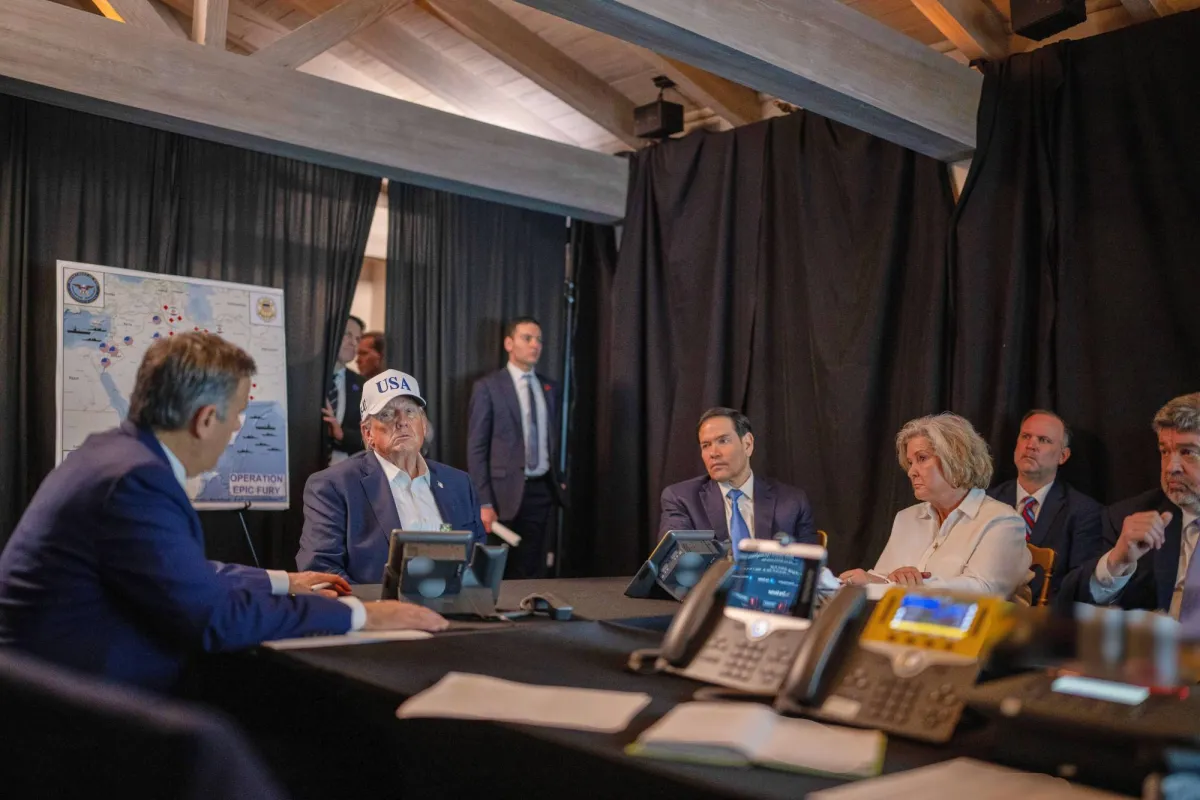
U.S. sources have reported that President Donald Trump has not yet approved a memorandum of understanding between the United States and Iran, aimed at extending the ceasefire for 60 days. These developments come at a time when Iran has denied that the text has become final, complicating ongoing negotiations.
According to Reuters reports, the memorandum will address how to deal with Iran's stockpile of highly enriched uranium, which is one of the key issues to be discussed during the sixty-day period. Although U.S. and Iranian negotiators reached a preliminary agreement, Trump has not yet signed it, leaving matters in a state of uncertainty.
Details of the Event
An informed U.S. official confirmed that negotiations between the two sides have made progress, with the outlines of the agreement completed. However, questions remain about whether Trump will approve the proposal, given the increasing pressure from within his party to avoid any agreement that does not directly address Iran's nuclear program.
In contrast, Iran's Tasnim news agency quoted a source close to the Iranian negotiating team stating that the text of the memorandum has not become final, reflecting a divergence in narratives between the two sides. The source indicated that Iran has not informed the Pakistani mediator that the text has become final, further complicating the situation.
Background & Context
These developments come at a time when the region is witnessing heightened tensions, as the United States and Iran have exchanged strikes near the Strait of Hormuz, raising concerns about regional stability. The U.S. Central Command has confirmed that its forces carried out strikes against Iranian drones, while the Iranian Revolutionary Guard retaliated by targeting the U.S. base from which the strike was launched.
Historically, the Strait of Hormuz is a vital maritime corridor through which a significant portion of global oil trade passes, increasing the importance of controlling it. Iran has sought to impose new arrangements for the passage of ships, while Washington has responded by imposing a blockade on Iranian ports.
Impact & Consequences
If a final agreement is reached, it could represent a significant diplomatic breakthrough, but it will not resolve the more complex issues related to Iran's nuclear program. U.S. demands regarding the nuclear program are expected to require additional rounds of negotiations, potentially prolonging the conflict.
Pressure is mounting on Trump from hawks within his party, who urge him not to enter into any agreement that does not directly address Iran's nuclear program. Additionally, the growing concerns among voters about rising prices, especially fuel prices, increase the political pressure on the Republican Party.
Regional Significance
These developments directly impact security and stability in the Arab region, where Iran is a key player in many regional conflicts. Any escalation in tensions between the United States and Iran could lead to negative repercussions for neighboring countries, including rising oil prices and increased military tensions.
In conclusion, the situation in the region remains complex, as political and economic interests intertwine, making it difficult to predict the course of events in the future. Stakeholders must work diligently to reach peaceful solutions that ensure security and stability for all.