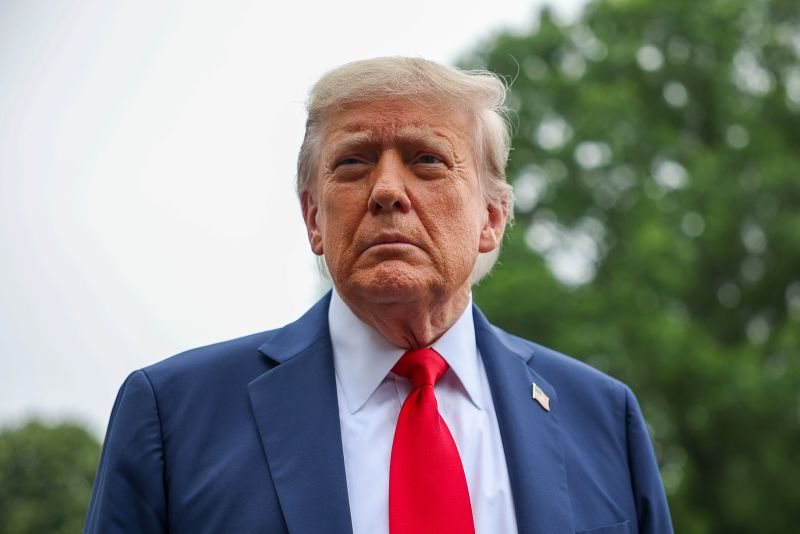
Pressure is mounting on U.S. President Donald Trump as a month passes since the military escalation with Iran. Analyses from three major French newspapers converge on the notion that Trump has fallen into a "strategic trap." While he claims through his platforms that the war is settled and the enemy has lost everything, the realities on the ground tell a completely different story.
In an analytical piece published by Le Point, French writer and diplomat Gérard Araud emphasized that Trump now faces a critical question: how can he exit a military intervention that has deteriorated? He explained that history shows U.S. presidents, from Vietnam to Afghanistan, have always faced two choices: either stop the losses and minimize the political cost of withdrawal, or escalate, often leading to their withdrawal under catastrophic conditions.
Details of the Situation
Araud noted that Trump might be looking for a "fig leaf" in the form of an agreement that preserves his dignity, similar to the 2015 agreement, questioning what Israel's position would be in such a scenario. At the same time, analyses indicate that Iran, despite military pressures and assassinations, has shown no signs of weakness; rather, it has managed to shift the battle to the Gulf and Israel, gaining a strategic advantage and maintaining the initiative.
The writer questioned whether the mobilization of U.S. forces is merely a "deception" from Trump, asserting that the president is not the type to endure significant human losses, especially with the midterm elections approaching. He also wondered if there could be an agreement that guarantees Iran some concessions, which could put Trump in a difficult position with his allies, particularly Israel.
Context and Background
In a related context, Libération highlighted the contradictions in Trump's character, who threatens destruction yet fears getting embroiled in new "endless wars." The newspaper's correspondent in Washington, Benjamin Duhamel, pointed out that Trump is trying to shirk responsibility, emphasizing that the war in the Middle East has entered its fifth week, and as days pass, it becomes clear that Trump has lost control over the course of operations.
He added that the U.S. administration seems to be "sailing blindly," while ministers attempt to justify the contradictory decisions emanating from the White House. The newspaper noted that Washington's allies, from Tokyo to Berlin, are living in a state of panic due to the implications of the Gulf closure, placing immense pressure on the U.S. administration.
Implications and Effects
On another front, the investigative site Mediapart addressed the "miscalculation" made by the White House, stressing that Trump, with a "real estate developer" mentality, failed to understand that Iran might prefer to fight "without hope" rather than enter into a humiliating agreement. The site warned that the real obstacle to any settlement could lie in the Israeli stance, which may reject any truce that allows Iran to catch its breath, potentially pushing Trump back toward escalation.
The site also questioned who actually manages Iran, noting that it is impossible to answer this question. It pointed out that Iran's military capabilities are not limitless, but the Iranian regime, which has shifted to a survival mode, resists after preparing in recent years to maintain a long-term defensive posture.
Impact on the Arab Region
The three newspapers agree that the moment of truth has arrived for Trump, as the realities on the ground indicate that the only available exit is a "settlement with regional guarantees" that reopens the Strait of Hormuz in exchange for easing pressures. This depends on Tehran's ability not to "gamble" with its current strong position and Washington's ability to rein in its regional allies.
In conclusion, the most important question remains: how will the Trump administration handle this strategic dilemma, and what options are available for it to exit this chaos?