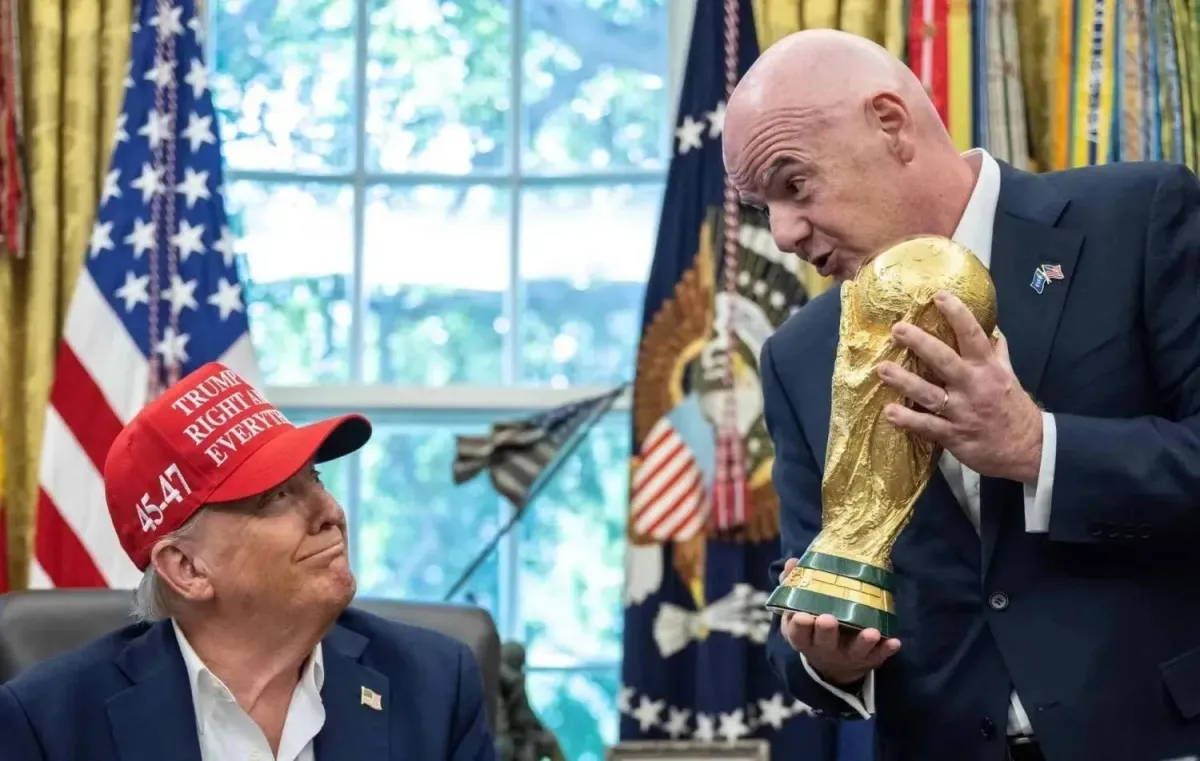
Political and security pressures are mounting on the World Cup just 40 days before its kickoff, as recent events in the United States raise concerns about the tournament's proceedings. The assassination attempt targeting U.S. President Donald Trump, which recently occurred in Washington, places the world's most significant sporting event under scrutiny due to political tensions.
In this context, the International Football Federation (FIFA) is striving to reassure fans about the progress of preparations, including the participation of the Iranian national team, which is one of the 48 teams qualified for the tournament. However, it remains undecided whether the Iranian team will choose to withdraw, and if that happens, the United Arab Emirates team is the closest to replace them.
Event Details
Proposals for Iran to play its matches in Mexico, a suggestion made by the Mexican government, have been dismissed. Despite FIFA's assurances, the impact of U.S. policies remains evident in the tournament's details, especially with recent tensions related to the escalation with Iran and the closure of the Strait of Hormuz, leading to a wave of global inflation that has affected the costs of organizing the World Cup.
Last December, FIFA announced the allocation of the largest prize money in the tournament's history, totaling $620 million, with a minimum of $9 million for each participating team and $45 million for the champion. However, several national federations have proposed increasing these allocations due to the significant rise in operational costs, particularly fuel, which may reduce the actual revenues for the teams.
Background & Context
Historically, World Cup tournaments have witnessed various political influences, but the current situation is different due to the complexities of the international landscape. Tensions between the United States and Iran, along with global economic crises, place the tournament in a sensitive position. FIFA is attempting to maintain the course of the tournament within the usual regulatory frameworks, despite the increasing challenges.
The varying tax systems among U.S. states add another layer of challenges, as tax exemptions can be obtained in some states while high taxes are imposed in others. These issues raise concerns among national federations regarding financial revenues.
Impact & Consequences
Concerns are growing that U.S. policies may affect the tournament's proceedings, potentially leading to withdrawals from some teams. At the same time, FIFA is striving to emphasize the continuity of preparations, reflecting a desire to maintain the tournament's image as a global sporting event free from political influences.
Opposing voices within the football community, such as the president of the Norwegian Football Federation, who called for the withdrawal of the Peace Prize from Trump, reflect the division on how to handle political issues in a sporting context. These voices may impact the tournament's reputation and cast a shadow over the atmosphere surrounding it.
Regional Significance
The World Cup is considered an important event in the Arab world, where Arab fans look forward to following their teams in the tournament. Political tensions may affect the participation of some teams, raising concerns among fans. Additionally, the economic dimensions of the tournament may impact investments and economic opportunities in the region.
In conclusion, it appears that the upcoming World Cup will take place under a clear influence of international politics, raising questions about how these factors will affect the tournament's proceedings and success. FIFA, despite the challenges, is striving to maintain the course of the tournament and ensure its success as a global sporting event.