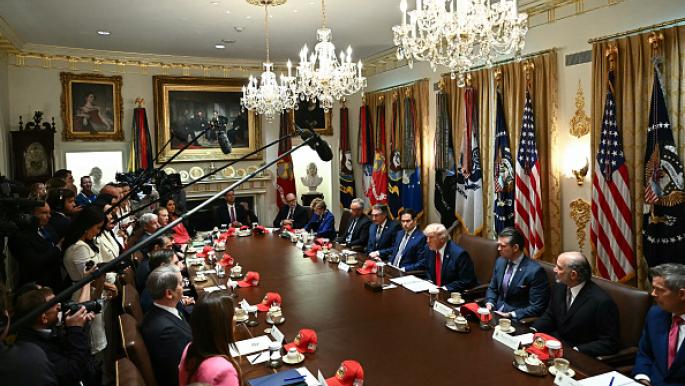
U.S. President Donald Trump stated on Wednesday that Iran is earnestly seeking to reach an agreement, but he indicated that he is not satisfied with the details presented so far. These remarks reflect the ongoing tensions in the relationship between the United States and Iran, which has seen significant shifts in recent years.
Trump's statements come at a time when pressure is mounting on the U.S. administration to find a diplomatic solution to the Iranian nuclear crisis. Concerns have grown that continuing negotiations without achieving tangible progress could escalate tensions in the region.
Details of the Event
During a press conference, Trump confirmed that Iran desires to reach an agreement, but he did not clarify which points raise his concerns. These statements raise questions about the seriousness of Iran in the negotiations, especially given the economic pressures it faces due to U.S. sanctions.
This statement is part of Trump's strategy in dealing with Iran, as he aims to secure a comprehensive agreement that ensures Iran does not develop nuclear weapons. However, the precise details of this agreement remain unclear, complicating the negotiations further.
Background & Context
The roots of the crisis between the United States and Iran extend back several decades, with tensions escalating after the U.S. withdrawal from the nuclear agreement in 2018. Since then, the United States has imposed strict sanctions on Iran, significantly impacting its economy.
In recent years, Iran has attempted to negotiate with major powers, including the United States, to alleviate sanctions and improve its economic situation. However, negotiations often stall due to disagreements over the terms of the agreement.
Impact & Consequences
Trump's remarks affect global markets, as companies and investors closely monitor the situation. Any progress in negotiations could lead to stabilization of oil prices, while failure might result in price increases due to fears of escalating conflict.
Moreover, failure to reach an agreement could heighten military tensions in the region, as Iran may feel compelled to respond to U.S. sanctions in more aggressive ways, potentially leading to new conflicts.
Regional Significance
The relationship between the United States and Iran significantly impacts security and stability in the Arab region. Any escalation in tensions could affect Gulf countries, which heavily rely on stable oil prices.
Potential conflicts could also lead to an influx of refugees and increased sectarian tensions in the region, necessitating an urgent response from Arab nations and the international community.
Negotiations between the United States and Iran remain uncertain, with both sides striving to achieve their interests. In these circumstances, hope remains for an agreement that brings stability to the region.