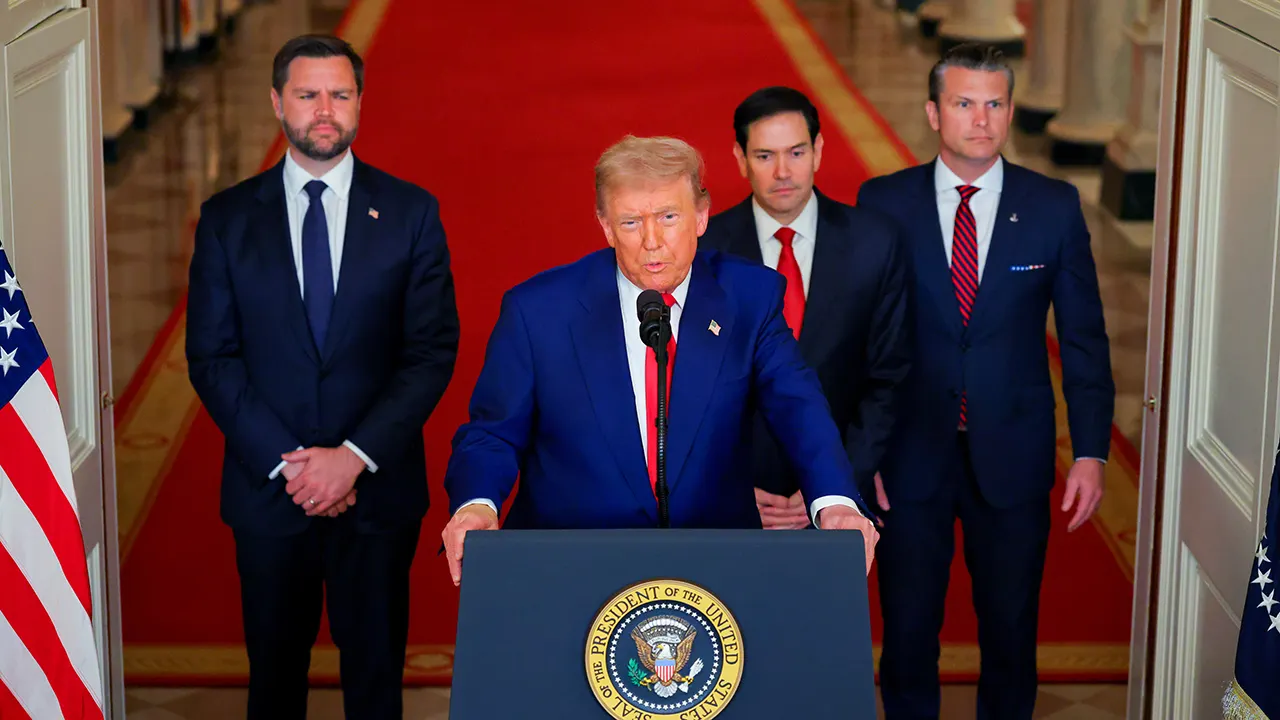
U.S. President Donald Trump is seeking to invite Arab nations to contribute to the costs of a potential military conflict with Iran, as tensions escalate in the region. White House spokesperson Caroline Levitt announced that further details will be provided by Trump later.
These statements come at a time when tensions between the United States and Iran are rising, with increasing fears of military escalation that could impact regional stability. This invitation from Trump represents a new step in his strategy towards the Middle East, aiming to enhance cooperation with Arab allies in confronting Iranian threats.
Details of the Announcement
In a press conference held today, Levitt confirmed that Trump intends to invite several Arab nations to help shoulder the financial burdens resulting from any potential military escalation against Iran. She noted that this move is part of the United States' efforts to strengthen regional alliances and alleviate the financial burdens borne by Washington in its foreign policy.
This announcement comes at a sensitive time, as pressures mount on the U.S. administration to reduce military costs abroad, especially amid the economic crises facing the country. The invitation is expected to include countries such as Saudi Arabia and the United Arab Emirates, which are considered among the United States' key allies in the region.
Context and Background
Historically, relations between the United States and Arab nations have been central to U.S. foreign policy, particularly in the context of regional conflicts. These relations have undergone significant transformations over the years, from the Gulf War in the 1990s to the current tensions with Iran.
Iran is viewed as a key player in the region, seeking to expand its influence by supporting armed groups in Iraq, Syria, and Lebanon. This influence has raised concerns among many Arab nations, prompting them to enhance cooperation with the United States to counter Iranian threats.
Impact and Consequences
If Arab nations respond to Trump's invitation, it could lead to a shift in the dynamics of the conflict in the region. Pressure on Iran may increase, potentially pushing it towards escalatory actions or even negotiations for new agreements.
On the other hand, Arab nations may face internal challenges as a result of this involvement, where rulers could encounter pressures from their populations opposing any military intervention. Thus, this invitation may provoke widespread debate in political and public circles within the concerned countries.
Significance for the Arab Region
This invitation from Trump serves as a test for the relations between the United States and Arab nations. If these countries respond, it may strengthen their position against Iran, but they may also face negative repercussions domestically.
Ultimately, questions remain about the willingness of Arab nations to bear the costs of war and whether they will respond to Trump's invitation. These developments could significantly impact stability in the region and reshape regional alliances.