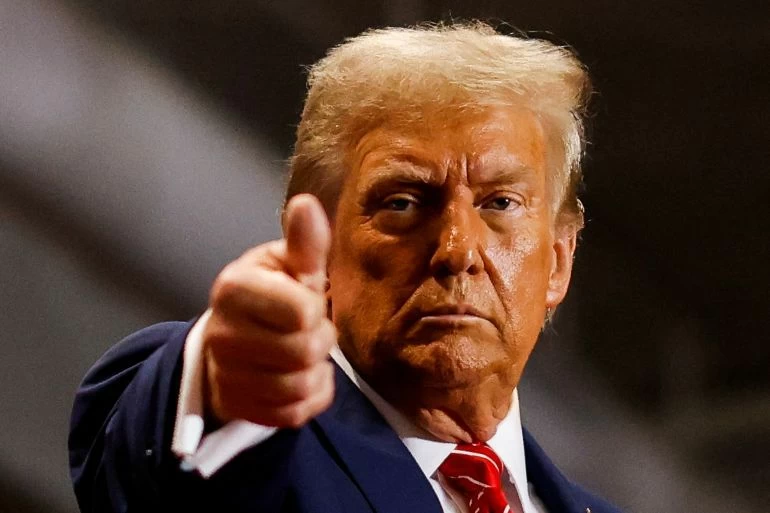
U.S. President Donald Trump stated in an interview with Fox News that any agreement with Iran must align with American interests, emphasizing that "the red line is any deal that is not good for us." These remarks come as nuclear negotiations between Washington and Tehran continue, amid escalating military tensions in the Gulf region.
In related news, reports indicate that American and Iranian negotiators have reached a preliminary memorandum of understanding for a period of 60 days, which includes an extension of the current ceasefire and the initiation of a broader round of talks regarding Iran's nuclear program. However, the agreement still requires final approval from Trump before it can take effect.
Details of the Event
The Trump administration is striving to balance pushing for a diplomatic breakthrough with Tehran while maintaining American military readiness, given the ongoing friction between U.S. and Iranian forces near the Strait of Hormuz. U.S. Treasury Secretary Steven Mnuchin warned of the United States' dwindling patience, indicating that military options will remain on the table if opportunities for reaching an agreement do not materialize.
These developments follow an incident where Iranian forces launched a missile towards Kuwait, raising concerns in Washington. In contrast, Iranian state media claimed that an American aircraft was shot down, a claim denied by U.S. Central Command.
Background & Context
Concerns are mounting regarding Iran's ability to rebuild its nuclear program, especially as the Iranian Revolutionary Guard continues to oversee activities related to this issue. The focus on Iran's enriched uranium stockpile raises questions about the viability of any temporary agreement that may be reached.
Historically, U.S.-Iranian relations have seen increasing tensions since the United States withdrew from the nuclear agreement in 2018. This withdrawal led to a surge in military and economic tensions between the two countries, complicating any future agreements.
Impact & Consequences
If an agreement is reached, it could lead to a de-escalation of tensions in the region; however, it may also raise new concerns about Iran's capacity to resume its nuclear activities. Furthermore, any military escalation could have serious repercussions for regional security.
Analysts believe that the Trump administration faces significant challenges in balancing diplomacy and military pressure, leaving the future of negotiations open to all possibilities.
Regional Significance
Developments in U.S.-Iranian relations directly impact security and stability in the Arab region. Any military escalation could negatively affect neighboring countries and heighten tensions in the Gulf.
In conclusion, the future of negotiations with Iran remains uncertain, as the involved parties must take decisive steps to ensure peace and stability in the region.