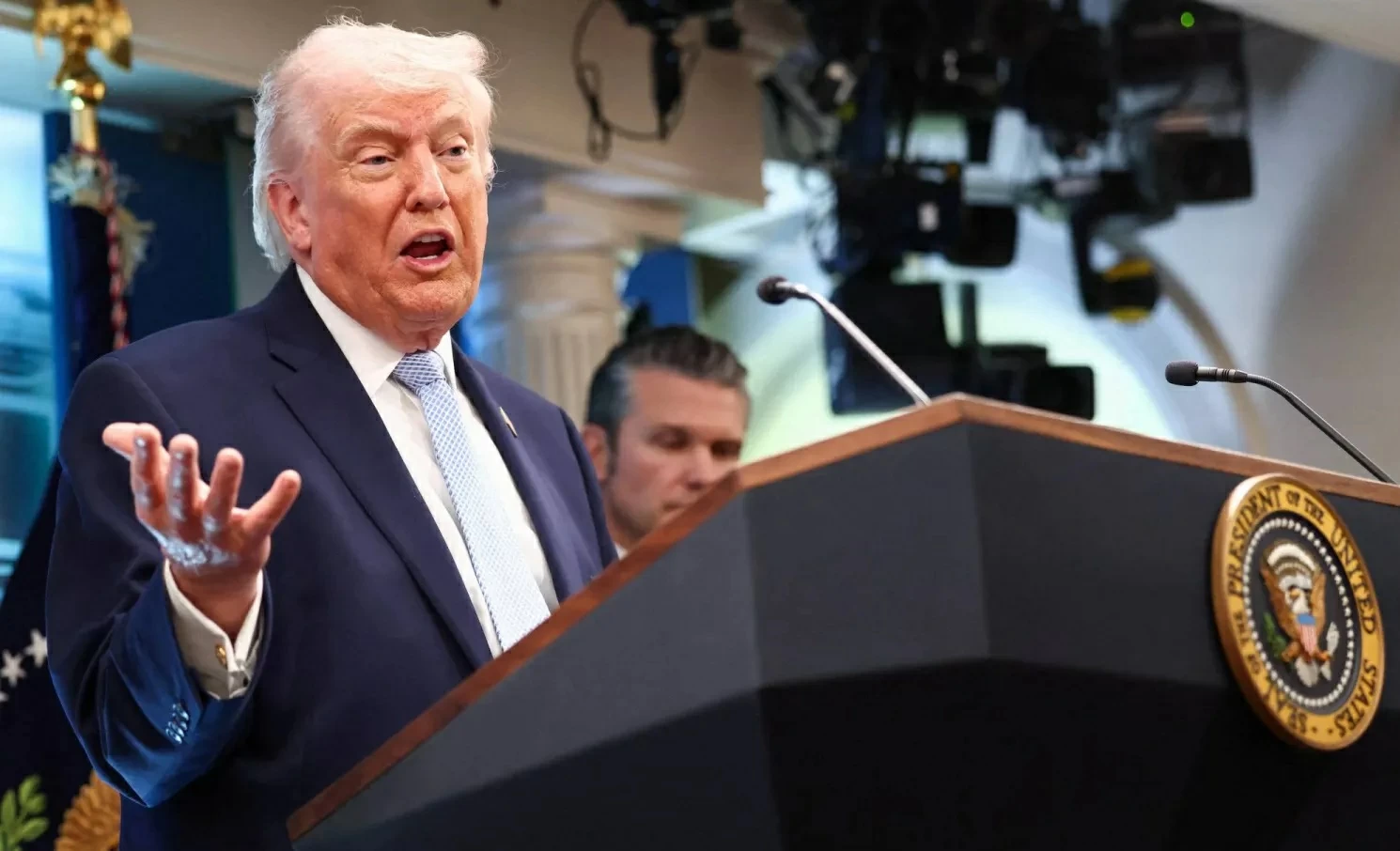
U.S. President Donald Trump confirmed today (Wednesday) that the ten Iranian points raised during negotiations with Tehran are considered reasonable. Trump explained that there is a circulation of messages and agreements from individuals unrelated to the ongoing negotiations between the United States and Iran.
He noted that there is only one set of important points that the United States accepts, which will be discussed in closed sessions during these negotiations. He emphasized that these points form the basis upon which the United States agreed to a ceasefire with Iran.
Details of the Event
The Wall Street Journal reported from intermediaries and sources familiar with the ceasefire talks between the U.S. and Iran that Israel was not officially part of the negotiations and was only informed of the agreement at a late stage, which caused its displeasure. A White House official stated that consultations with Israel were limited to a call made by Trump to Israeli Prime Minister Benjamin Netanyahu before the announcement of the agreement, where the latter agreed to join the ceasefire.
Intermediaries also indicated that Israeli officials expressed reservations about the terms of the agreement, particularly regarding the inclusion of Lebanon, as Israel considers Iran and Lebanon to be separate arenas.
Background & Context
These developments come at a sensitive time in the region, as the United States seeks to stabilize relations with Iran after years of tension. U.S.-Iranian relations have deteriorated significantly since Washington's withdrawal from the nuclear agreement in 2018, leading to escalating military and economic tensions.
In this context, the office of Turkish President Recep Tayyip Erdoğan stated that he informed his U.S. counterpart of the necessity to prevent any opportunity for sabotaging the ceasefire process. Erdoğan confirmed during a phone call that the next two weeks represent an opportunity that should be well utilized to reach a lasting peace agreement.
Impact & Consequences
These negotiations indicate a shift in U.S. policy towards Iran, as Washington appears to be seeking tangible results amid internal and external pressures. Additionally, the exclusion of Israel from the negotiations could exacerbate tensions between Tel Aviv and Tehran, threatening regional stability.
Conversely, Iranian President Masoud Bezhakian emphasized to Pakistani Prime Minister Shahbaz Sharif the need for regional and global powers to pressure aggressors to prevent the recurrence of war. These statements reflect Iranian fears of potential military escalation and underscore the importance of dialogue as a means to avoid conflicts.
Regional Significance
These negotiations are of great importance to the Arab region, as their outcomes could affect relations between Arab states and Iran, especially amid ongoing tensions in Lebanon and Syria. Moreover, stability in Iran could positively impact regional security and reduce the likelihood of armed conflicts.
In conclusion, it remains to be seen how these negotiations will develop and whether they will lead to positive outcomes that contribute to achieving peace and stability in the region.