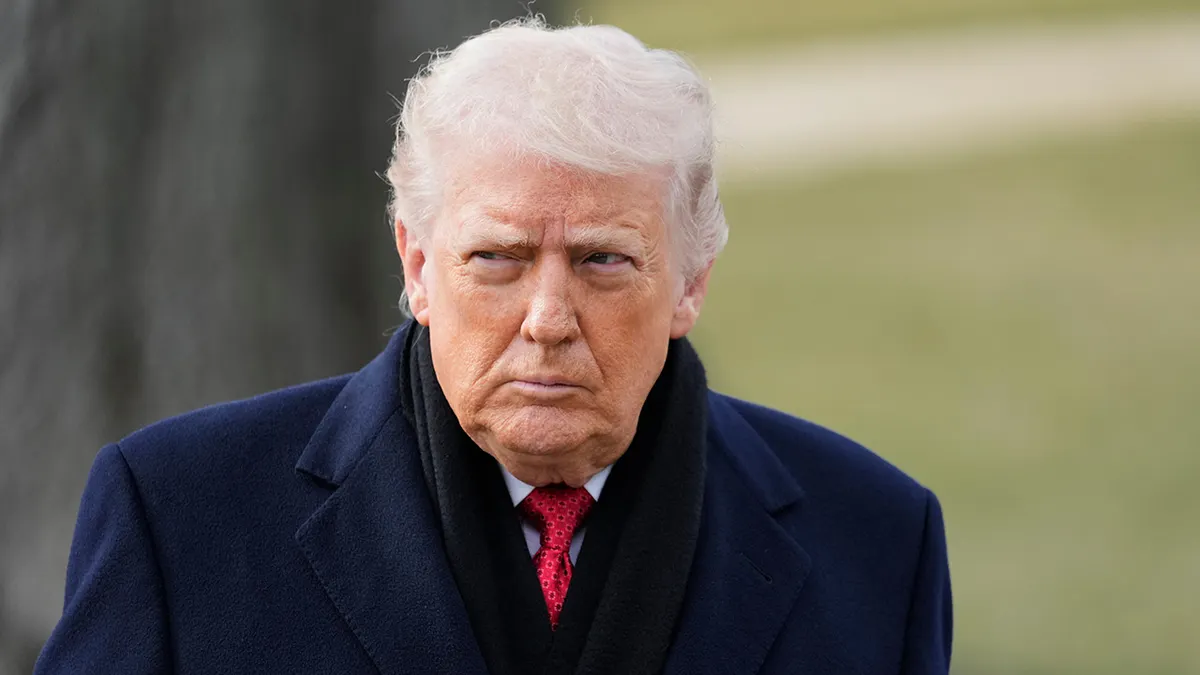
U.S. President Donald Trump has issued a warning to Iran regarding the Strait of Hormuz, as regional tensions escalate due to the disappearance of an American pilot. This warning comes amid increasing fears of a potential military escalation in the region, raising concerns about the stability of maritime navigation in one of the world's most critical waterways.
During a press conference, Trump emphasized that the United States would not hesitate to take stringent measures to protect its interests and those of its allies in the region. He also indicated that any threat to navigation in the Strait of Hormuz would be met with a strong response from Washington.
Details of the Incident
These statements come at a sensitive time, as an American pilot has gone missing under mysterious circumstances, heightening tensions between the United States and Iran. The incident has raised fears of a potential escalation of military conflict between the two parties, especially given the ongoing tensions since the U.S. withdrawal from the Iranian nuclear deal in 2018.
The strait is a vital point for the transport of oil and gas, with approximately 20% of the world's total oil passing through it. Any threat to this corridor could lead to rising oil prices and destabilize global markets.
Background & Context
Historically, relations between the United States and Iran have been marked by increasing tensions, particularly following the Iranian revolution in 1979. Since then, the United States has imposed economic sanctions on Iran, exacerbating the situation. In recent years, these tensions have notably escalated, especially after attacks on oil tankers in the region, which Iran has been accused of orchestrating.
In 2019, the region witnessed a series of incidents that heightened tensions, including the downing of an American drone by Iran, which resulted in military responses from Washington. These events indicate that the situation in the region may be more fragile than it appears.
Impact & Consequences
The U.S. warnings to Iran could lead to a potential military escalation, threatening regional stability. Should any escalation occur, oil prices could be significantly affected, impacting the global economy. Additionally, any escalation could destabilize the Gulf Arab states, which heavily rely on oil exports.
On the other hand, these tensions may lead to strengthened regional alliances, as Gulf countries may seek to enhance their cooperation with the United States to counter Iranian threats. Furthermore, these events could affect relations between Iran and other countries in the region, such as Iraq and Syria, which are also experiencing political and military tensions.
Regional Significance
The tensions between the United States and Iran have a direct impact on security and stability in the Arab region. Gulf countries, located near the Strait of Hormuz, may be the most affected by any military escalation. These events could also influence the relationships between Arab states and Iran, as some countries may seek to adopt more cautious stances towards Tehran.
In conclusion, the situation in the region remains complex, with political and economic interests intertwining. Arab countries must closely monitor developments and consider strategies to address any potential escalation.