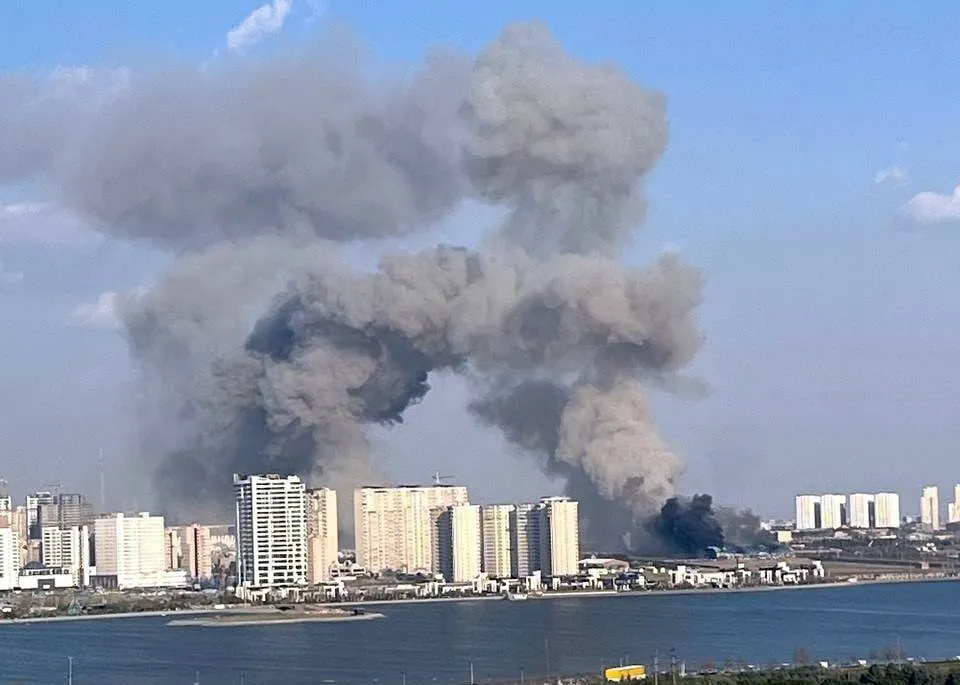
U.S. President Donald Trump has escalated pressure on Iran by linking any discussions regarding a ceasefire to the reopening of the Strait of Hormuz. Trump emphasized that the United States could withdraw from the war quickly if it ensured that Tehran could not develop a nuclear weapon, while retaining the option to return to military strikes if necessary.
At the same time, Washington has continued to bolster its military presence in the region, with intensified airstrikes within Iran. Meanwhile, the Iranian Revolutionary Guard remains adamant about keeping the strait closed to what it describes as "enemies," asserting that there are no internal disagreements in Tehran and that it is prepared to continue fighting.
Details of the Event
In a post on the "Truth Social" platform, Trump stated that the "new regime leader" in Iran requested a ceasefire, noting that Washington would only consider this when the Strait of Hormuz is open and free of obstacles. Trump threatened that the United States would completely eliminate Iran, or as he put it, "bring it back to the Stone Age." He also indicated that the new Iranian president is less extreme and more intelligent than his predecessors.
In an interview with Reuters, Trump confirmed that the United States would withdraw from Iran "very quickly," but he did not specify a precise timeline for the end of the war. He clarified that the primary goal is to prevent Iran from acquiring a nuclear weapon, stating that this has already been achieved. He also mentioned that he does not care about Iran's stockpile of enriched uranium, justifying this by saying that the goal has been accomplished.
Background & Context
Trump's statements come at a sensitive time as the United States continues to enhance its military presence in the region, sending the aircraft carrier USS George H.W. Bush and three destroyers to the Middle East. Concurrently, the 82nd Airborne Division has begun arriving in the area, reflecting an increasing military escalation.
On the other hand, the Iranian Revolutionary Guard insists on keeping the Strait of Hormuz closed, asserting that the strait is "under decisive control," indicating that it will not be opened to enemies. The head of the Iranian Parliament’s National Security Committee confirmed that the strait would only be opened to countries that adhere to the new rules of the Islamic Republic.
Impact & Consequences
Concerns are rising that military escalation between the United States and Iran could lead to a broader conflict in the region, with experts warning that seizing Kharq Island, which represents the heart of Iran's oil industry, could endanger the lives of American soldiers. Additionally, imposing a naval blockade on ships carrying Iranian oil may be a safer option than occupying the island.
Simultaneously, U.S. Secretary of State Marco Rubio warned that the United States sees the "finish line" in the war with Iran, indicating that objectives are being achieved faster than planned. He confirmed that Washington has largely destroyed the Iranian navy and air force and is on track to destroy a significant portion of missile launch platforms.
Regional Significance
The situation in the Strait of Hormuz represents a sensitive point for Arab countries, many of which rely on oil passing through this vital corridor. Any escalation in the conflict could directly affect oil prices and regional stability. Additionally, tensions between Iran and Western countries could lead to a broader escalation involving Gulf states.
In conclusion, the situation in the region appears to be heading towards further complexity, with ongoing military escalation and mutual threats. It is crucial to monitor developments closely, as any escalation could impact security and stability across the entire region.