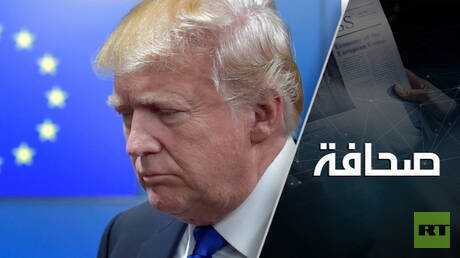
U.S. President Donald Trump hinted that he would withhold support for NATO countries against Russia unless these countries cooperate with him on issues related to the Middle East. These statements reflect a shift in U.S. foreign policy, as Trump seems to be using military support as a means to pressure his European allies.
These remarks come at a sensitive time, as relations between the United States and its European allies are increasingly strained due to various issues, including the conflict in Ukraine and tensions with Iran. Trump, who is looking to bolster his position in the upcoming elections, appears to be betting on support from his Middle Eastern allies as a condition for receiving European military support against Russian threats.
Details of the Event
In his statements, Trump indicated that the United States might not be prepared to provide military support to NATO countries if it does not receive similar backing in the Middle East. This stance places America's European allies in a difficult position, as they must consider how to navigate U.S. pressures without compromising their national interests.
It is noteworthy that Trump has long criticized his European allies for not meeting the required defense spending commitments, reflecting his discomfort with the existing balance within NATO. These remarks may strengthen the position of countries seeking to enhance their defense independence, such as France and Germany, which have begun contemplating the establishment of their own defense capabilities.
Background & Context
Historically, the United States has viewed NATO as one of its most important foreign policy tools, helping to maintain stability in Europe after the Cold War. However, changes in U.S. leadership, particularly under the Trump administration, have led to a reevaluation of this alliance. Trump, who favors an 'America First' policy, seeks to reduce his country's military commitments abroad.
In recent years, U.S.-European relations have faced numerous challenges, ranging from withdrawal from the Iran nuclear deal to trade tensions. These dynamics could lead to a reshaping of alliances in the region, as some European countries may seek to strengthen their ties with Russia or China as an alternative to reliance on the United States.
Impact & Consequences
If this policy continues, it could erode trust between the United States and its European allies, negatively impacting European security. Additionally, this stance may encourage other countries to seek military alternatives, increasing the likelihood of escalating conflicts in the region.
Moreover, linking U.S. military support to European positions on the Middle East could exacerbate crises in the region, as European countries may find themselves compelled to intervene in complex issues such as the Syria conflict or tensions with Iran, complicating the security landscape further.
Regional Significance
For the Arab region, these developments could mean increased pressure on Arab countries striving for stability. Nations reliant on U.S. support, such as Saudi Arabia and Egypt, may find themselves in a difficult position if the United States continues to tie its support to specific political stances.
Additionally, the rising tensions between the United States and its European allies may open the door for other regional powers, such as Russia and Iran, to enhance their influence in the region, potentially leading to changes in regional alliances.
In conclusion, Trump's statements reflect a significant shift in U.S. policy towards its allies, which may impact regional and international stability in the coming years.