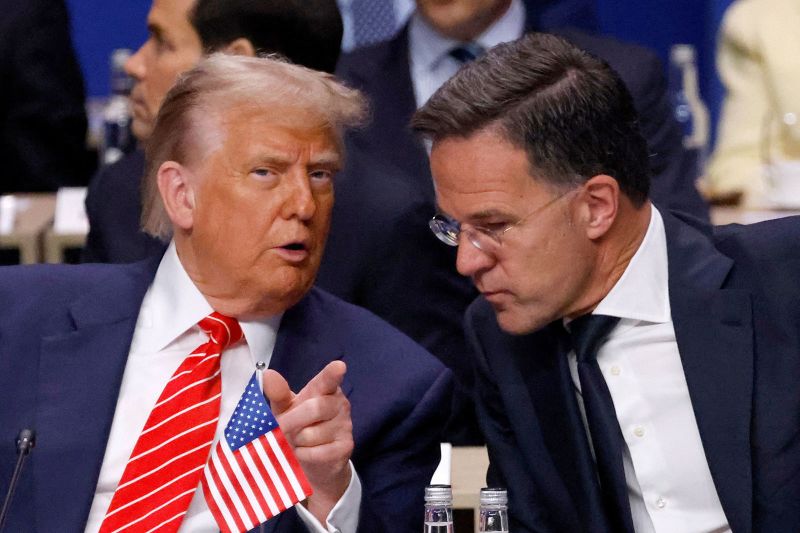
Former U.S. President Donald Trump is expected to meet with NATO Chief Mark Rutte, as Trump considers the possibility of the United States withdrawing from the military alliance. This meeting occurs during a sensitive period characterized by rising geopolitical tensions, raising questions about the future of U.S. relations with its NATO allies.
Concerns are growing that Trump's withdrawal from NATO could destabilize international relations, particularly given the challenges faced by member states. The meeting is scheduled for later this week, where Trump hopes to discuss issues related to security and defense, as well as the economic challenges confronting member nations.
Event Details
This move follows Trump's previous statements expressing his willingness to reassess U.S. commitments to NATO, which has alarmed many European leaders. In recent years, there has been extensive debate regarding the defense spending levels of NATO member countries, with Trump repeatedly calling for increased contributions from European nations.
NATO is considered one of the most significant military alliances globally, established in 1949 to enhance the collective security of its member states. However, Trump's remarks about a potential U.S. withdrawal from the alliance raise questions about the future of this coalition and its ability to address global security challenges.
Background & Context
Historically, NATO has been a cornerstone of European and American security, contributing to peace and stability in the region for decades. However, political changes in the United States, particularly with Trump's rise to power, have led to a reevaluation of the U.S. role within the alliance.
In 2016, during his campaign, Trump criticized NATO, deeming it unfair as he believed many member countries were not contributing enough to the alliance's budget. This criticism elicited mixed reactions from European leaders, who emphasized NATO's importance as a strategic ally in facing global threats.
Impact & Consequences
If Trump decides to withdraw from NATO, it could lead to radical changes in the global security balance. European nations may become concerned about losing U.S. military support, potentially prompting them to bolster their defense capabilities further.
Moreover, a U.S. withdrawal from NATO could create opportunities for other powers, such as Russia, to expand their influence in the region, which could escalate military tensions in Europe. In this context, European leaders must consider new strategies to ensure their security in the event of such a scenario.
Regional Significance
For the Arab region, any changes in U.S. policy towards NATO could impact relations between Arab states and the West. A weakened NATO might lead to shifts in regional security strategies, especially given the threats some Arab countries face from armed groups.
Furthermore, any new tensions arising from Trump's withdrawal from NATO could affect stability in the region, necessitating Arab nations to enhance their security and defense cooperation to address common challenges.
In conclusion, the anticipated meeting between Trump and Rutte represents a potential turning point in international relations, requiring leaders worldwide to closely monitor developments.