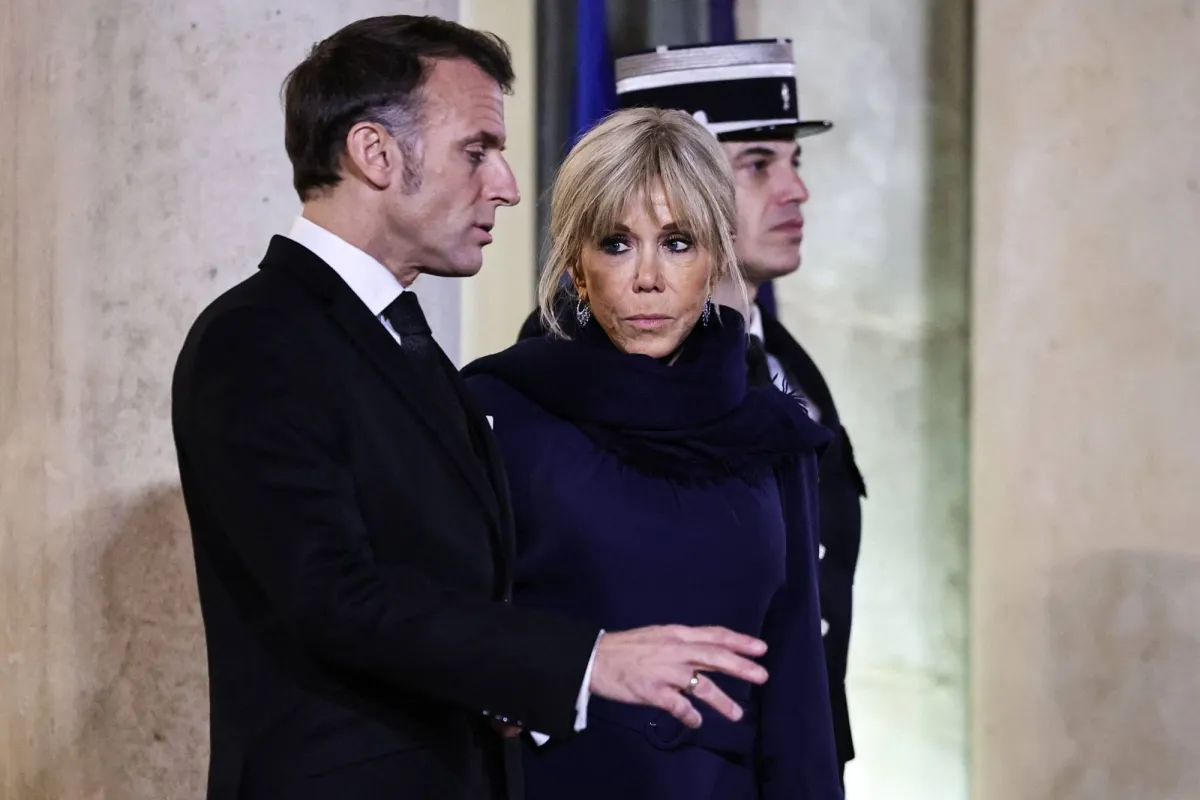
During a private lunch, U.S. President Donald Trump mocked French President Emmanuel Macron and his wife, criticizing NATO allies for not joining the war against Iran, which is experiencing increasing tensions in the Middle East.
In a video briefly posted on the White House's YouTube channel before being removed, Trump stated, "We didn't need them, but I asked anyway," referring to military support from France. He added, "I called France, with Macron who is treated very poorly by his wife. He is still recovering from a strong punch to his jaw."
Details of the Event
Trump was referencing a video from May 2025, where it appeared that Brigitte Macron delivered a punch to her husband during a trip to Vietnam, which Macron later denied and considered part of a disinformation campaign. Trump continued, saying, "I told Emmanuel, we would like to get some help in the Gulf even though we are breaking records in terms of the number of bad guys we are taking out and the number of ballistic missiles we are destroying."
Trump also described NATO as a "paper tiger," in his latest attack on the alliance since returning to the White House. Secretary of State Marco Rubio confirmed that the United States would reassess its relationship with NATO once the war with Iran concludes.
Context and Background
Trump's remarks come at a time when relations between the United States and its NATO allies are increasingly strained, particularly amid the ongoing war with Iran. Trump indicated that Iran would face "very severe" strikes for another two to three weeks, specifically threatening the Iranian electrical grid. He asserted that the Islamic Republic no longer poses a threat, stating, "We will send them back to the Stone Age."
In a speech from the White House, Trump clarified that the core strategic objectives of the United States in the war with Iran are nearing completion, noting that the military operation has completely destroyed Iran's nuclear program.
Impact and Consequences
Concerns are rising that escalating tensions between the United States and Iran could lead to a larger military escalation in the region, potentially affecting stability in the Middle East. Trump's comments regarding NATO may also lead to greater divisions among member states, as some express dissatisfaction with U.S. military support.
These remarks come at a sensitive time, as European countries seek to maintain stability in the region and avoid escalating the conflict, while the United States under Trump's leadership appears more inclined to take direct military action.
Impact on the Arab Region
The U.S. escalation against Iran directly affects neighboring Arab countries, as it may lead to increased tensions in the Arabian Gulf. Any military escalation could also impact oil prices, reflecting on Arab economies that heavily rely on oil exports.
Under these circumstances, Arab countries must closely monitor developments in U.S.-Iranian relations and prepare to deal with any potential repercussions on their security and stability.
In conclusion, relations between the United States and its NATO allies remain under scrutiny amid rising tensions with Iran, raising questions about the future of security cooperation in the region.