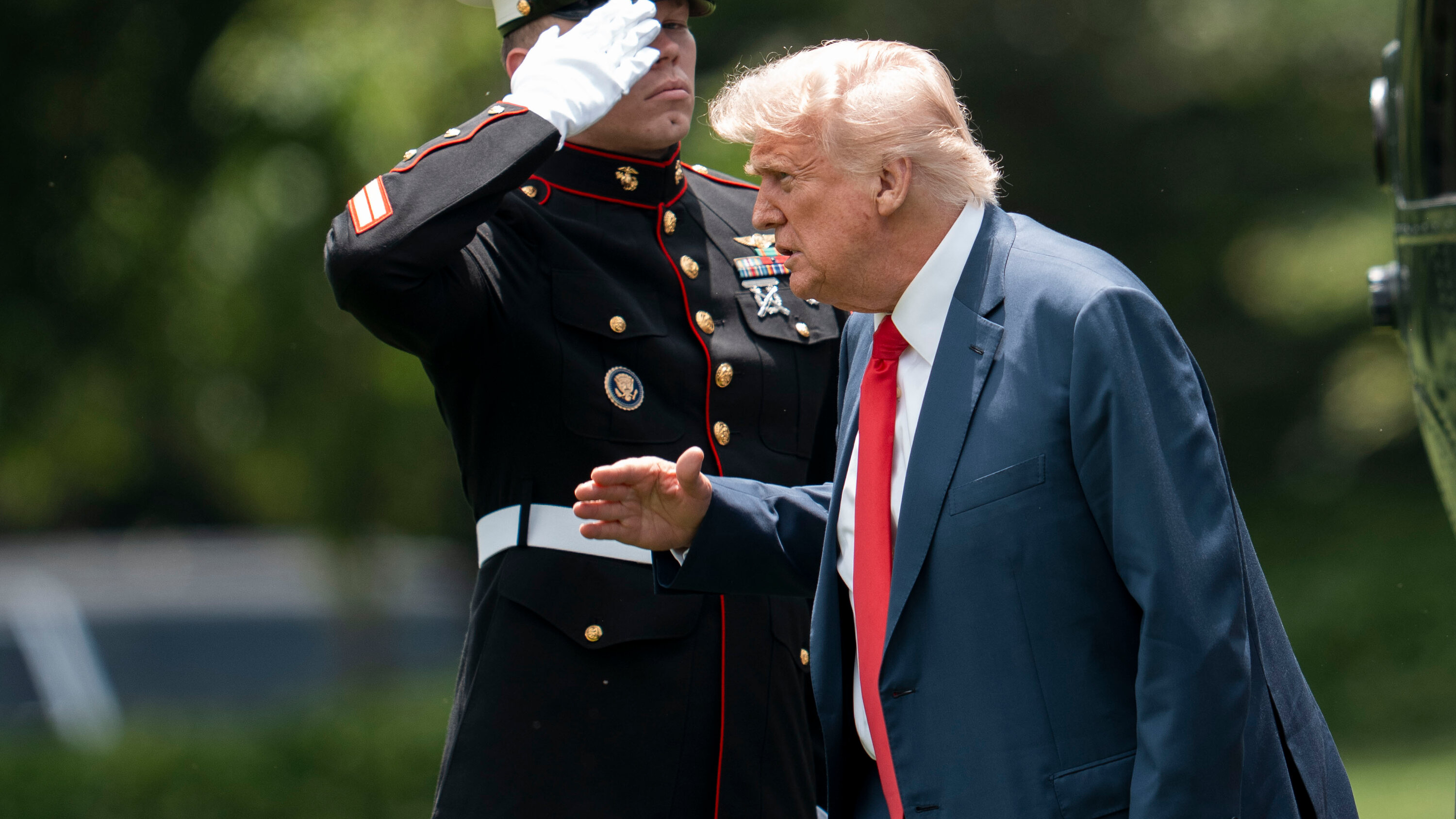
U.S. President Donald Trump stated that the country is closely monitoring the issue of high-enriched uranium in Iran, indicating readiness to take strong action if necessary. These comments were made during a press conference where Trump downplayed concerns regarding buried uranium in Iran.
Trump, speaking in the context of escalating tensions between Washington and Tehran, noted that the United States has the capability to respond very strongly if circumstances warrant it. These statements come at a sensitive time, as international concerns about Iran's nuclear program, which is believed to aim at developing nuclear weapons, have increased.
Details of the Event
During the conference, Trump emphasized that the U.S. administration is closely following Iranian nuclear activities, mentioning that available intelligence indicates the presence of quantities of high-enriched uranium. He added that the United States would not hesitate to take stringent measures to protect its interests and those of its allies in the region.
Trump also pointed out that there is close cooperation with U.S. allies in the Middle East, including Israel, which considers Iran a major threat to its security. These remarks come at a time when international calls for a return to the Iranian nuclear agreement, from which the United States withdrew in 2018, are increasing.
Background & Context
Historically, Iran has been a subject of international controversy due to its nuclear program, which began in the early 2000s. Despite signing the nuclear agreement in 2015, tensions have persisted due to Iran's non-compliance with certain terms of the agreement, leading to economic sanctions imposed on it.
In recent years, Iran has ramped up uranium enrichment, raising concerns within the international community. Reports have indicated that Iran may be close to producing sufficient amounts of high-enriched uranium to create a nuclear weapon, prompting the United States and its allies to adopt a tougher stance towards Tehran.
Impact & Consequences
Concerns are growing that any military escalation between the United States and Iran could destabilize the Middle East region. Any potential military strike could provoke violent reactions from Iran, potentially dragging the region into a broader conflict.
Moreover, the increasing tensions could impact oil prices and global financial markets, as Iran is a key player in the energy market. Any escalation in conflict could lead to rising oil prices, affecting the global economy.
Regional Significance
Neighboring Arab countries to Iran, such as Iraq and Saudi Arabia, find themselves in a sensitive position due to the rising tensions. Any military escalation could directly affect the security and stability of these nations.
There are also concerns that any conflict could lead to a flow of refugees into neighboring Arab countries, increasing economic and social pressures on these nations. At the same time, some armed groups in the region may exploit the chaos resulting from any escalation.
In conclusion, the issue of Iranian uranium remains a vital topic that requires close monitoring by the international community. Recent U.S. statements indicate that Washington is prepared to take strong actions, increasing the likelihood of escalating tensions in the region.