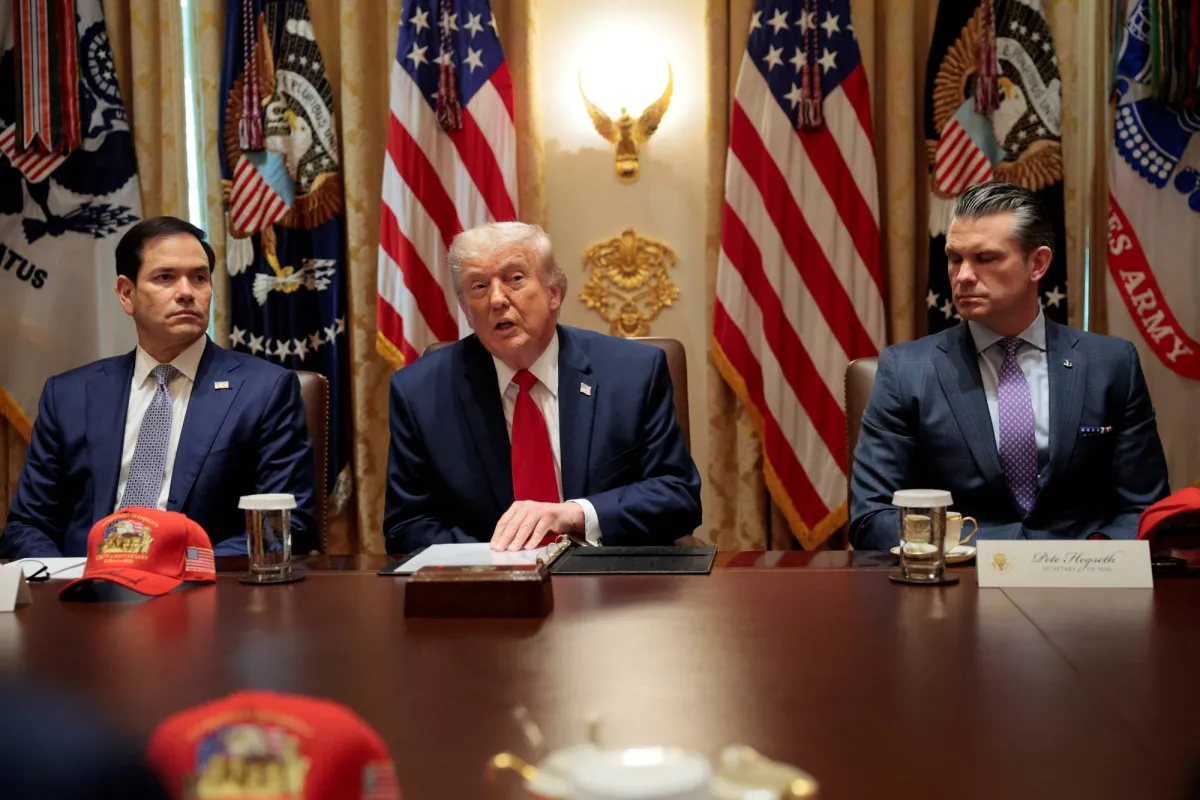
U.S. President Donald Trump emphasized that Iran will not receive any sanctions relief if it abandons high-enriched uranium, indicating that negotiations with Tehran are progressing well. This statement was made at a time when the White House denied the validity of Iranian reports regarding a preliminary draft agreement to resolve the conflict.
In her remarks, White House spokesperson Olivia Wells stated that negotiations with Iran are proceeding positively, stressing that Trump has clarified his "red lines" in this context. Wells confirmed that the Iranian reports about a draft agreement are inaccurate, describing them as "completely fabricated."
Details of the Event
In a phone call with PBS News, Trump denied any sanctions relief in exchange for Iran's abandonment of high-enriched uranium, saying, "No, no, not at all. No sanctions relief, no." He reiterated that abandoning high-enriched uranium would have no connection to sanctions relief.
This coincided with Israeli airstrikes around the city of Tyre in southern Lebanon, where the Lebanese National News Agency reported that Israeli aircraft targeted areas near the city. This escalation comes amid Israeli threats to expand its operations in Lebanon, complicating the situation in the region further.
Background & Context
Negotiations between the United States and Iran continue amid rising tensions in the region, as Washington seeks to reach an agreement to end the conflict that has unfolded in recent months. Relations between the two countries have significantly deteriorated since the onset of the war in the region, which began with a U.S.-Israeli attack on Iran.
In this context, Iran had closed the Strait of Hormuz, a vital passage for global energy supplies, exacerbating economic and political crises in the region. These negotiations represent an opportunity for both sides to reach a solution that alleviates tensions.
Impact & Consequences
Analysts expect that the outcomes of the negotiations will significantly affect stability in the Middle East. Successful negotiations could lead to a reduction in tensions between Iran and the United States, while failure could escalate the conflict and lead to greater military confrontation.
Moreover, the continuation of sanctions on Iran could negatively impact the Iranian economy and increase internal pressures, potentially worsening social and political conditions in the country.
Regional Significance
The current developments in U.S.-Iranian relations are of great importance to Arab countries, as any escalation in the conflict could impact security and stability in the region. Neighboring Arab states are closely monitoring the outcomes of these negotiations, as any change in the situation could affect their interests and national security.
In conclusion, the situation in the region remains tense, with anticipation surrounding the results of negotiations between the United States and Iran, which could determine the course of events in the Middle East in the near future.