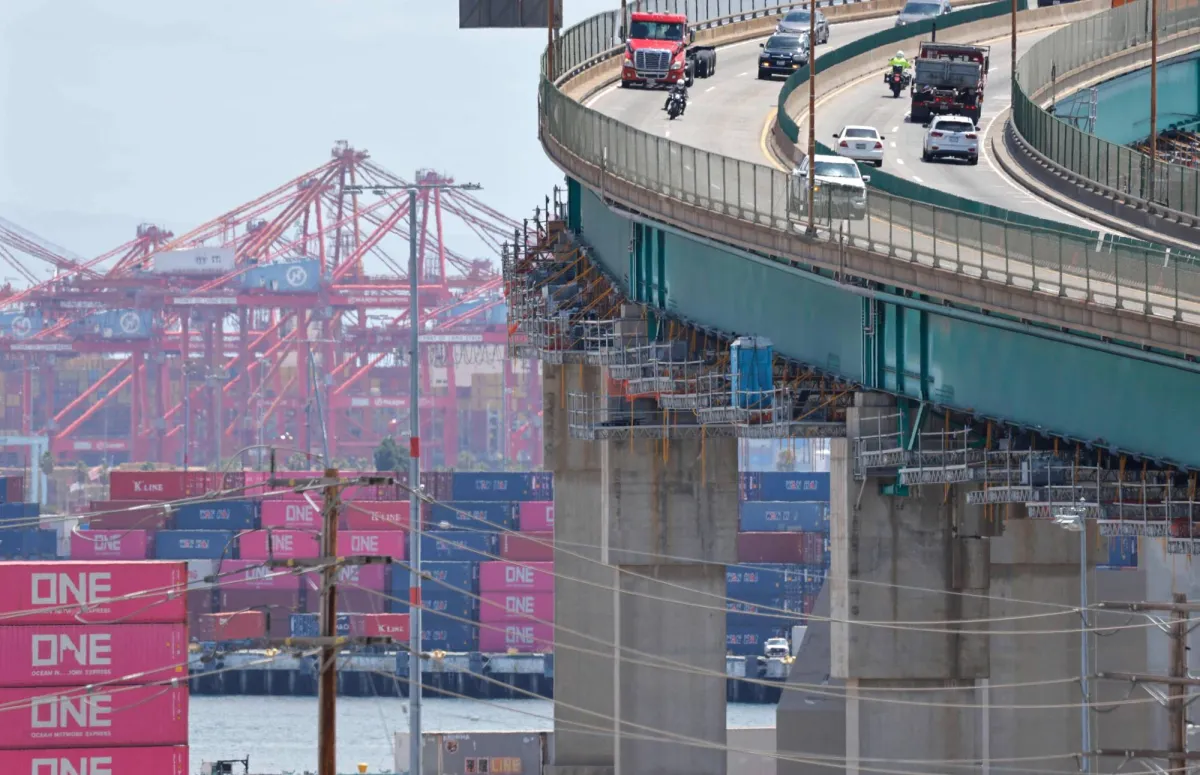
The Trump administration has opened a new front in global trade disputes by proposing additional tariffs ranging from 10 to 12.5 percent on imports from 60 economies worldwide. This move comes amid accusations from Washington that its trading partners have not taken adequate measures to prevent products made with forced labor from entering global markets.
The U.S. action, announced through the Office of the U.S. Trade Representative, is not merely a new trade measure but aims to rebuild part of the extensive tariff system that the Trump administration previously launched before it was overturned by the U.S. Supreme Court last February. Washington justifies this decision as a means to protect American workers and combat unfair trade practices; however, the proposals have sparked a wave of international criticism.
Details of the Proposal
U.S. Trade Representative Jamison Greer stated that the failure of the United States' main trading partners to curb the import of goods linked to forced labor is unacceptable, adding that this reality forces American workers to compete in an uneven environment. Under the new proposals, imports from the European Union, the UK, Canada, Mexico, Taiwan, Indonesia, Malaysia, and Pakistan will be subject to an additional 10 percent tariff, while China, India, Japan, South Korea, Australia, New Zealand, and 45 other countries will face higher tariffs of up to 12.5 percent.
Although the measures have not yet taken effect, as the Office of the U.S. Trade Representative has opened a public comment period until July 6, with a hearing scheduled for July 7, the announcement alone has been sufficient to provoke strong reactions from the U.S.'s key trading partners.
Background & Context
The European Union has been at the forefront of objections to the decision, with the European Commission asserting that the proposed tariffs are unjustified, emphasizing its commitment to implementing the trade agreement made with Washington last year. Bernd Lange, Chairman of the Trade Committee in the European Parliament, described the U.S. justifications as completely ridiculous, noting that the EU has already enacted a law in 2024 prohibiting the import of products linked to forced labor.
In contrast, China's responses have been more severe, with the Chinese Foreign Ministry stating that there is no such thing as forced labor in China, accusing Washington of using the issue as a pretext for political manipulation. Chinese Foreign Ministry spokesperson Mao Ning confirmed that Beijing opposes all forms of unilateral tariffs, warning that China will take necessary measures to defend its trade interests.
Impact & Consequences
This confrontation comes at a time when economic relations between the world's two largest economies are experiencing a cautious de-escalation following the summit between Presidents Trump and Xi Jinping in Beijing last month, which resulted in trade understandings including mutual reductions of certain tariffs. However, the new U.S. decision threatens to reintroduce tension into the trade relationship between the two countries.
In India, which has also been placed on the list of countries subject to higher tariffs, the response has been more subdued. The Indian Ministry of Commerce confirmed that the proposed tariffs are not final and that New Delhi continues to negotiate with the United States. Indian officials believe that the issue extends beyond the forced labor file itself and is part of the U.S. pressure tools used during trade negotiations.
Regional Significance
The Arab region is indirectly affected by these developments, as any escalation in trade disputes between the United States and its partners could impact oil and commodity markets that many Arab countries rely on. Additionally, trade tensions could lead to rising prices and a decline in investments in the region.
In conclusion, the proposed U.S. tariffs appear to be more than just a limited trade measure; they represent a new test for economic relations between Washington and its key partners, and they could evolve into one of the most significant points of tension in the global economy over the coming months.