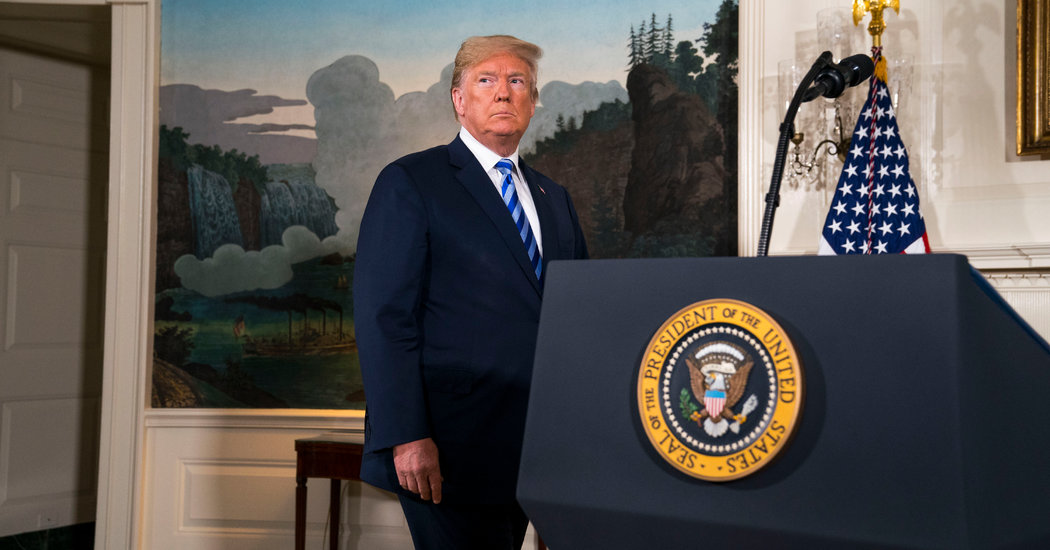
U.S. President Donald Trump has shown optimism regarding the possibility of reaching an agreement with Iran by tomorrow. This statement was made during a press conference where Trump emphasized that there is a good chance for understanding with Tehran, while simultaneously warning of dire consequences that could arise from the ongoing negotiations' failure.
Trump did not hide his concern about the current situation, indicating that the United States might resort to military strikes against Iranian facilities if an agreement is not reached. He also stressed the importance of controlling Iranian oil resources in the event of negotiation failure, reflecting the escalating tensions between Washington and Tehran.
Details of the Event
Trump's remarks come at a sensitive time as the U.S. administration seeks to revive the nuclear deal with Iran, which was abandoned in 2018. Current negotiations focus on several key points, including Iran's nuclear program, its support for militias in the region, and ballistic missile programs.
It appears that Trump is betting on both diplomatic and military pressure simultaneously, stating that military options remain on the table. These comments come amid increasing regional tensions, particularly following attacks targeting oil facilities in Saudi Arabia.
Background & Context
Historically, relations between the United States and Iran have been tense since the 1979 Islamic Revolution. These relations have experienced numerous fluctuations, with attempts at rapprochement often thwarted by recurring crises. The nuclear deal reached in 2015 represented a glimmer of hope for improving relations, but it quickly collapsed after the U.S. withdrawal.
Now, the U.S. administration aims to rebuild trust with Iran, but doubts remain. Trump's recent statements reflect the dual U.S. strategy that combines diplomacy with military threats.
Impact & Consequences
If an agreement is reached, it could lead to a reduction in regional tensions, positively impacting global oil markets. Conversely, if negotiations fail, military escalation could have serious repercussions, not only for Iran but for the entire region.
Increasing tensions may also affect relations between the United States and its allies in the region, who could find themselves in a difficult position if Washington decides to take military action against Iran.
Regional Significance
Neighboring Arab countries, such as Saudi Arabia and the United Arab Emirates, are among the most affected by the tensions between Washington and Tehran. Any escalation could lead to heightened tensions in the Gulf, potentially impacting the overall stability of the region.
The economic impact will also be significant, as oil prices could be greatly affected by any potential military escalation. Arab countries that rely on oil as a primary source of revenue will face substantial challenges in the event of any escalation.
In conclusion, the question remains whether negotiations will succeed in achieving peace or if military escalation will be the available option. The coming days will be crucial in determining the course of relations between the United States and Iran.