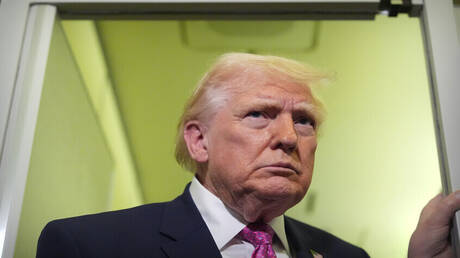
U.S. President Donald Trump praised the bombing of a major bridge linking the Iranian capital Tehran to the city of Karaj on Thursday, expressing his support for this military action and reiterating his call for Tehran to reach an agreement before it's too late.
Trump's statements come amid increasing tensions in U.S.-Iran relations, as the White House seeks to pressure Tehran to curb its nuclear activities and regional interventions.
Details of the Event
In his remarks, Trump emphasized that the bombing targeting the bridge represents an important step in U.S. efforts to confront Iranian threats. He noted that this attack is part of a response to the threats posed by Iran to regional and international security.
Trump also urged Iran to take serious steps towards reaching a comprehensive agreement, warning that the opportunity may run out if Tehran continues to ignore international demands.
Background & Context
The roots of tensions between the United States and Iran date back several years, with relations escalating after Washington's withdrawal from the Iranian nuclear deal in 2018. Since then, the United States has imposed strict economic sanctions on Tehran, leading to a deterioration of the Iranian economic situation.
In recent years, Iranian military activities in the region have increased, including support for militias in Iraq and Syria, raising concerns among neighboring countries and the United States alike.
Impact & Consequences
Trump's statements and the bombing of the bridge raise significant concerns in the region, as they could lead to greater military escalation between the United States and Iran. These events may also affect the stability of the entire region, especially with the presence of other regional powers like Russia and China that might exploit the situation to their advantage.
Any military escalation could have negative economic repercussions on neighboring countries, in addition to its impact on oil prices and global markets.
Regional Significance
Arab countries neighboring Iran, such as Iraq and Syria, find themselves in a very sensitive position. Any military escalation could lead to an influx of refugees and increased sectarian tensions in these countries.
Additionally, Gulf countries, which are concerned about Iranian activities, may find themselves compelled to adopt a more hardline stance towards Tehran, further complicating the security landscape in the region.
In conclusion, U.S.-Iran relations remain in a state of uncertainty, with increasing pressure on Tehran to reach an agreement that ensures regional stability and curtails Iranian military activities.