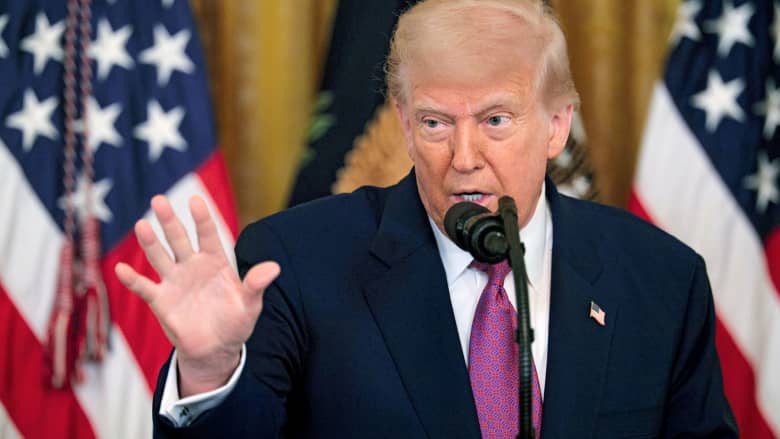
Former U.S. President Donald Trump has proposed extending the sanctions imposed on Iran, indicating that this measure is essential to prevent Tehran from advancing its nuclear program. These statements come at a time when relations between the United States and Iran are increasingly strained, with Tehran warning that it may reconsider its military options if Western pressures persist.
In related remarks, Iranian officials have confirmed that they would not hesitate to return to conflict if the United States and its allies continue to impose sanctions. Senior Iranian officials have stated that the country is prepared to confront any potential threats.
Details of the Proposal
Trump, who withdrew from the Iranian nuclear agreement in 2018, expressed concern that Iran might exploit any easing of sanctions to accelerate its nuclear program. He emphasized that extending the sanctions would ensure that Iran cannot develop nuclear weapons that threaten regional and international security.
In response, Tehran reacted sharply to these statements, with the Iranian Foreign Minister asserting that such policies reflect Washington's misunderstanding of the realities in the region. He affirmed that Iran would not stand idly by in the face of any threats and would take all necessary measures to protect its sovereignty.
Background & Context
Historically, U.S.-Iranian relations have seen increasing tensions since the Islamic Revolution in 1979. Economic sanctions have led to a deterioration of the economic situation in Iran, intensifying public discontent. In recent years, the region has witnessed a rise in armed conflicts, heightening fears of a comprehensive war.
It is noteworthy that Iran signed a nuclear agreement with major powers in 2015, but Trump's withdrawal from the agreement brought matters back to square one. Since then, Iran has taken gradual steps to increase its nuclear activities, raising concerns within the international community.
Impact & Consequences
If the sanctions are extended, it could exacerbate the economic conditions in Iran, potentially leading to further public protests. Additionally, any potential military escalation could destabilize the region, where Iran holds significant influence over several neighboring countries.
On the other hand, these policies may affect U.S. relations with its allies in the region, who may feel apprehensive about the rising tensions. Furthermore, any military escalation could have unforeseen consequences on global markets, especially in the oil sector.
Regional Significance
Arab countries neighboring Iran are on high alert, as any military escalation could directly impact their security and stability. Many of these nations rely on regional stability to safeguard their economic and political interests.
At the same time, some regional powers may exploit the situation to enhance their influence in the area, complicating the political landscape. It is crucial for Arab nations to remain united in facing any potential threats and to work on strengthening security cooperation among themselves.
In conclusion, the situation in Iran remains a focal point for the world, as any new developments could affect regional and international security. It is essential that these issues are approached with caution, and that the involved parties seek peaceful solutions to avoid military escalation.