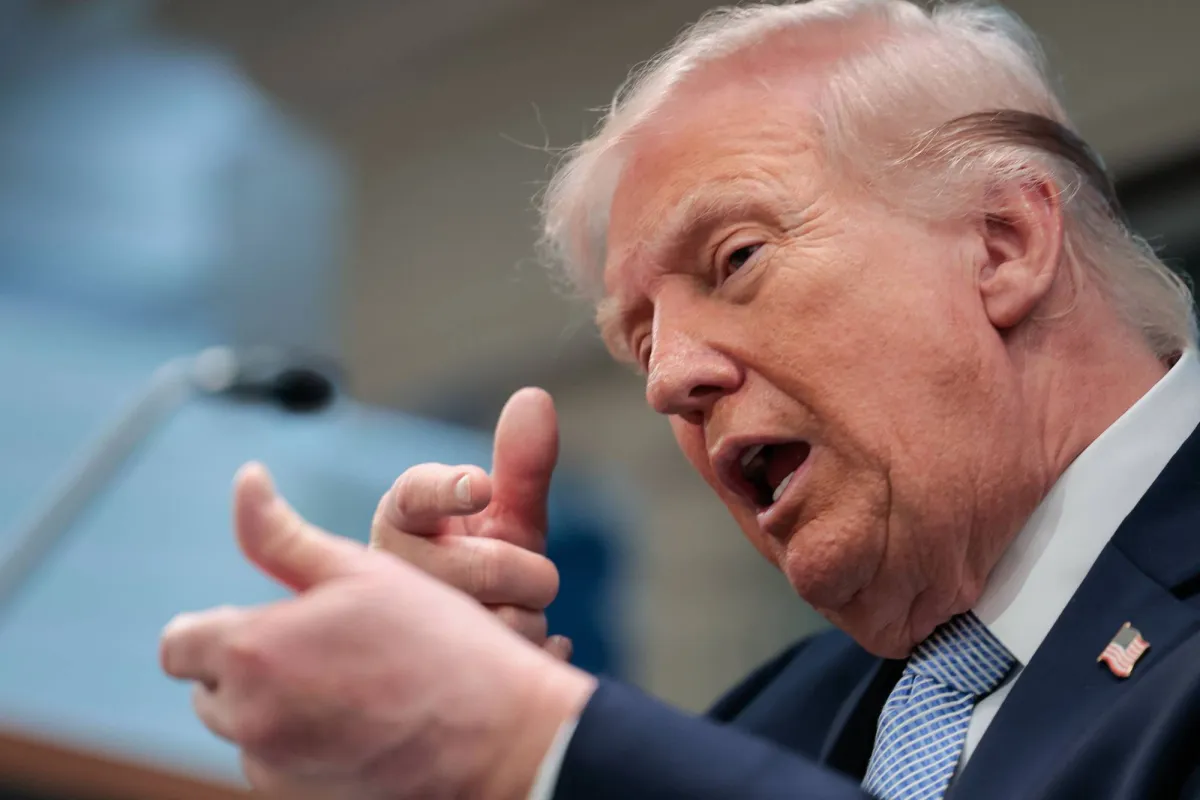
US President Donald Trump has unveiled his idea of controlling the Iranian oil sector, arguing that it could provide the United States with significant economic and political leverage, and serve as a pressure point against China, according to Bloomberg.
Trump noted that he has discussed this idea multiple times, asserting that it could yield substantial profits for the United States. However, he admitted that American public opinion favors reducing foreign interventions and focusing on domestic issues. He stated to reporters, "If it were up to me, I would seize the oil; it's there and can be taken. But the American people want us to come home."
Details of the Proposal
This proposal reflects Trump's belief that controlling energy flows grants global negotiating power, drawing on past experiences such as pressuring Venezuela. Close associates believe that incorporating Iranian oil into US influence could strengthen Washington's position against Chinese President Xi Jinping, especially given Beijing's heavy reliance on energy imports.
However, long-term control over the Iranian energy sector faces enormous challenges, including financial and human investments, as well as international legal risks. Polls indicate that a majority of Americans lean towards quickly ending conflicts, particularly with rising fuel prices.
Background & Context
China's assessment of the situation differs, as it has worked over the past years to enhance its energy security through strategic reserves, increasing domestic production, and investing in renewable energy. The Chinese Foreign Ministry has reiterated its rejection of any use of force on other countries' resources, emphasizing Iran's right to manage its oil.
Trump's statements come ahead of an anticipated visit to Beijing, which is expected to test the relationship between the world's two largest economies amid escalating trade tensions. Trump has often expressed regret over not exploiting Iraqi oil after the 2003 invasion, considering it a missed opportunity to offset war costs.
Impact & Consequences
Experts believe that the idea of controlling Iranian oil is more about political pressure and rearranging the balance of power rather than direct economic gains. Any actual step would be fraught with risks of escalation in a region considered one of the most sensitive hotspots in the world.
The White House firmly denied on Tuesday any intention to use nuclear weapons in Iran, in a message posted on its account on the platform X. This came in response to a post linked to former Vice President Kamala Harris, which referenced statements made by the US Vice President.
Regional Significance
Concerns are rising over escalating tensions in the region, as any US actions regarding Iranian oil could impact the stability of global energy markets. Additionally, any escalation could provoke reactions from Iran, complicating the security situation in the Middle East.
In conclusion, it remains to be seen how events will unfold in light of these statements and whether they will lead to tangible changes in US policy towards Iran.