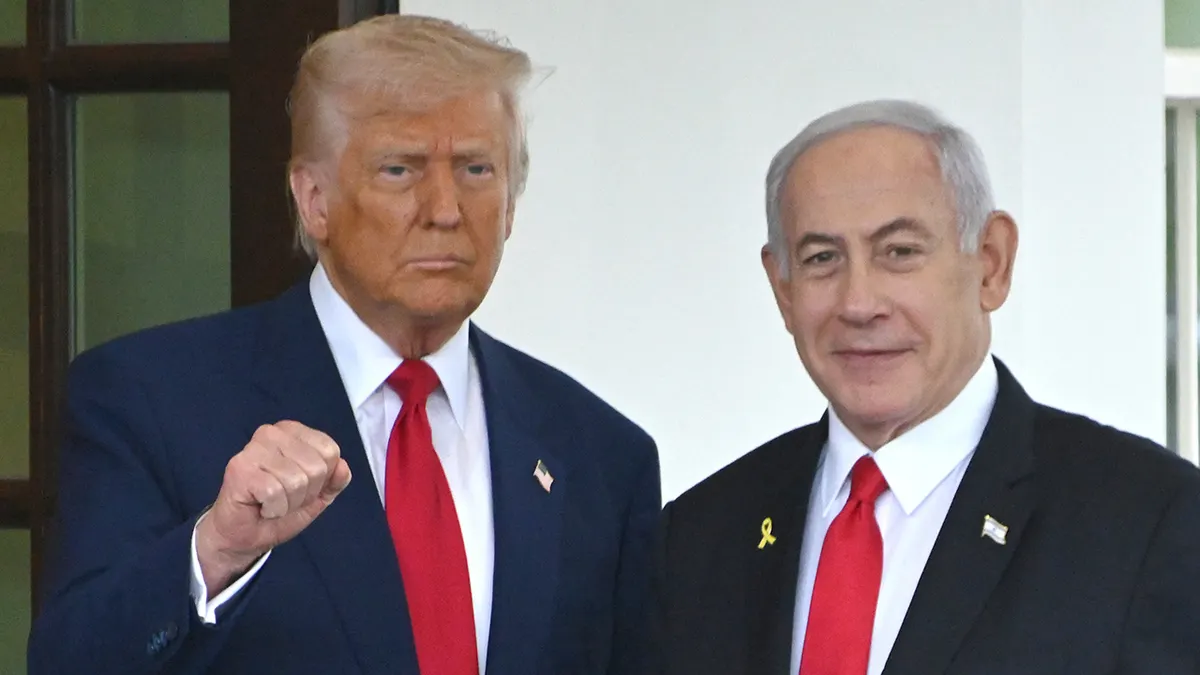
In an opinion piece for The Independent, writer Robert Fox reveals that the public disagreement between President Donald Trump and Israeli Prime Minister Benjamin Netanyahu regarding the management of the war on Iran reflects a delayed American realization that the conflict exceeds its declared objectives. He points out that Israel is pushing for a greater escalation.
This tension was evident when Trump expressed his anger at Netanyahu's calls to incite Iranians to a public uprising following the assassination of prominent figures, as Trump refused to push people into the streets to face killings. This disagreement reflects the gap between what Washington seems to want to achieve from the war and what the Israeli government is pursuing.
Details of the Conflict
The United States speaks of destroying Iranian missile and nuclear capabilities and reducing Tehran's regional influence, while regime change remains a latent goal at the core of the Israeli vision. In this context, Trump has not departed from the logic of escalation, but he has begun to collide with its consequences. The closure of the Strait of Hormuz and the strangulation of oil and gas exports from the Gulf have dispelled the American illusion that what is happening is merely a short "adventure."
Netanyahu, fearing that Trump might move towards a deal that quickly halts the fighting, has asked his military leaders to launch a "comprehensive attack" on major targets inside Iran within 48 hours, reflecting an Israeli insistence on expanding the war before the political door closes. Fox states: "Every new military step imposes another step and delays exiting the war."
Background & Context
Instead of leading to a quick exit, the war has prompted Washington—according to leaks from the Pentagon—to send more troops to the Gulf, including Marines and paratroopers, while scenarios for controlling strategic sites and facilities are being circulated. Fox evokes extended American and British wars, from Iraq to Afghanistan, to indicate that limited operations do not accidentally turn into open commitments; rather, they do so when managed without a clear operational end and no viable exit strategy.
In the Iran war, controlling escalation has become another name for expanding it. Therefore, what concerns Trump now is not just the widening of the war but discovering that Israel is waging it with a broader and longer-term mindset than what was initially presented to him.
Impact & Consequences
Fox warns that the greatest danger lies in what he calls the old military adage, which speaks of reinforcing failure rather than retreating from it. When additional forces are sent, new targets are opened, and a clear plan is replaced with improvised exits, the war does not come closer to its end but rather intensifies.
This situation reflects significant challenges for American foreign policy, as Washington must deal with the repercussions of escalating the conflict in the Middle East, which may affect the stability of the entire region.
Regional Significance
Concerns are growing that the escalation of the conflict between the United States and Iran may have negative effects on neighboring Arab countries, as these nations may face increased political and economic pressures. Additionally, military escalation could open the door to rising sectarian tensions and internal conflicts in some Arab countries.
In conclusion, this conflict between Trump and Netanyahu over the management of the war on Iran signals the complexities of international politics in the region and reflects the challenges the United States faces in achieving its strategic objectives.