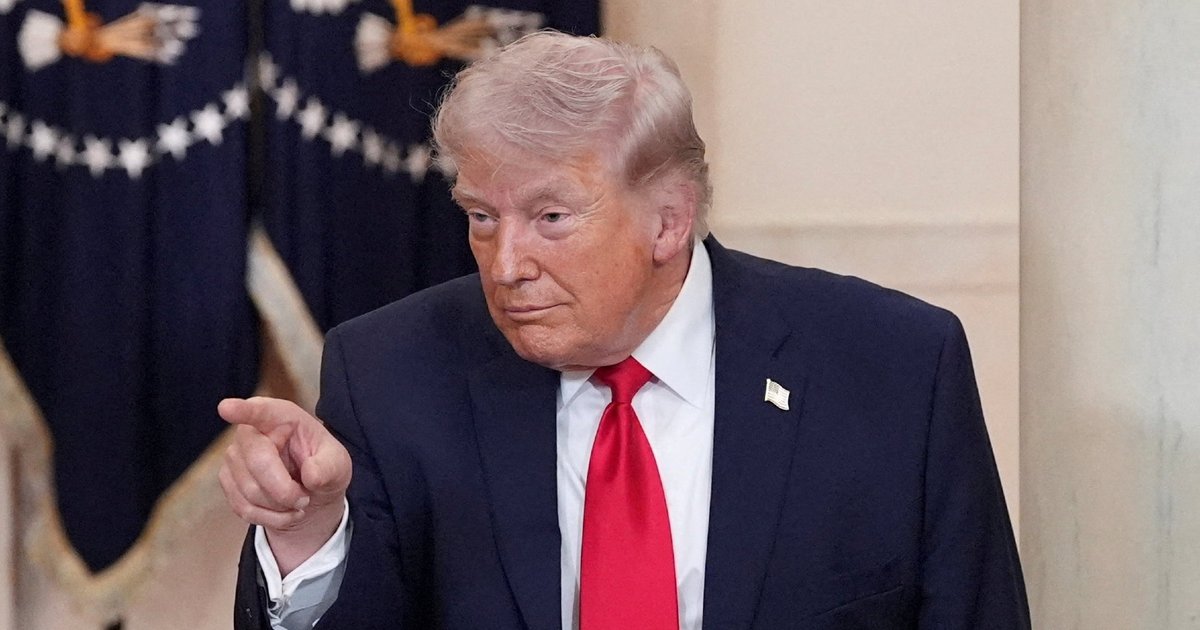
In an unconventional event, President Donald Trump delivered a speech during the Easter lunch held at the White House, addressing a select group of Christian leaders. The event, originally intended to be closed to the media, was streamed live online before being subsequently removed from the White House's YouTube page. In his speech, which lasted over 40 minutes, Trump showcased an unusual side of his personality, engaging directly with the attendees.
Trump began his speech by referencing Erika Kirk, the widow of conservative commentator Charlie Kirk, urging her to 'sue the hell out of' those spreading rumors about her husband's death. He also referred to himself by the title 'king', stating, 'They say I’m a king. Can you believe that?' in reference to protests organized by Democrats under the slogan 'no kings.'
Details of the Event
Trump spoke about the importance of religion in nation-building, emphasizing that 'to be a great nation, you must have religion.' He also touched on issues related to the war with Iran, noting that there are 'more wars due to religion' compared to trade. This statement sparked widespread controversy given the current tensions between the United States and Iran.
Additionally, Trump addressed foreign policy issues, indicating that his allies in NATO are not providing adequate support for his efforts to open the Strait of Hormuz to ships associated with the United States and Israel. He commented on France's stance, stating that he had requested assistance from President Emmanuel Macron, but the latter declined.
Background & Context
This speech comes at a sensitive time for Trump, as he faces numerous legal and political challenges. The relationship between Trump and the evangelical church has sparked much debate, especially as he heavily relies on their support in his election campaigns. Many evangelical leaders view Trump as a pivotal figure in supporting issues that matter to them, despite his lack of overt religious piety in his public life.
Historically, Trump has always sought to enhance his image as a defender of Christian values, although some critics point to contradictions in his personal behavior. The intersection of politics and religion in the United States remains a contentious topic, particularly amid current political divisions.
Impact & Consequences
Trump's remarks may affect American relations with Islamic countries, especially given the escalating tensions with Iran. His use of religious language in the speech could bolster support from the evangelical voter base, but at the same time, it may alienate other segments of American society.
Trump's comments about a 'religious war' could escalate tensions in the region, as many Arab countries closely monitor developments in U.S. policy toward Iran. The speech reflects the challenges the United States faces in maintaining a balance in its relationships with traditional allies in the Middle East.
Regional Significance
For the Arab world, Trump's statements could reflect future U.S. policy directions in the region. The war against Iran could exacerbate conditions in the Middle East, impacting security and stability in Arab countries. The speech also highlights the challenges Arab nations face in navigating U.S. policies that may contradict their interests.
In conclusion, Trump's speech during the Easter lunch exemplifies how religion and politics intertwine in the United States and how these dynamics can influence international relations, particularly in the Middle East.