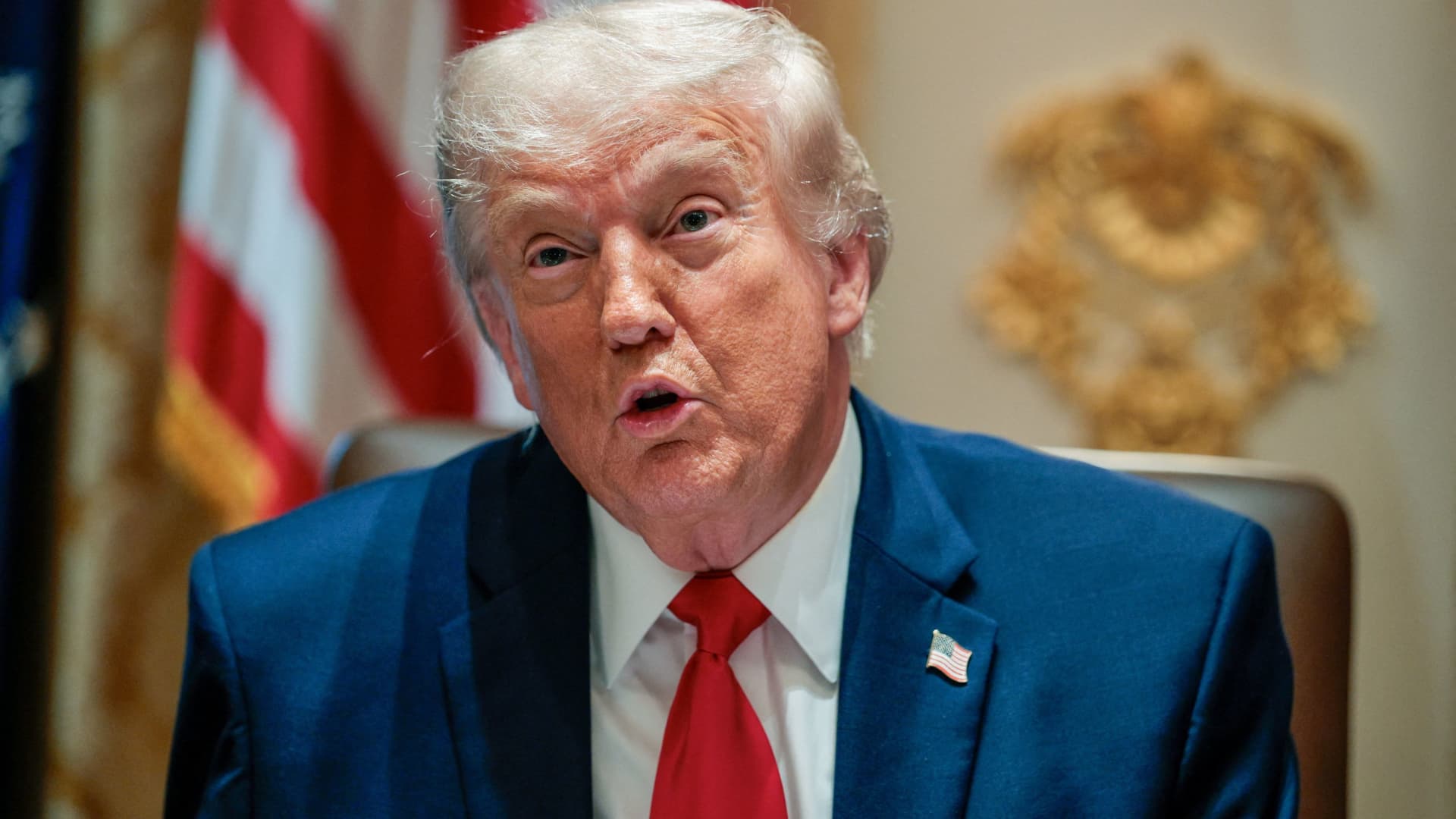
During a cabinet meeting, U.S. President Donald Trump rejected the notion of Iran transferring enriched uranium to Russia or China as part of any agreement aimed at ending the ongoing dispute between the United States and Iran. Trump stated that he "would not feel comfortable" with such an arrangement, reflecting his firm stance on the Iranian nuclear program.
Trump's remarks came at a time when both the U.S. and Iranian sides have been signaling the possibility of reaching a short-term agreement to end the three-month-long conflict in the Middle East. Oil prices have surged significantly due to the impact of the dispute on global energy supplies, but they have seen a decline following Secretary of State Marco Rubio's emphasis on giving diplomacy "every chance to succeed."
Details of the Event
In his remarks, Trump pointed out that the United States is not discussing any easing of sanctions imposed on Iran or providing any funds as part of any agreement. He stated, "No sanctions, no money, nothing," emphasizing that the U.S. retains control over the funds that Iran claims belong to it. He clarified that these funds would only be released when Iran acts appropriately.
Trump also added that he would not accept any short-term agreement that grants Iran control over the Strait of Hormuz, which is one of the most crucial maritime passages for oil trade. He asserted that "the strait will be open to everyone," reflecting his firm position against any attempts to control this strategic area.
Background & Context
The roots of the dispute between the United States and Iran date back several years, with tensions escalating after the U.S. withdrawal from the Iranian nuclear deal in 2018. Since then, the United States has imposed strict sanctions on Iran, leading to a deterioration of the Iranian economy and increased tensions in the region.
In recent years, there have been multiple attempts to reach a new agreement, but these efforts have not achieved the desired success. However, recent statements from both sides indicate that there may be an opportunity for negotiations, although doubts remain regarding the intentions of both Iran and the United States.
Impact & Consequences
Trump's statements serve as a clear warning to Iran and to international partners who may consider cooperating with Tehran on enriched uranium. His firm stance could affect any future talks and complicate diplomatic efforts aimed at resolving the dispute.
Moreover, the continuation of the conflict in the region could impact global oil prices, reflecting on the world economy. If tensions persist, we may witness further price increases, affecting oil-consuming countries.
Regional Significance
The Middle East, particularly Arab countries, is among the most affected regions by the tensions between the United States and Iran. Any escalation in the conflict could lead to serious repercussions for security and stability in the region, threatening Arab interests.
Control over the Strait of Hormuz is a sensitive issue for oil-producing Arab countries, as any attempt to dominate this passage could affect oil exports and heighten regional tensions.
In conclusion, Trump's statements reflect a strict policy towards Iran, complicating negotiation efforts. Under these circumstances, the future remains uncertain and requires close monitoring by the international community.