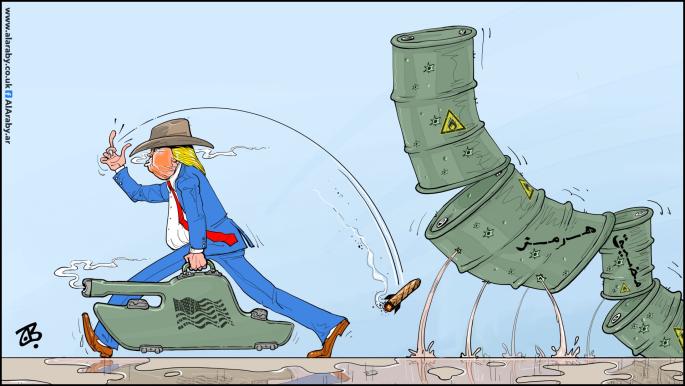
President Donald Trump's approach is redefining the concept of the international system, shifting from mutual interests to coercive deals enforced by power. This transformation raises questions about the future of international relations and its impact on global stability.
Trump's policies are evident in many decisions he has made since taking office, including the United States' withdrawal from international agreements such as the Paris Climate Agreement and the Iranian nuclear deal. These steps reflect a trend towards a foreign policy based on power and pressure, threatening the stability that was previously based on cooperation and understanding among nations.
Details of the Events
The Trump administration seeks to achieve quick gains by imposing sanctions and restrictions on countries it considers adversaries, such as Iran and North Korea. This policy undermines the ability of nations to negotiate and exacerbates crises rather than resolving them. Trump has also employed threats and coercion in many situations, increasing international tensions.
For instance, in the trade dispute with China, Trump used tariffs as a means to pressure Beijing, escalating the trade conflict between the world's two largest economies. These policies raise concerns among U.S. allies, who feel they may become victims of this strategy.
Background & Context
Historically, international relations relied on the principle of balance among major powers, where nations sought to achieve their interests through dialogue and negotiation. However, Trump's rise to power has brought radical changes to this context, as he began to undermine the foundations on which traditional international relations were built.
It is worth noting that Trump is not the first U.S. president to adopt an aggressive foreign policy, but his unique style of dealing with both adversaries and allies distinguishes his administration from its predecessors. This approach could lead to a fundamental reshaping of the international system, raising fears of new conflicts.
Impact & Consequences
The repercussions of Trump's policies extend beyond American borders, affecting regional and international stability. As tensions rise, countries may seek to enhance their military capabilities, increasing the likelihood of conflict. Furthermore, these policies may lead to a decline in international cooperation in areas such as climate change and public health, where nations need to work together to address global challenges.
Moreover, Trump's policies could bolster nationalist tendencies in many countries, threatening the international system based on cooperation. This trend could negatively impact international security and peace, as nations become more closed off and isolated.
Regional Significance
For the Arab region, Trump's policies could exacerbate existing crises, such as the Israeli-Palestinian conflict, where peace prospects have diminished following the U.S. embassy's relocation to Jerusalem. Additionally, pressures on Iran could escalate tensions in the Gulf, affecting regional security.
At the same time, some Arab countries may benefit from these policies as they seek to strengthen their relations with the United States in the face of regional threats. However, this cooperation may come at the expense of humanitarian issues and human rights, complicating the regional landscape.
In conclusion, Trump's approach to foreign policy appears to be reshaping the international system in ways that extend beyond U.S. borders, raising questions about the future of international relations and its impact on global stability.