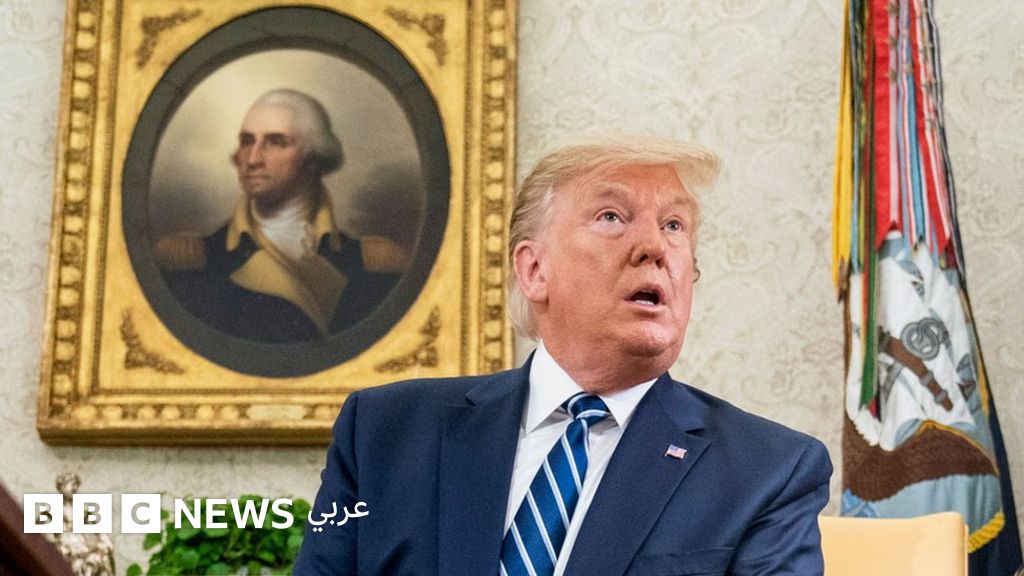
Reports indicate that U.S. President Donald Trump has decided to backtrack on some escalatory measures after receiving threats from Iran about targeting energy facilities in West Asia. The Iranian news agency Fars reported that its sources confirmed no direct communications have occurred between the United States and Iran, either directly or through intermediaries.
Statements from the Iranian news agency Tasnim suggested that the Strait of Hormuz will not return to the state it was in before the outbreak of conflict, as long as the "psychological war" continues, clarifying that Iran will continue to defend its territory and respond to the threats it faces.
Details of the Incident
The threats issued by Iran come amid increasing tensions between Tehran and Washington, characterized by strong statements from both sides over the past months. Despite the absence of direct communications, the exchanged statements, particularly those from Trump, may indicate the sensitivity of the situation and the importance of securing vital energy infrastructures in the region.
The Iranian response came at a highly sensitive time, as many countries in the region are suffering from political and economic turmoil, making any threats related to energy facilities a matter of global concern. Reports published by news agencies from Tehran provided a glimpse into the Iranian position, which does not appear to be moving towards de-escalation.
Background & Context
Relations between Iran and the United States have been severely strained since Washington's withdrawal from the nuclear agreement in 2018. These decisions led to the re-imposition of economic sanctions on the Islamic Republic, further escalating tensions in the Gulf region. Energy facilities in this area are vital, playing an important role in supplying energy to the world.
U.S. sanctions have significantly impacted the Iranian economy, pushing the country back into military and strategic rhetoric as it seeks to assert its power and influence in the region. It is clear that this tension could lead to further provocations among the involved parties, especially concerning the Strait of Hormuz, which is considered a vital transit point for oil and natural gas.
Impact & Consequences
Although Trump seems to be avoiding direct escalation, the Iranian threats exert significant pressure on the U.S. administration and its alliances in the Middle East. Recent developments show that Iran is willing to take defensive risks in the face of military and economic pressures.
Analysis suggests that the resurgence of tensions indicates a lack of effective solutions to de-escalate the conflict, and points to the possibility that Iran may be moving towards enhancing its military capabilities and using them as leverage in international negotiations.
Regional Significance
The current crisis has serious implications for security and stability in the Arab region, with both Saudi Arabia and the UAE being neighboring countries to Iran. Any escalation in the conflict could have direct effects on oil markets and energy prices, threatening the fragile economies of some Arab nations.
Moreover, instability is clearly reflected in the humanitarian and social conditions within these countries, where many areas are already suffering from conflicts and wars. Communication and playing a mediating role may be essential to alleviate tensions, but it seems that all of this requires significant changes in the adopted policies.
As threats and concerns escalate, attention remains focused on possible solutions that could ease tensions between the United States and Iran, while simultaneously providing the necessary security for the region as a whole.