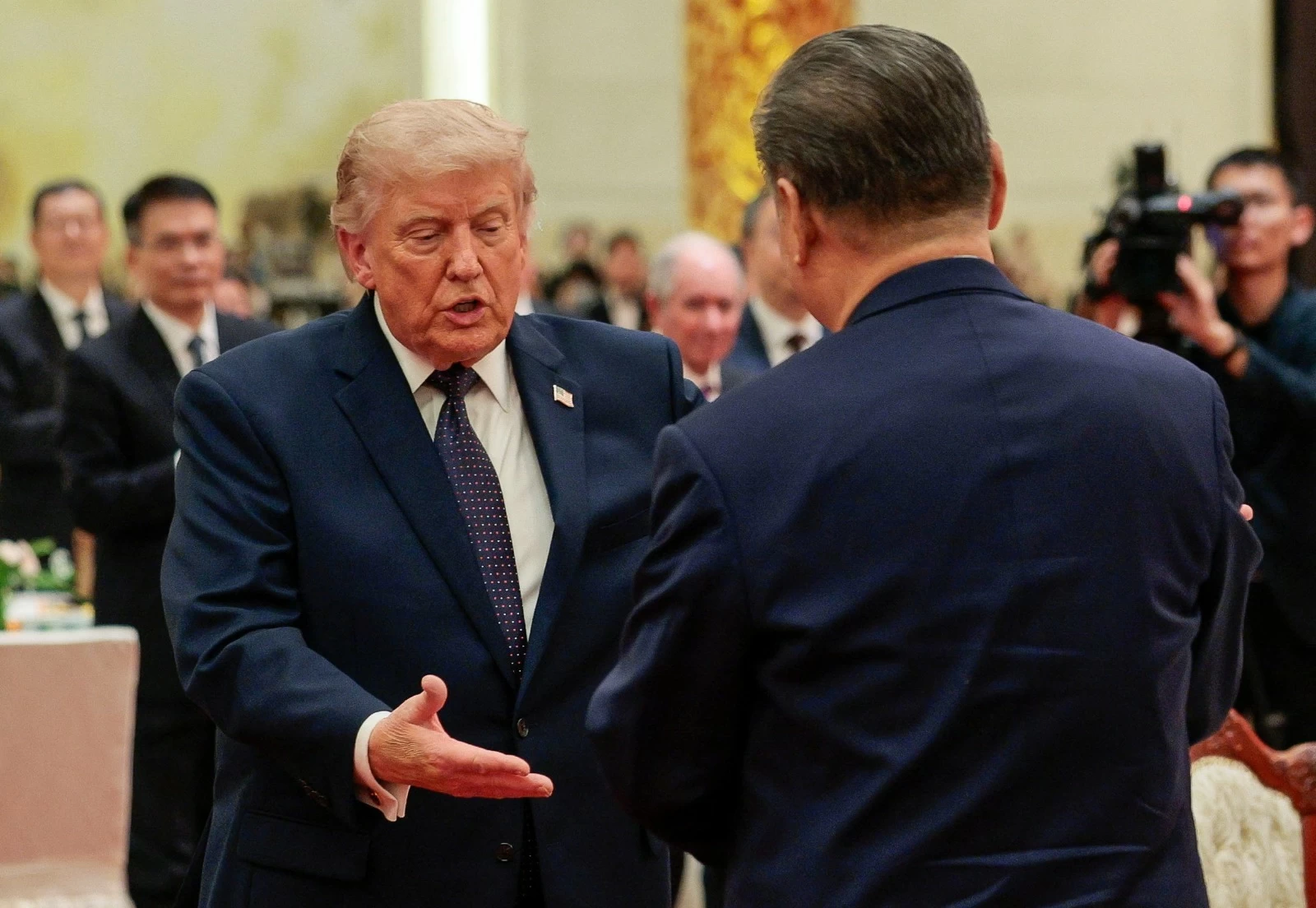
U.S. President Donald Trump confirmed today (Thursday) that Chinese President Xi Jinping has offered help in resolving the crisis at the Hormuz Strait, noting that China has a significant interest in keeping this vital waterway open.
In statements reported by Fox News, Trump explained that the Chinese president desires to see the Hormuz Strait open, reflecting the strait's importance to the global economy and international trade.
Details of the Event
In a related context, U.S. Secretary of State Marco Rubio clarified that Trump raised the issue of Iran during his meeting with Xi, but did not request any assistance from China. Rubio emphasized that the United States does not require China's support in this matter, indicating that the purpose of bringing up the issue was solely to clarify the U.S. position.
Rubio added: "We are not asking for China's help; we do not need their assistance," stressing that Washington's stance is clear: Iran must not possess nuclear weapons. He also noted that China reiterated its previous position against allowing Iran to acquire nuclear weapons, confirming that no nation wishes to see Iran with such arms.
Background & Context
The crisis at the Hormuz Strait is one of the sensitive issues in international relations, through which approximately 20% of the world's oil passes. The strait has witnessed increasing tensions in recent years, particularly with the escalation of tensions between the United States and Iran. In this context, Washington seeks to reaffirm its position against Iran's nuclear ambitions while China attempts to maintain its economic interests in the region.
It is noteworthy that China is one of the largest oil importers from the Gulf region, which gives it a significant interest in the stability of navigation in the Hormuz Strait. In this framework, Trump's remarks reflect the importance of international cooperation in addressing regional crises.
Impact & Consequences
The implications of these statements extend beyond U.S.-China relations, indicating the importance of international coordination in addressing security challenges in the Gulf region. They also reflect the increasing tensions among major powers regarding security and energy issues.
While the United States seeks to strengthen its position in the region, China is attempting to enhance its relationships with Gulf states, which could lead to changes in the power dynamics in the area. These developments may impact oil prices and global markets, making it a concern for all nations.
Regional Significance
The Gulf region is one of the most sensitive areas in the world, playing a pivotal role in the global economy. Any tension in the Hormuz Strait could significantly affect Arab countries, especially those reliant on oil exports.
Moreover, U.S. statements could escalate tensions between Iran and Arab nations, necessitating dialogue and regional cooperation to avoid any potential escalation. The stability of the region heavily depends on how major powers handle these issues.
In conclusion, amid increasing challenges, dialogue and cooperation among nations remain essential to ensure the stability of the Gulf region and protect shared interests.