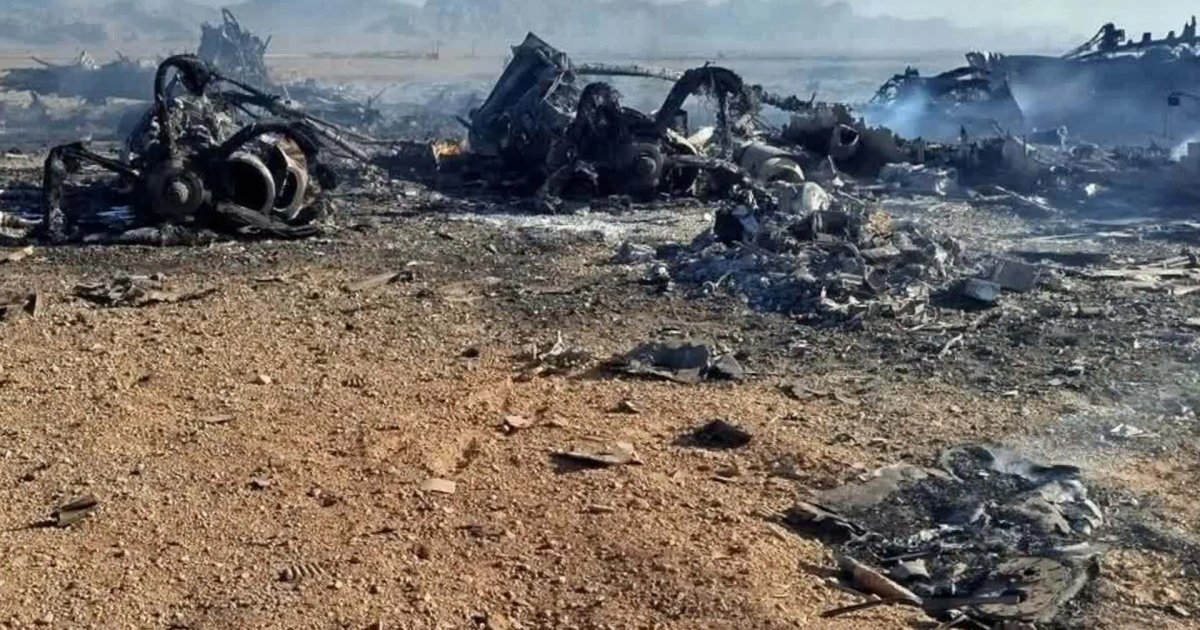
President Donald Trump revealed in a press conference held today, Monday, new details regarding the rescue operation of American pilots whose aircraft crashed in Iran days ago. Trump considered this operation to be one of the greatest and most complex combat missions in the history of the U.S. military.
He highlighted that the operation was characterized by bravery and remarkable strategic planning, which led to the safe return of the pilots to the United States, despite the significant dangers faced by American soldiers during the mission.
Details of the Operation
According to Trump, the pilots ejected from their F-15 aircraft before it fell deep into Iranian territory, prompting an immediate decision to send forces for their rescue. He confirmed that the decision was extremely difficult, as the U.S. military could have lost one hundred soldiers instead of just two, emphasizing that the military does not leave any American behind.
The initial operation involved deploying 21 aircraft into hostile airspace, where many faced direct gunfire, yet they successfully completed their missions thanks to advanced equipment and the exceptional skills of the crews. Trump stated that the first pilot was rescued by two AH-60 Jayhawk helicopters, while the second pilot, a colonel in weapon systems, sustained injuries while escaping from Iranian forces but managed to communicate with U.S. troops thanks to an emergency communication device.
Background & Context
This operation is part of the ongoing tensions between the United States and Iran, which have significantly escalated in recent years. Relations between the two countries were heavily impacted after the U.S. withdrew from the Iranian nuclear agreement in 2018, leading to the imposition of severe economic sanctions on Tehran.
The rescue operation comes at a sensitive time, as Iran seeks to enhance its military strength in the region, complicating relations with the United States and its allies. Recent events have shown that any military escalation could have dire consequences for regional and international security.
Impact & Consequences
The rescue operation highlights the U.S. military's capability to conduct complex missions in hostile environments, reinforcing the United States' position in facing security challenges. Additionally, the success of the operation may bolster the confidence of the U.S. administration in its ability to protect its citizens abroad, especially amid rising tensions with Iran.
However, this operation could also lead to an escalation of tensions between the United States and Iran, as Tehran confirmed that it targeted American aircraft involved in the search for the pilots and shot down some of them. This escalation could provoke reciprocal reactions, increasing the risk of military conflict.
Regional Significance
These events are of significant importance to the Arab region, as any escalation between the United States and Iran could affect the stability of Gulf Arab states. Moreover, U.S. military operations in the region may provoke reactions from Iran-backed armed groups, further complicating the security situation in Iraq, Syria, and Lebanon.
In conclusion, the rescue of American pilots in Iran stands out as an important event that reflects the ongoing tensions between the United States and Iran, underscoring the importance of military readiness and the ability to execute complex operations in challenging environments.