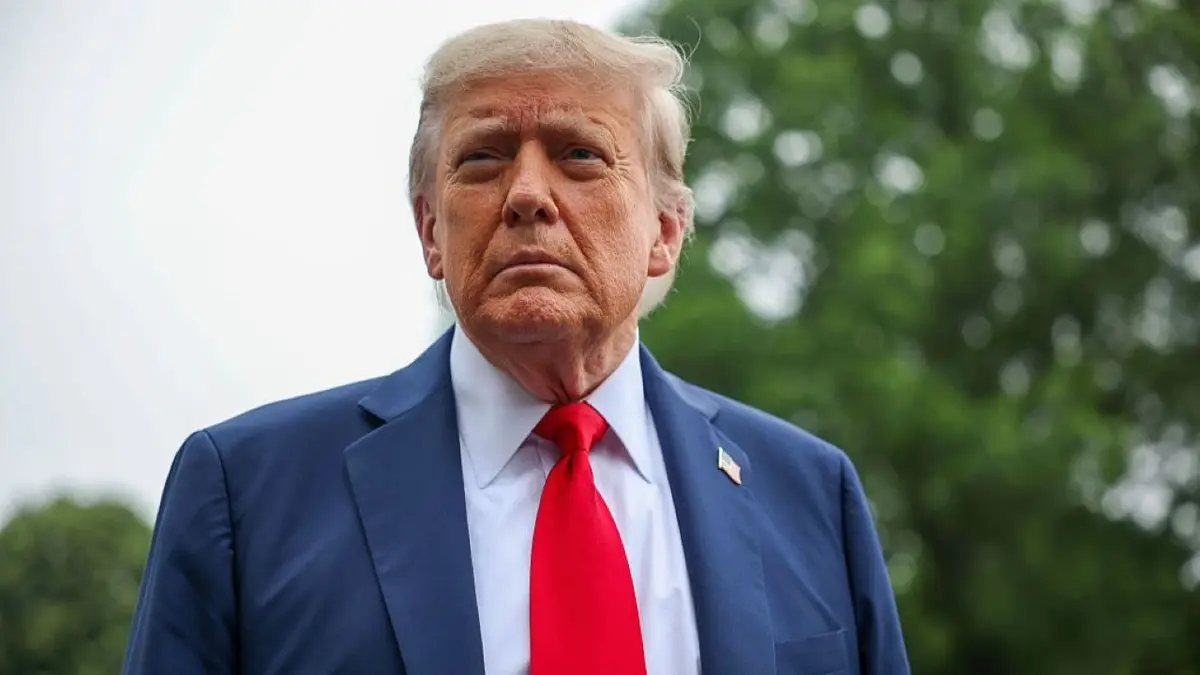
In a recent statement, U.S. President Donald Trump confirmed that Iran has made a request for a ceasefire; however, the United States stipulates the opening of the Hormuz Strait as a prerequisite for this agreement. These remarks come at a time when the Middle East is witnessing an escalation in military and political tensions, raising concerns about the stability of the region.
Trump, speaking at a press conference, clarified that the United States hopes for the opening of the Hormuz Strait, which is considered one of the most important maritime passages in the world, before any ceasefire agreement is reached. This stance aligns with U.S. policy aimed at exerting pressure on Iran to curb its military activities in the region.
Details of the Event
Trump's statements are part of a broader strategy adopted by the U.S. administration towards Iran, which includes the imposition of economic and military sanctions. Tensions between the United States and Iran have significantly increased since Washington's withdrawal from the Iranian nuclear deal in 2018, leading to an escalation of hostilities between the two parties.
At the same time, Iran's request for a ceasefire reflects its desire to alleviate the military and economic pressures it is facing. Tehran has expressed its willingness to engage in dialogue, but insists that this must occur within a framework that guarantees its national interests.
Context and Background
Historically, the Hormuz Strait has been the scene of numerous regional conflicts, through which approximately 20% of the world's oil passes. In recent years, the area has seen an escalation in military activities, including attacks on oil tankers, which have heightened tensions between Iran and Western countries.
Iran views its military presence in the region as part of its strategy to defend its interests, while the United States and its allies perceive these activities as a threat to regional and international security. Therefore, any ceasefire agreement must include guarantees for the opening of Hormuz, reflecting the significance of this vital passage in international politics.
Consequences and Impact
If a ceasefire agreement is reached, it could lead to a reduction in tensions in the region, positively impacting oil prices and global financial markets. However, the U.S. condition for the opening of Hormuz may pose an obstacle to any progress in negotiations, as Iran may reject this condition.
Furthermore, the continuation of tensions could escalate military conflict, affecting regional security and increasing the likelihood of new conflicts erupting. Thus, international observers are closely monitoring these developments, as any change in the situation could impact stability in the Middle East.
Impact on the Arab Region
Neighboring Arab countries, such as Saudi Arabia and the UAE, are among the most affected by the tensions in the Hormuz Strait. Any escalation in conflict could impact oil exports and increase energy prices, negatively affecting the economies of these countries.
Moreover, the stability of the region heavily relies on the balance between regional and international powers. Therefore, any efforts for a ceasefire must consider the interests of all parties involved, including the Arab states.
In conclusion, the situation in the Middle East remains complex, with political and economic interests intertwining. Trump's statements regarding Iran and Hormuz may open new avenues for dialogue, but they also reflect significant challenges to achieving peace and stability in the region.