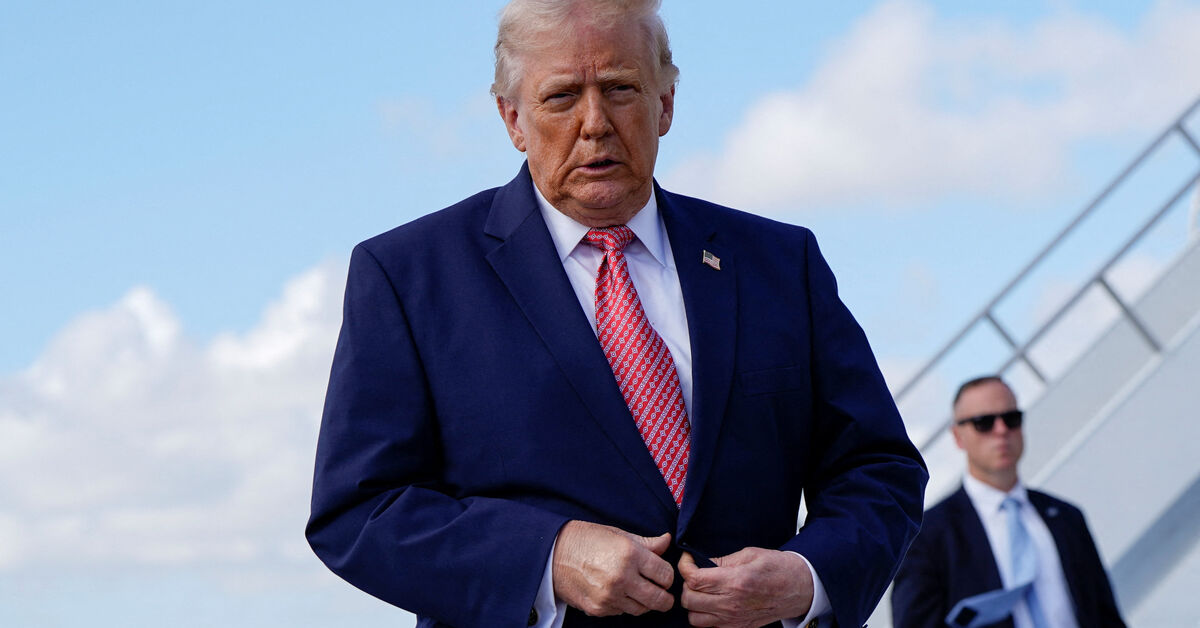
U.S. President Donald Trump revealed in a post on the 'Truth Social' platform that the new Iranian leader has requested a ceasefire from the United States. Trump clarified that this request will be considered when the Strait of Hormuz is 'open, free, and safe,' asserting that the United States will continue to 'destroy Iran' until that condition is met.
Trump's statements come at a sensitive time as tensions between the United States and Iran escalate, particularly following a series of military and economic events in the region in recent months. The Strait of Hormuz is one of the most important maritime passages in the world, through which approximately 20% of the world's total oil passes, making it a vital strategic point.
Details of the Event
In the context of the current escalation, Trump indicated that the United States would not hesitate to take strict actions against Iran, reflecting the current U.S. administration's policy towards Tehran. This statement followed a series of military skirmishes in the region, including attacks on oil tankers.
The Iranian request for a ceasefire is considered an unusual step, as relations between the two countries have significantly deteriorated since the United States withdrew from the Iranian nuclear deal in 2018. This request comes at a time when Iran is facing significant economic pressures due to U.S. sanctions.
Background & Context
Historically, U.S.-Iranian relations have experienced significant fluctuations since the Islamic Revolution in Iran in 1979. Since then, there have been several attempts at negotiation, but most have failed. In recent years, tensions have escalated due to Iran's nuclear program and Tehran's support for armed groups in the region, intensifying the conflict.
In recent years, there have been multiple international efforts to revive the nuclear deal, but these efforts have not yielded tangible results so far. As tensions rise, it has become clear that any future talks will need a new framework that includes broader issues beyond just the nuclear program.
Impact & Consequences
If Iran's request for a ceasefire is accepted, it could lead to a de-escalation of tensions in the region, potentially contributing to the stabilization of oil prices and enhancing maritime security in the Strait of Hormuz. However, there may also be concerns that Iran could exploit this calm to bolster its military capabilities or expand its influence in the region.
On the other hand, continued escalation could lead to heightened military conflicts, which could impact the global economy and increase instability in energy markets. Furthermore, any escalation could negatively affect U.S. relations with its allies in the region, who are concerned about Iran's actions.
Regional Significance
The Arab countries neighboring Iran, such as Saudi Arabia and the United Arab Emirates, are among the most affected by the tensions between the United States and Iran. Any escalation in the region could lead to increased sectarian tensions and exacerbate political divisions.
At the same time, some Arab countries may seek to exploit any opportunity for mediation between the two sides, which could contribute to greater stability in the region. However, the situation remains fragile, and future developments will depend on how both the United States and Iran respond to calls for de-escalation.