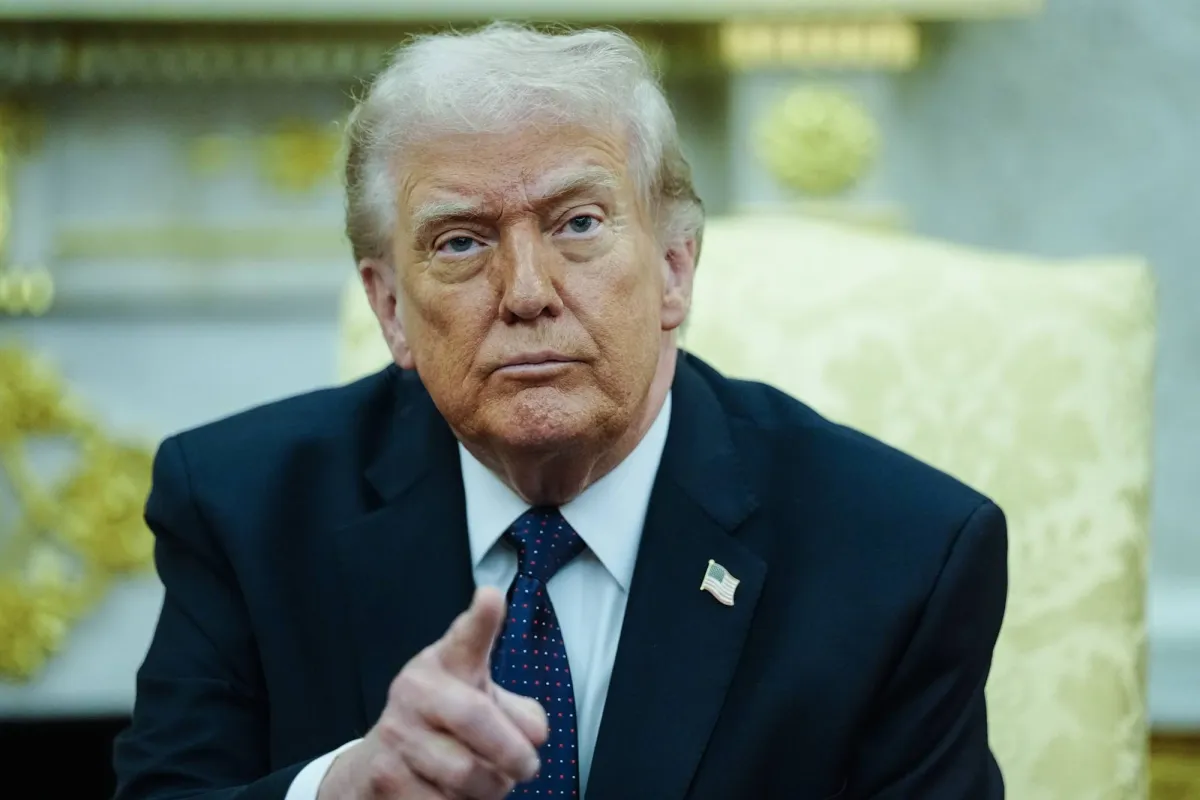
U.S. President Donald Trump announced on Wednesday that the new Iranian leader Mojtaba Khamenei has just requested the United States to cease fire in the ongoing war that has lasted for over a month. Trump indicated in a post on his platform 'Truth Social' that the U.S. would consider this request on the condition that the Strait of Hormuz is open and free of obstacles, adding, 'Until then, we will continue to bomb Iran until we destroy it.'
Trump described Khamenei as 'less extreme and more intelligent than his predecessors,' reflecting a potential shift in Iranian political dynamics. These statements come at a sensitive time, as the region is witnessing an escalation in military actions between the United States and Iran.
Details of the Event
In a related context, the Russian embassy in Tehran confirmed that airstrikes targeted a Russian Orthodox church in the Iranian capital, causing damage to the building without any injuries reported. The embassy stated via the 'X' platform that the strikes occurred on April 1, damaging the main building and a shelter for the poor.
Trump, facing increasing pressure to end the ongoing war with Iran, threatened to deploy ground forces to seize control of the oil infrastructure on the Iranian island of 'Kharg.' The island is considered the heart of Iran's oil sector, through which 90 percent of Iran's oil exports pass, making it a strategic target.
Background & Context
The island of 'Kharg' is a vital point in the Iranian economy, as the country heavily relies on its oil exports. Iranian attacks on U.S. bases and its allies in the region have escalated tensions, prompting Trump to consider military options that may include taking control of the island.
Analysts suggest that seizing 'Kharg' could lead to greater escalation in the conflict, as Iran and its proxies, including the Houthis, may intensify their retaliatory actions, potentially leading to new crises in the region.
Impact & Consequences
Any military escalation in the region could have serious repercussions on energy prices and the global economy. Researchers in commodities and investment banks warn that retaliatory responses could lead to a significant spike in oil prices, affecting the global economy.
Additionally, the deployment of U.S. forces on 'Kharg' could put them at risk due to its proximity to the Iranian mainland, making it an easy target for Iranian attacks. Analysts have pointed out that controlling the island will not be easy and could exacerbate the situation rather than improve it.
Regional Significance
Arab countries are directly affected by any escalation in the U.S.-Iran conflict, as this could increase tensions in the region. The closure of the Strait of Hormuz, through which 20 percent of the world's oil passes, could lead to significant economic crises for oil-importing countries.
In conclusion, the situation in the region appears to be heading towards further complexity, with ongoing tensions between Iran and the United States. Arab countries must closely monitor developments, as any escalation could impact the overall stability of the region.