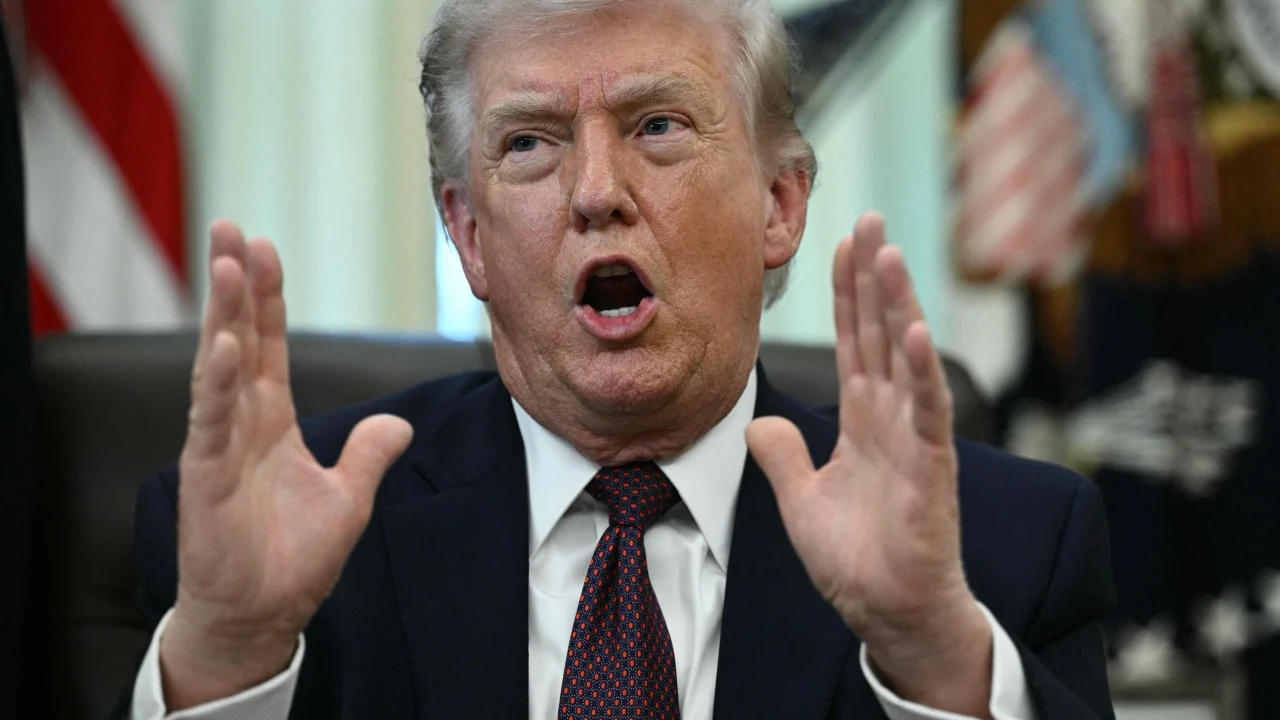
U.S. President Donald Trump announced during a press conference at the White House that military attacks against Iran could stop within a period of two to three weeks, even in the absence of any formal agreement between the two sides. These statements raise questions about the future of the Strait of Hormuz, which is one of the most important maritime passages in the world, through which about 20% of the world's total oil passes.
During the conference, Trump stated, "We will be leaving very soon," indicating that Iran does not need to reach an agreement with the United States. These remarks come at a sensitive time, as the world awaits the outcomes of the ongoing tensions between the United States and Iran, which have escalated significantly in recent months.
Details of the Event
Trump's statements come at a time when the Strait of Hormuz is witnessing increasing tensions, with several incidents involving commercial and oil vessels. This has led to significant concern in global markets, as any closure of the strait could lead to a substantial rise in oil prices.
Trump is expected to provide an important update on the Iranian situation in a speech to the nation, which will be broadcast at 9 PM New York time. This speech may contain new details regarding U.S. policy towards Iran, especially in light of the economic and political pressures facing Tehran.
Background & Context
Historically, U.S.-Iranian relations have seen increasing tensions since the United States withdrew from the Iranian nuclear agreement in 2018. Since then, Washington has imposed strict economic sanctions on Iran, leading to a deterioration of the country's economic situation.
The military escalation between the two sides has gone through several phases, starting from attacks on oil facilities in Saudi Arabia to targeting American interests in Iraq. These dynamics have made the Gulf region a hotspot for geopolitical tensions, negatively impacting the stability of the area.
Impact & Consequences
If Trump's statements are realized and the attacks cease, this could lead to a de-escalation of tensions in the region, which may positively reflect on oil prices and global markets. However, the question remains about the seriousness of Trump in implementing these promises, especially in light of the political pressures he faces domestically.
Additionally, these developments could lead to a reassessment of strategies by other countries in the region, including the Gulf Arab states that heavily rely on the stability of the Strait of Hormuz. Ongoing tensions could result in shifts in regional and international alliances.
Regional Significance
For Arab countries, any improvement in U.S.-Iranian relations could open the door to new opportunities for economic and security cooperation. However, at the same time, these countries must be cautious of any sudden changes in U.S. policies, which could directly affect their interests.
In conclusion, the situation in the Gulf remains complex and requires careful monitoring by all concerned parties. The balance between security and economic stability is what everyone is striving for at this sensitive stage.