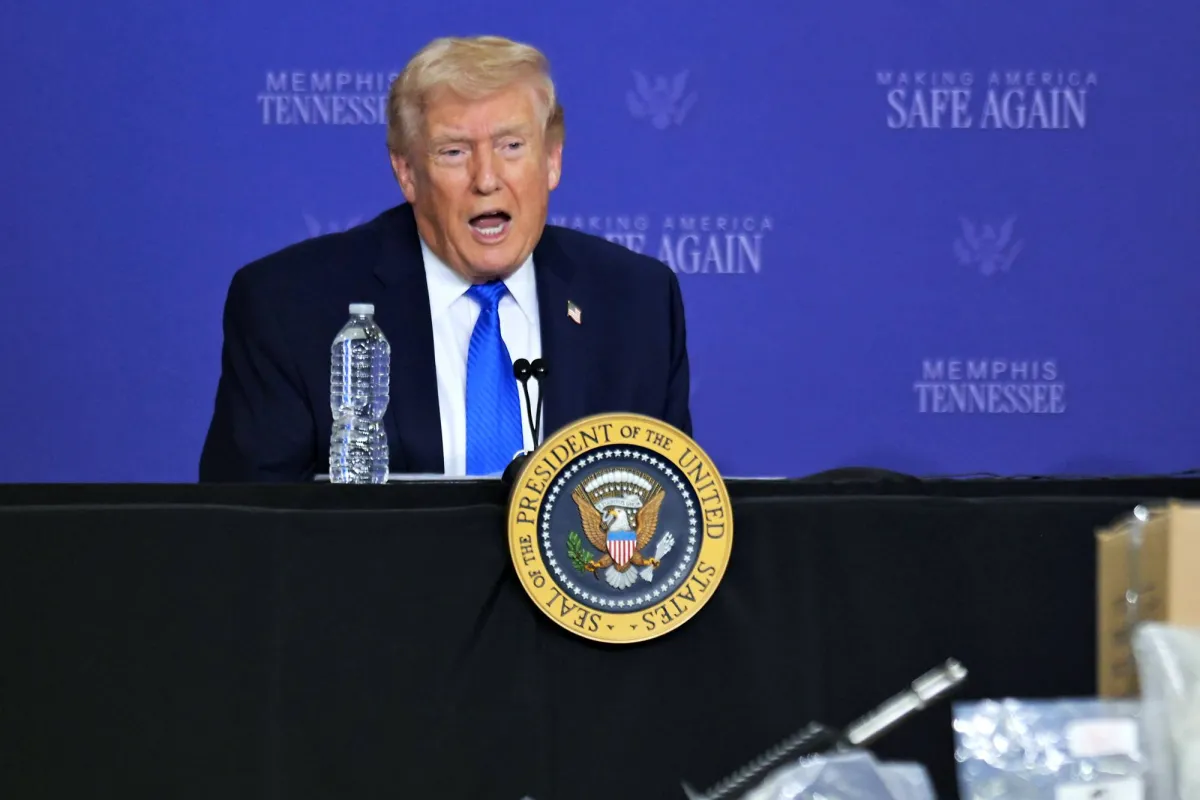
U.S. President Donald Trump revealed that he is in discussions with a prominent Iranian figure, describing them as being from the "first tier" and enjoying "great respect," in an effort to reach an agreement to end the ongoing war. These developments come about three weeks after the outbreak of the Israeli-American war against Tehran, raising questions about the identity of this figure and their impact on Iran's future.
Trump clarified that this figure is not the Supreme Leader Mohammad Khamenei, who took over leadership after the death of his father Ali Khamenei on the first day of the war. He also mentioned the death of the Secretary of the Supreme National Security Council Ali Larijani, which has increased focus on the Speaker of the Iranian Parliament Mohammad Baqer Qalibaf, who seems to have survived the war thus far.
Details of the Event
Although Trump did not disclose the name of the individual involved, analysts believe that Qalibaf could be the de facto Iranian leader under the current circumstances. Qalibaf, who has held several positions in the Iranian system over the past three decades, possesses deep experience in military and civil affairs, making him a pivotal figure at this critical stage.
It is noteworthy that Qalibaf has run for the presidency three times but has not achieved success. While Israeli media reported that he is the interlocutor with the United States, Qalibaf denied this through the platform "X," calling the news "false."
Background & Context
These talks come at a highly sensitive time for Iran, as the country is witnessing significant changes in its leadership following the deaths of several prominent figures. Bezheskian has assumed the presidency after the death of former President Ibrahim Raisi, and he is seen as belonging to the more moderate wing of the Iranian political landscape. However, his authority is limited, as the final word on major issues remains with the Supreme Leader.
In this context, Bagheri, the Iranian Foreign Minister, is considered one of the prominent figures representing Iran in negotiations with the United States. Bagheri has had direct communications with American officials recently, reflecting the importance of his role at this stage.
Impact & Consequences
Concerns are growing that the continuation of the war could exacerbate the humanitarian situation in Iran, where the people are suffering from the effects of the ongoing conflict. Additionally, any potential agreement with the United States could alter the dynamics of power in Iran and affect regional and international relations.
On the other hand, tensions between Iran and the United States could lead to greater military escalation, complicating the security landscape in the region. Therefore, the success or failure of the talks will have far-reaching implications for the stability of the region.
Regional Significance
These talks are of great importance to Arab countries, as any change in Iranian policy could affect regional relations. Arab nations, especially those sharing borders with Iran, are closely monitoring these developments, as any escalation could lead to significant security and economic repercussions.
In conclusion, the identity of the Iranian figure negotiating with Washington remains unclear, but the potential impact of these talks on the future of Iran and the region as a whole will be a major focus of interest in the coming days.