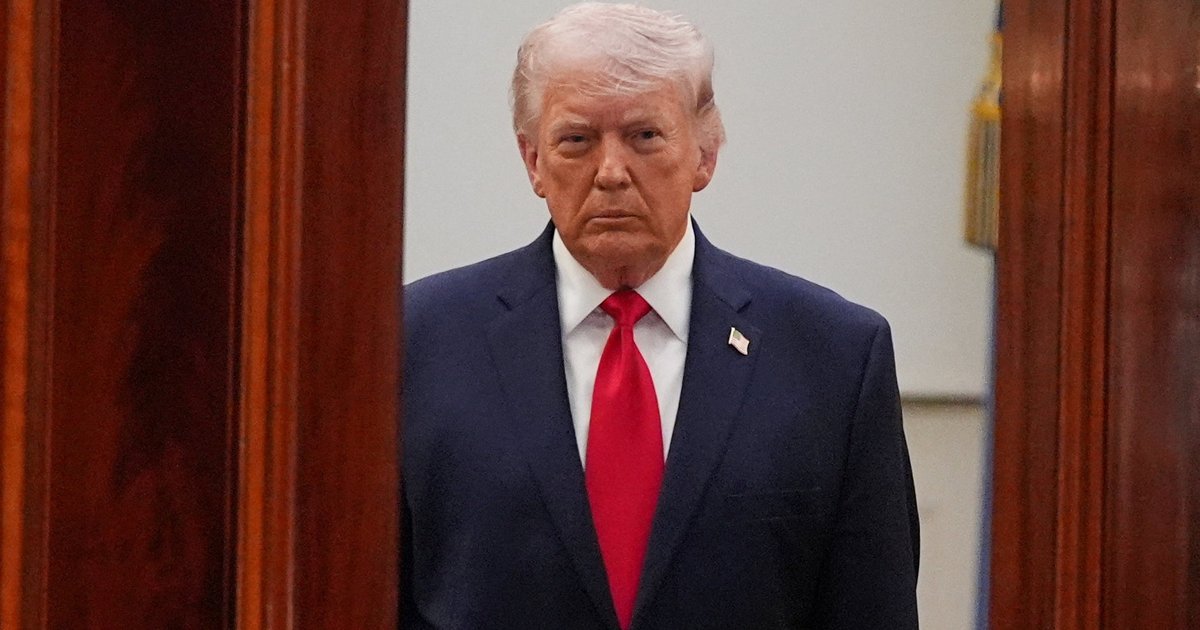
U.S. President Donald Trump revealed in a speech on Wednesday that the United States began the war on Iran based on a request from its allies in the region, which is seen as a nod to ongoing Israeli pressures on Washington to launch an attack on Tehran. Trump emphasized that the United States no longer needs Iranian oil or any other resources from the region, but is present there to support its allies.
In his over half-hour speech, Trump described the military operations as "swift and decisive," noting that the strategic objectives of the war, which began 32 days ago, are nearing completion. He also warned that more destruction is on the way, stating: "We will finish the mission quickly, and we will strike them hard in the next two or three weeks, and we will return them to the Stone Age where they belong."
Details of the Event
Although Trump did not provide a specific timeline for ending the attacks, he affirmed that "regime change is not our goal," despite mentioning the deaths of several Iranian leaders, including former Supreme Leader Ali Khamenei. He clarified that current leaders in Iran, including Khamenei's son, have not appeared publicly yet.
Trump also indicated that the Iranian navy has been destroyed and that the Iranian air force is in ruins, considering that most leaders of the terrorist regime have met their demise. He expressed gratitude to the United States' allies in the Middle East, such as Israel, Saudi Arabia, Qatar, the UAE, Kuwait, and Bahrain, confirming that they have been a significant help in these operations.
Background & Context
These statements come at a sensitive time, as tensions between the United States and Iran have been escalating for a long time, especially after Washington's withdrawal from the Iranian nuclear deal in 2018. Since then, the United States has imposed strict economic sanctions on Iran, exacerbating the country's economic situation.
The current war follows a series of reciprocal attacks between U.S. and Iranian forces, heightening the conflict in the region. Recent months have seen an escalation in military operations, raising international concerns about regional stability.
Impact & Consequences
Trump's statements raise many questions about the true objectives of U.S. policy in the Middle East. While Trump insists that the war is not aimed at regime change, the deaths of Iranian leaders cast doubt on the intentions of the U.S. administration. Furthermore, the continuation of the war could worsen the humanitarian situation in Iran and increase the suffering of the Iranian people.
Concerns are growing that this war could lead to greater escalation in the region, with other countries potentially intervening in the conflict, complicating matters further. Additionally, rising energy prices due to the conflict could impact the global economy, raising alarms among oil-consuming nations.
Regional Significance
The war on Iran directly affects neighboring Arab countries, which may face the repercussions of the conflict, whether through the influx of refugees or potential attacks. Arab nations that are considered allies of the United States may find themselves in a precarious position, having to balance support for their American ally while maintaining relations with Iran.
In conclusion, the situation in the region remains tense, with the war on Iran ongoing and uncertainty about the future of U.S.-Iranian relations. Everyone is looking forward to seeing how events will unfold in the coming weeks.