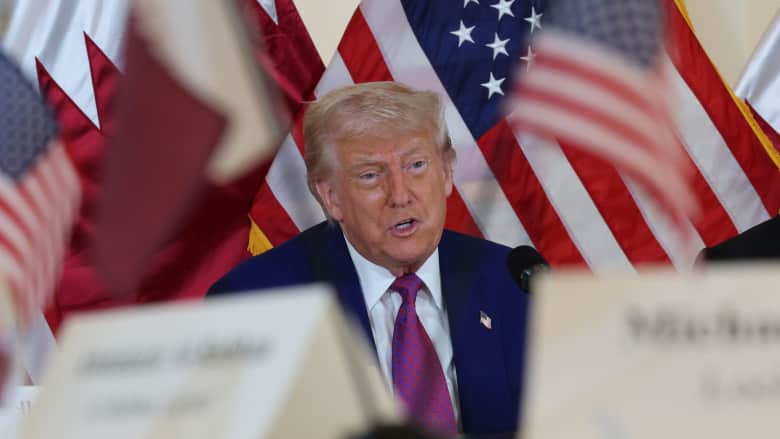
U.S. President Donald Trump appears to be striving to save face amid escalating tensions with Iran, much like his predecessor Richard Nixon did during the Vietnam War. In an opinion piece published by the British newspaper The Guardian, legal expert Kenneth Roth noted that Trump finds himself in a similar position, attempting to justify the continuation of military operations without a clear rationale.
Roth, who previously served as the executive director of Human Rights Watch, emphasizes that Trump faces significant challenges in justifying the bombing of Iran, especially after claiming to have destroyed its military capabilities. However, the question remains: how much destruction will occur before Trump realizes that the conflict cannot continue?
Details of the Event
Historically, Nixon and his national security advisor Henry Kissinger used airstrikes as a means to pressure the Vietnamese, resulting in the deaths of over 20,000 American soldiers, while the toll on Vietnamese, Cambodian, and Laotian civilians was much higher. Today, Trump faces similar challenges as he continues to bomb Iran in an attempt to achieve political objectives without a clear strategy.
Trump continues to assert that military operations aim to undermine Iran's nuclear program, although many observers believe these operations may exacerbate the situation rather than improve it. Roth also questioned Trump's true motives, pointing out that regime change in Iran through airstrikes has no successful historical precedent.
Background & Context
Historically, the United States has been involved in numerous wars that failed to achieve their objectives, leading to significant human and material losses. In the case of Vietnam, the war dragged on for many years and significantly affected the United States' image worldwide. Today, it seems that Trump is following the same approach, seeking to achieve political goals without a clear exit strategy.
The ongoing conflict with Iran has raised concerns not only about military engagement but also about its broader implications for regional stability and international relations. As tensions rise, the potential for miscalculation and escalation increases, posing risks not only to U.S. interests but also to global security.
Impact & Consequences
The humanitarian impact of the conflict is already being felt, with reports of casualties and displacement among Iranian civilians. The economic consequences are also significant, as sanctions and military actions could further destabilize the Iranian economy, leading to increased suffering for ordinary citizens.
Moreover, the conflict could have far-reaching consequences for U.S. foreign policy, potentially alienating allies and emboldening adversaries. The lack of a coherent strategy raises questions about the long-term viability of U.S. involvement in the region and its ability to achieve desired outcomes without further escalation.
Regional Significance
The conflict with Iran has implications that extend beyond its borders, affecting neighboring countries and the broader Middle East. The potential for a wider regional conflict looms, as various actors may be drawn into the fray, complicating an already volatile situation.
As Trump navigates this complex landscape, the need for diplomatic solutions becomes increasingly urgent. Engaging with allies and seeking multilateral approaches may offer pathways to de-escalation and a more stable regional environment.
In conclusion, Trump's efforts to manage the conflict with Iran echo historical precedents but also highlight the risks of repeating past mistakes. The international community watches closely as the situation unfolds, hoping for a resolution that prioritizes peace and stability over military confrontation.