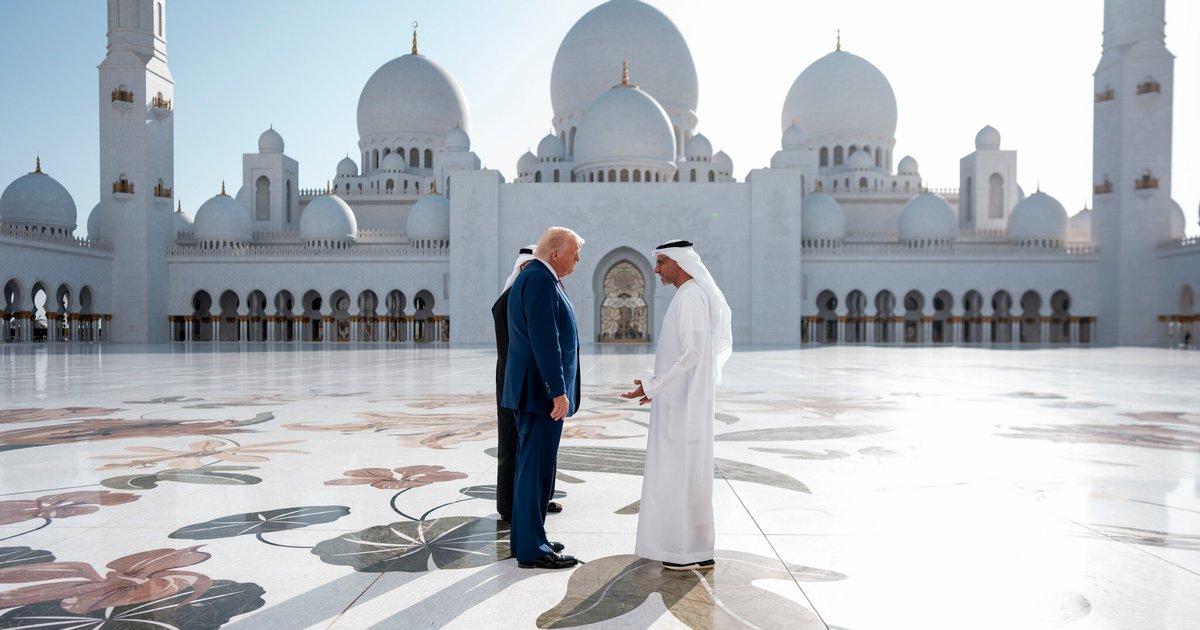
Attention is focused on U.S. President Donald Trump, who controls the current war dynamics in the Middle East, determining its start and end. Israel's involvement in the conflict does not alter its essence or responsibilities.
Tehran and its sympathizers insist that Washington acts as a puppet in the hands of Israel during the "Epic Wrath" operation. According to this view, significant decisions are imposed by Israeli Prime Minister Benjamin Netanyahu on the White House through political pressure or personal influence. However, this claim is far from the truth.
Details of the Event
Trump has long believed that a war could erupt between the United States and Iran. In his youth during the 1980s, he called for a military solution to the ongoing disputes between the two countries. Since then, he has remained a fierce critic of the Islamic regime and the threat it poses to the stability of the Middle East.
During his first term, Trump ordered a strike on Qassem Soleimani, the commander of the Quds Force of the Iranian Revolutionary Guard, and recently authorized the "Midnight Hammer" operation to eliminate the Iranian nuclear program. Thus, the current war is seen as an extension of Trump's inclination to use force when diplomacy fails.
Background & Context
Trump's leadership style shows that he is not someone who can be manipulated or pressured into conflict. His political identity is built on independence, strength, and certainty in his strategic vision. He does not consider himself subordinate, whether in life, business, or politics.
Trump dictates outcomes rather than allowing them to be imposed on him. The claim that someone with Trump's will and strong self-image would subject American national security to a foreign leader is not only unreasonable but contradicts everything we know about him.
Impact & Consequences
Trump's decision-making style is central and strategic, closely linked to his vision of American power. When he chooses to use military force, it is because he believes it serves American national security interests and enhances his strategic goals.
Trump's vision for stability in the Middle East aligns with Israel's vision, reflecting the shared interests between the two countries. The United States and Israel share a common history and political values, making their strategic partnership extend for decades.
Regional Significance
The Iranians have repeatedly chanted for the death of the United States and Israel, so it is not surprising that the two countries cooperate in facing a common threat in a war that has been anticipated for some time.
The idea that Israel dictates American policy ignores the imbalance of power between the two countries. The United States possesses unparalleled military, economic, and diplomatic capabilities, while Israel's scope of action is much narrower.
Ultimately, the "Epic Wrath" operation must be understood for what it truly is: an American war. It was conceived within American institutions, justified by American strategic logic, and executed to serve American interests. Those who believe otherwise do not understand Trump.