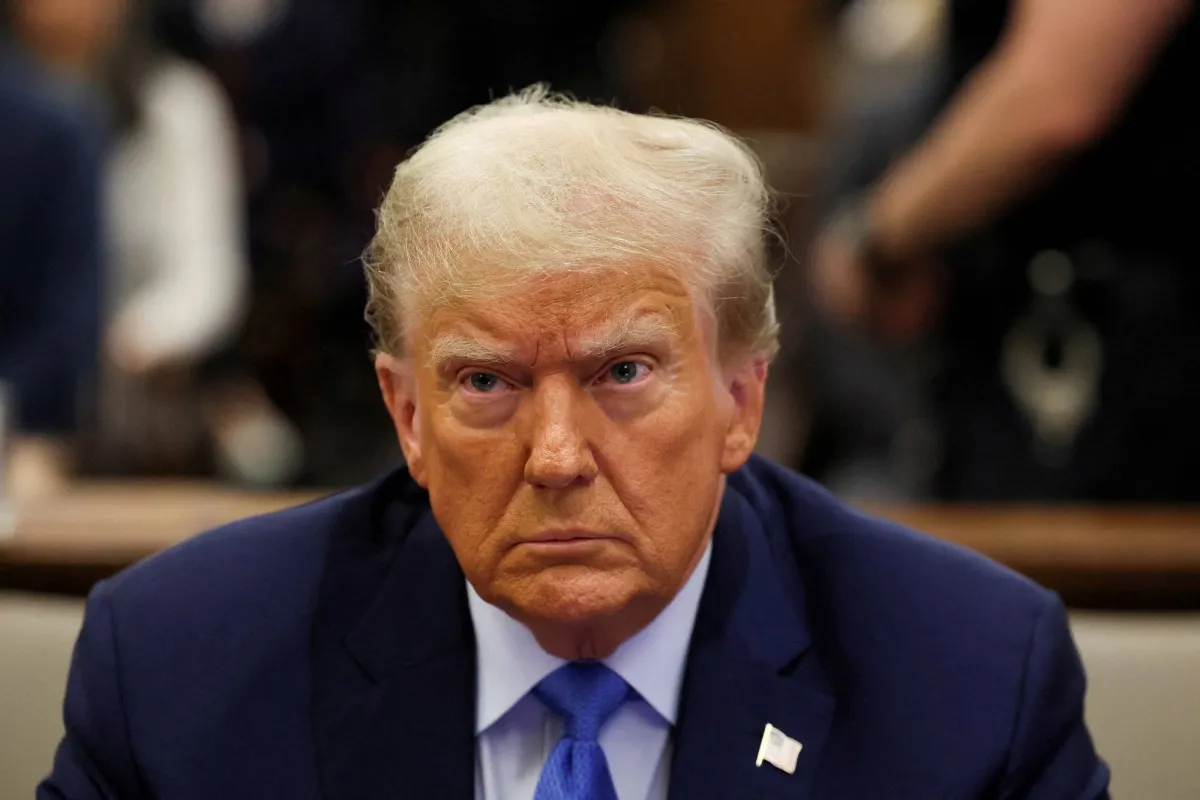
U.S. President Donald Trump announced that he will sign $100 bills in June, making him part of a small group of leaders whose names have been associated with currency during their time in office. This step represents a historic shift in a tradition that has lasted for 165 years, where the signatures of the U.S. Treasury Secretary have been predominant on banknotes.
This initiative comes as the U.S. Treasury celebrates the 250th anniversary of the founding of the United States, with bills bearing Trump's signature being issued instead of his image, due to a law passed in 1866 that prohibits placing the images of any president on paper currency while they are in office.
Event Details
It is noteworthy that banknotes in many countries carry the signature of the central bank or the treasury, as seen in the Euro and the Pound Sterling. In some countries, such as Cuba, images of leaders are placed on currency, reflecting certain political orientations. For instance, the image of former Congolese dictator Mobutu Sese Seko appeared on banknotes during his rule, as did Idi Amin in Uganda.
The U.S. Treasury aims to revive the tradition of leaders signing banknotes, which raises questions about the motivations behind this move, especially given the current political climate in the United States.
Background & Context
Historically, the signatures of leaders on currency have been associated with totalitarian regimes, where this act was seen as a means to reinforce the authority of the ruler. It is well-known that many dictatorial regimes have used this method to immortalize their leaders. In contrast, Trump seeks through this step to enhance his popularity among his supporters, especially with the midterm elections approaching.
At the same time, this step reflects the political and social tensions in the United States, where Trump faces strong opposition from various groups, making his signature on banknotes a symbolic act that carries multiple implications.
Impact & Consequences
This move could exacerbate political division in the United States, as some view Trump's signing of banknotes as a continuation of his authority, while others see it as an expression of authoritarian tendencies. Additionally, this step may affect international relations, as it could be perceived as a challenge to other regimes that feature images of their leaders on currency.
Moreover, Trump's signature on banknotes may spark a debate about the future of monetary policy in the United States, especially in light of the economic challenges facing the country.
Regional Significance
In the regional context, this step may influence how Arab countries engage with the United States, particularly amid the political and economic crises many of these nations are experiencing. Furthermore, Trump's signing of banknotes could be seen as a message to Arab regimes seeking to bolster their authority through similar means.
In conclusion, Trump's signing of banknotes appears to be a symbolic step that carries deep political implications and may provoke varied reactions both domestically and internationally.