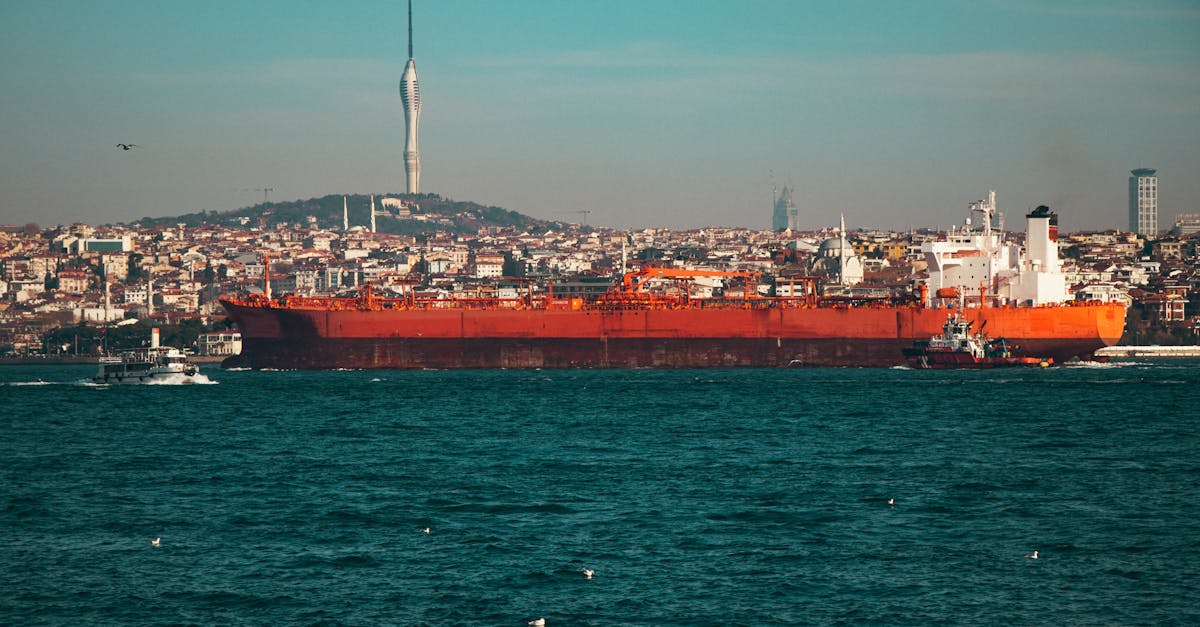
US President Donald Trump announced on Wednesday that the United States will support efforts to address the maritime congestion in the Hormuz Strait, a move that comes after a ceasefire agreement with Iran. This agreement was reached less than two hours before the deadline Trump set for Tehran to reopen the strait, or else face attacks on its civilian infrastructure.
The maritime congestion in the Hormuz Strait is a sensitive issue, as this strait is one of the most important maritime passages in the world, through which approximately 20% of the world's total oil passes. Tensions between the United States and Iran have significantly affected navigation in the region, raising concerns about the potential for new crises.
Details of the Event
In his statements, Trump emphasized that the United States will work to facilitate navigation in the strait, highlighting the importance of this strategic passage for the global economy. He also added that his country will coordinate with other concerned nations to ensure the safety of navigation in the area.
This announcement comes after escalating tensions between the United States and Iran, marked by mutual threats from both sides. This has led to an increase in the number of US military ships in the region, heightening concerns about the possibility of military clashes.
Background & Context
Historically, the Hormuz Strait has witnessed numerous crises due to political and military tensions in the region. In recent years, tensions between Iran and the United States have intensified, especially following Washington's withdrawal from the Iranian nuclear deal in 2018.
This withdrawal led to the imposition of strict economic sanctions on Iran, impacting its economy and increasing tensions in the region. Additionally, the presence of US forces in the Arabian Gulf reflects Washington's strategy to curb Iranian influence in the area.
Impact & Consequences
If the United States succeeds in addressing the maritime congestion in the Hormuz Strait, it could lead to improved economic conditions in the region, contributing to the stabilization of global oil prices. Furthermore, easing tensions may open the door for diplomatic dialogue between the United States and Iran.
However, any new escalation could have adverse effects, potentially increasing military tensions and complicating the situation in the region. Therefore, observers are closely monitoring developments in this matter.
Regional Significance
The Arab countries neighboring the Hormuz Strait, such as the United Arab Emirates and Oman, are among the most affected by tensions in this area. Any escalation in the situation could impact trade and maritime transport, negatively affecting the economies of these countries.
Moreover, the stability of the Hormuz Strait is vital for energy security in the region, as many Arab countries rely on exporting oil through this passage. Thus, any efforts to improve conditions in the strait will be of great importance to the Arab nations.
In conclusion, the question remains about the United States' ability to achieve stability in the Hormuz Strait and the impact of this on international relations in the region. Upcoming events will determine the course of relations between the United States and Iran, as well as their effect on security and stability in the area.