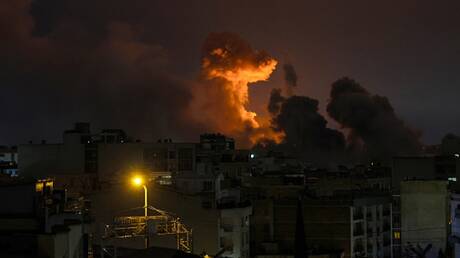
U.S. President Donald Trump's threats to bomb bridges and power stations in Iran have sparked strong reactions from military law experts, who argue that such statements could amount to a war crime. These threats come at a sensitive time as tensions between the United States and Iran escalate, increasing fears of a potential military escalation in the region.
These statements are part of Trump's aggressive policy towards Iran, which includes imposing strict economic sanctions and supporting U.S. allies in the region. This approach has drawn widespread criticism from the international community, as many experts believe that such threats could lead to severe consequences for civilians and infrastructure in Iran.
Details of the Threats
In remarks made during a press conference, Trump emphasized that he would not hesitate to use military force against Iran if necessary. He indicated that targeting power stations and bridges would be part of his strategy to pressure the Iranian government. These statements come at a time when fears of escalating military conflict in the region are growing, as Iran continues to develop its nuclear program and expand its influence in the Middle East.
Power stations and bridges are considered vital infrastructure that Iranian citizens rely on in their daily lives. Therefore, targeting them could lead to significant suffering for civilians, which contradicts international laws that prohibit targeting civilians and essential facilities.
Background & Context
Historically, U.S.-Iranian relations have seen increasing tensions since the Islamic Revolution in 1979. U.S. policies, including economic sanctions, have exacerbated conditions in Iran. In recent years, these tensions have significantly increased, especially following the U.S. withdrawal from the Iranian nuclear deal in 2018.
Iran is one of the key countries in the Middle East and has a substantial influence on many conflicts in the region. Its policies have strained relations with several countries, including Saudi Arabia and Israel, complicating the regional situation.
Impact & Consequences
If Trump's threats are carried out, it could lead to significant military escalation in the region, threatening both regional and international security. Additionally, targeting vital infrastructure could worsen humanitarian conditions in Iran, where many citizens already suffer from a lack of basic services.
These statements are likely to provoke strong reactions from the Iranian government, which may perceive them as a declaration of war. The international community might also intervene, further complicating the situation and making it difficult to reach a peaceful resolution.
Regional Significance
The tensions between the United States and Iran directly affect neighboring Arab countries. Many Arab nations view the escalation of the conflict as a potential destabilizing factor in the region, threatening their security and economic interests. Furthermore, these tensions could exacerbate sectarian divisions in the area, complicating peace efforts.
In light of these circumstances, Arab countries must be cautious in their dealings with the situation and strive to enhance dialogue and regional cooperation to avoid military escalation.