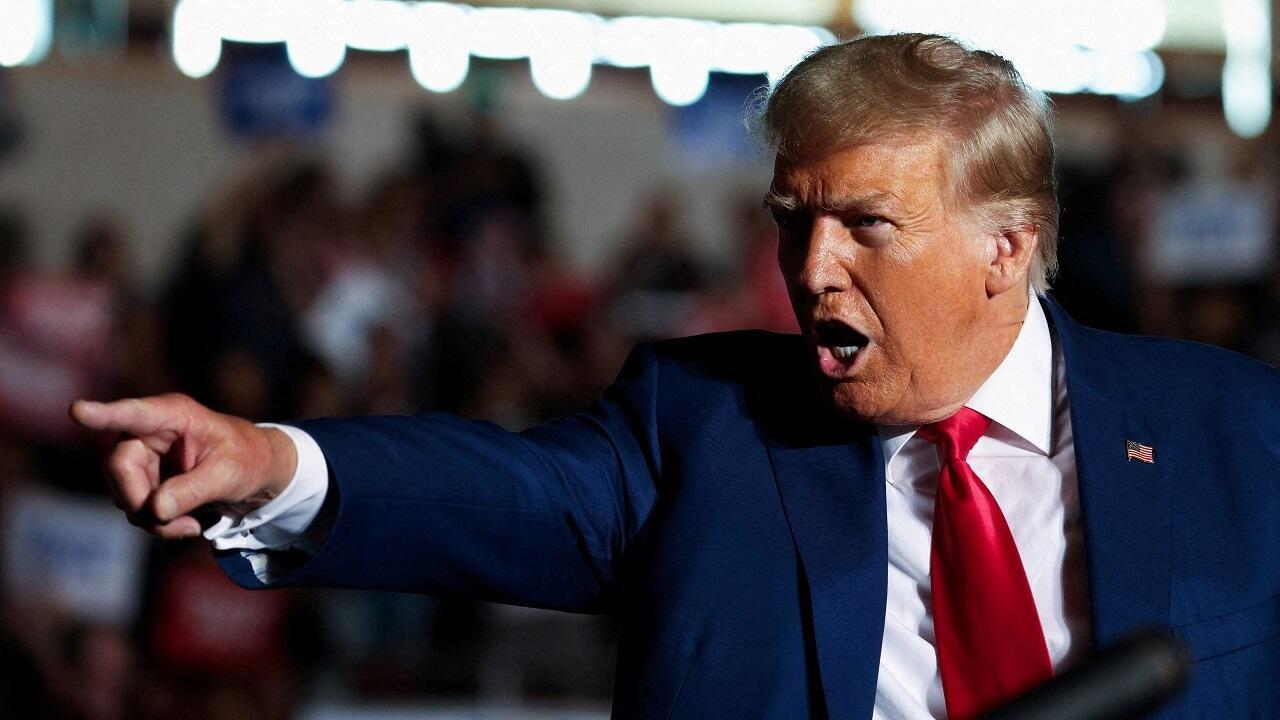
U.S. President Donald Trump announced on Thursday that his forces have taken full control of the Strait of Hormuz, marking a significant escalation in tensions between the United States and Iran. Trump emphasized that the strait will remain closed to ships heading to Iranian ports until an agreement is reached with Tehran, stating that any vessel wishing to enter or exit the strait must obtain permission from the U.S. Navy.
In a related move, Trump ordered the U.S. Navy to fire on any boats laying mines in the strait, asserting that mine-sweeping efforts will be tripled to remove any planted mines. He noted that American forces are currently working to clear the area of any threats.
Details of the Incident
In a provocative step, the U.S. Department of Defense confirmed that its forces seized a ship in the Indian Ocean that was transporting oil from Iran, stressing that entities under sanctions cannot use international waters to evade penalties. These developments come at a sensitive time, raising fears of a new escalation in the standoff between the two sides.
The Washington Post reported that U.S. officials believe Iran may have planted over 20 mines in the Strait of Hormuz and surrounding areas, reflecting the scale of tensions in the region. The Pentagon estimated that the mine-clearing operation could take up to 6 months, which could significantly impact global oil prices.
Background & Context
These developments follow a day after an attack by the Iranian Revolutionary Guard on three cargo ships in the strait, seizing two of them. Footage released by the U.S. Department of Defense showed its forces aboard the seized oil tanker Majestic X.
In response, Iranian Foreign Minister Abbas Araghchi announced that his country would take legal measures against U.S. aggression, while the Deputy Speaker of the Iranian Parliament confirmed that the first revenues from the tolls imposed on the Strait of Hormuz have been deposited into the central bank's account.
Impact & Consequences
This crisis has raised concerns among European governments and other nations worldwide, as they become aware of the potential risks to their economies. Reports indicate that shipping companies have begun to avoid passing through the Strait of Hormuz following the seizure of ships, which could lead to an increase in oil prices.
The German government has expressed its readiness to contribute to maintaining freedom of navigation in the strait, urging Iran to resume talks with the United States. Simultaneously, British and French officials have expressed confidence in the possibility of making progress on this issue.
Regional Significance
The Strait of Hormuz is considered one of the most important maritime passages in the world, through which a significant percentage of global oil exports pass. Any escalation in tensions between the United States and Iran could directly affect oil prices and increase instability in the region.
In conclusion, attention remains focused on the upcoming developments in the Strait of Hormuz, as fears grow of a new escalation that could impact regional and international security.