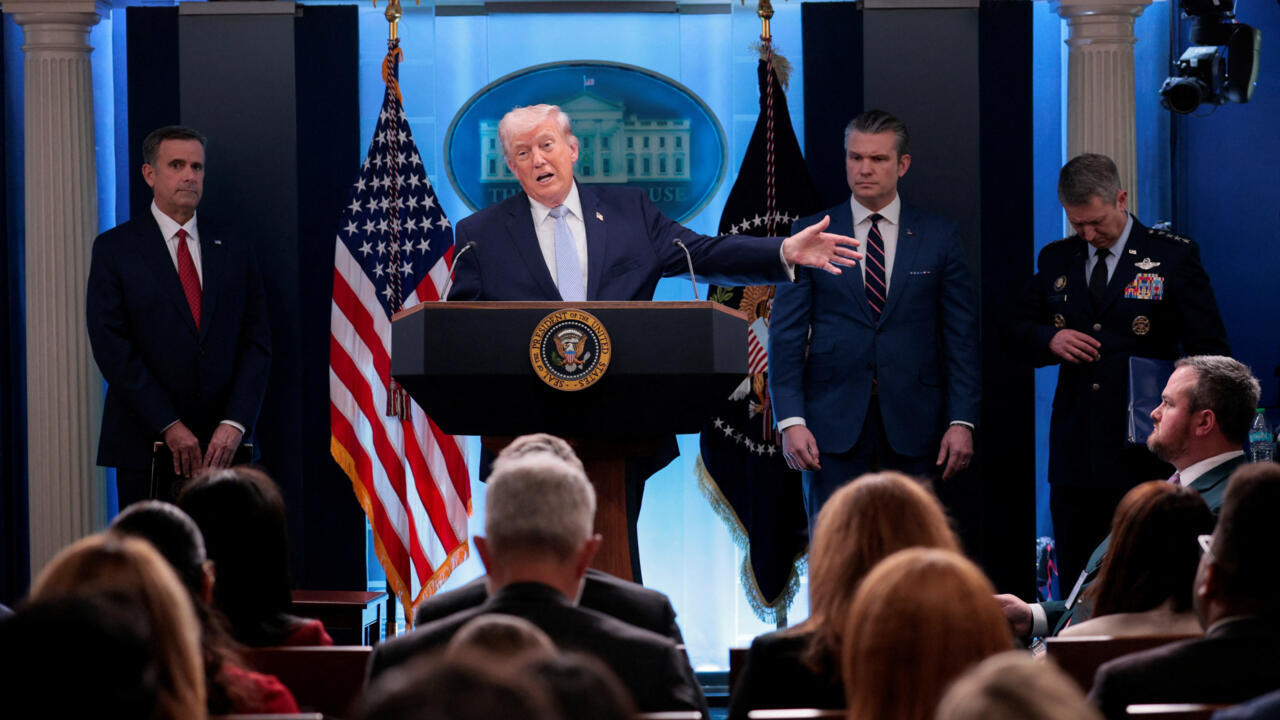
U.S. President Donald Trump threatened on Monday to destroy "all bridges and power stations in Iran within four hours," provoking strong reactions from Iranian military leadership. These threats arise during a sensitive period as tensions escalate between the United States and Iran, especially after the loss of an American pilot on Iranian soil.
In a related development, Japan's Kyodo News Agency reported the release of a Japanese citizen who had been detained in Iran since January, believed to be the head of the NHK bureau in Tehran. This development comes amid increasing international tensions.
Details of the Incident
Explosions were heard in Tehran and the city of Karaj west of the capital, according to Iranian news agencies Mahr and Fars, raising concerns in the region. It has been suggested that these explosions could be linked to escalating military tensions.
For its part, the Iranian Central Military Command stated that Trump's threats would not affect the morale of Iranian soldiers. Ibrahim Zolfaghari, spokesperson for the Quds Headquarters, remarked that the "rude words" and "hollow threats" from the U.S. president would not impact Iranian military operations against what he termed enemies.
Background & Context
These statements come amid rising tensions between the United States and Iran, with relations between the two countries deteriorating significantly since Washington's withdrawal from the Iranian nuclear deal in 2018. Since then, the U.S. has imposed strict economic sanctions on Iran, exacerbating the country's economic and political situation.
Moreover, the American threats come at a critical time as Iran seeks to enhance its military capabilities and develop its nuclear programs, raising international concerns about the potential escalation of conflict in the region.
Impact & Consequences
The American threats indicate a potential for military escalation in the region, which could have serious repercussions for both regional and international security. Should these threats be acted upon, it could provoke military responses from Iran, intensifying the conflict.
Additionally, these statements may affect relations between the United States and its allies in the region, as some allies might find themselves in a difficult position between supporting the U.S. and dealing with Iran.
Regional Significance
The tensions between the United States and Iran have significant implications for security and stability in the Arab region. Military escalation could lead to negative repercussions for neighboring countries, including Iraq, Syria, and Lebanon, where influential Iranian forces are present.
Ultimately, the regional landscape remains complex, with overlapping political and military interests, making it challenging to predict future developments in the near term.