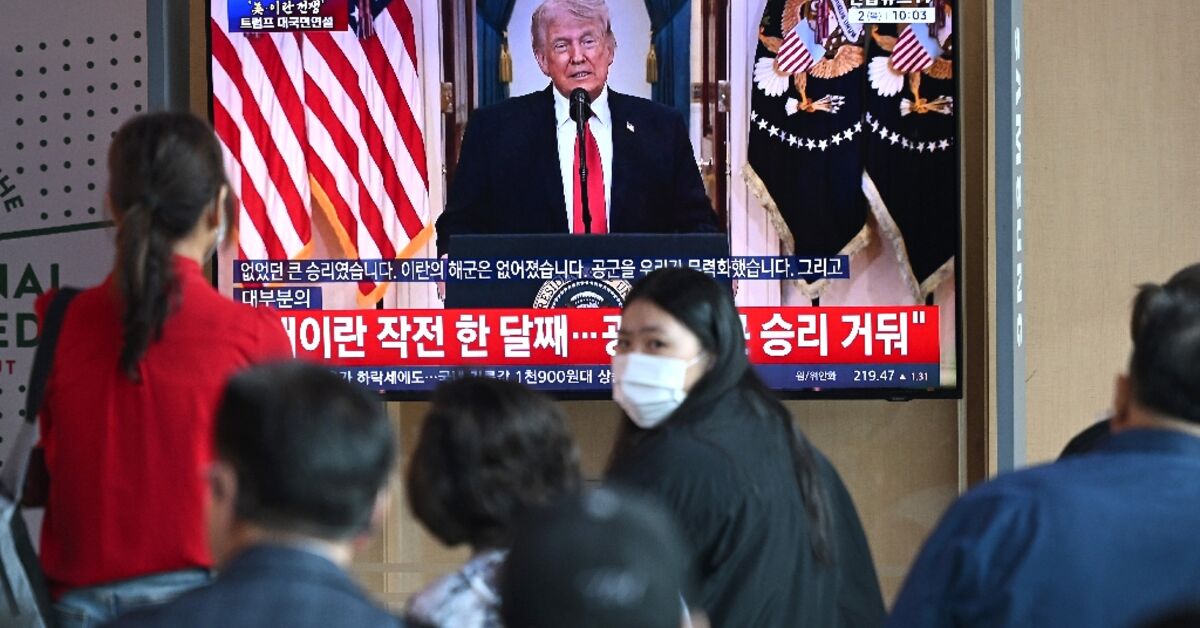
U.S. President Donald Trump has threatened to destroy Iran's power grid, which could lead to a deterioration of living conditions in Iran, home to approximately 90 million people. These statements come at a sensitive time as tensions between the United States and Iran escalate, increasing concerns about regional stability.
Trump, who has not hesitated to express pride in his threats, is sparking widespread debate about what could be considered war crimes. In light of these remarks, experts indicate that the U.S. administration is undermining international institutions aimed at upholding international norms and laws.
Details of the Threat
In statements made by Trump, he indicated that the destruction of Iran's power grid would be part of a broader strategy to pressure the Iranian regime. These remarks come at a time when pressures on Iran are increasing due to its nuclear program and regional behavior. Trump has also not shied away from using clear threatening language, reflecting an escalation in his tone towards Tehran.
It is noteworthy that these statements are not the first of their kind, as U.S.-Iranian relations have seen increasing tensions since the U.S. withdrawal from the nuclear agreement in 2018. However, Trump's use of direct threats to destroy the vital infrastructure of a sovereign nation raises questions about the U.S. commitment to international laws.
Background & Context
Historically, U.S.-Iran relations have experienced escalating tensions since the Iranian Revolution in 1979. Since then, economic sanctions have been imposed on Iran, significantly impacting its economy. As tensions rise, it has become clear that the U.S. seeks to change the Iranian regime through economic and political pressure.
In recent years, U.S. military activities in the region have increased, including the deployment of troops in the Arabian Gulf. These activities, along with hostile statements, reflect Trump's strategy in confronting what he perceives as Iranian threats to regional security.
Impact & Consequences
Trump's recent statements could lead to greater escalation in tensions between the U.S. and Iran, potentially negatively affecting regional stability. Experts warn that such threats could provoke military responses from Iran, increasing the risk of armed conflict in the region.
Moreover, these statements could impact U.S. relations with its allies in the region, who may feel concerned about the escalation of tensions. The international community may also take a stance against the U.S. if it continues to violate international norms.
Regional Significance
Considering the potential impact on the Arab region, the escalation of tensions between the U.S. and Iran could affect security and stability in countries like Iraq, Syria, and Lebanon. These countries are already suffering from the effects of regional conflict, and any escalation could exacerbate humanitarian conditions.
Additionally, Arab countries may find themselves in a difficult position, needing to balance their relationships with the U.S. and their security needs in the face of Iranian threats. Ultimately, the situation in Iran could have wide-ranging implications for regional security.