U.S. President Donald Trump has threatened to destroy Kharg Island and Iranian electricity and oil facilities if Tehran does not reopen the Strait of Hormuz soon. Trump confirmed that ongoing communications with Iran have not resulted in any agreement so far, warning that the continued closure of the strait would lead Washington to expand its strikes on Iranian energy infrastructure.
In statements to the New York Post, Trump indicated that the United States would know within a week whether Iranian Parliament Speaker Mohammad Baqer Qalibaf is willing to cooperate with Americans. He described the situation in Iran as a "complete regime change," reflecting a state of turmoil within the Iranian leadership.
Details of the Event
On another note, U.S. Secretary of State Marco Rubio reported that there are "some divisions" within the Iranian leadership, pointing to the existence of "more rational" parties. He emphasized the need to prepare for the possibility of diplomatic failure. In contrast, Iranian Foreign Ministry spokesman Ismail Baqaei denied any direct negotiations with the United States, considering U.S. demands to be "exaggerated and unreasonable."
In a related context, the Iranian newspaper Kayhan published nine conditions for ending the war, which included the withdrawal of U.S. forces from the region, dismantling their bases, lifting sanctions, and returning frozen assets. It also called for ensuring Iran's sovereignty over the Strait of Hormuz.
Context and Background
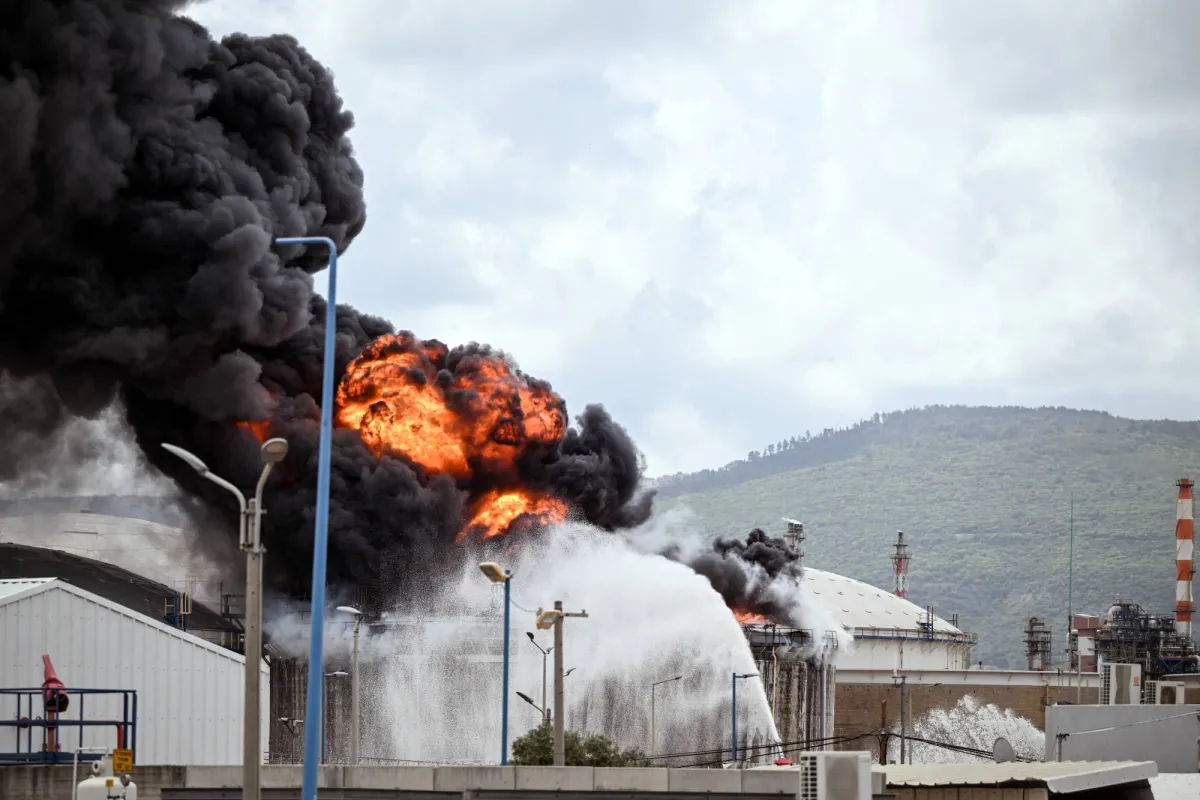
These statements come at a time of military escalation in the region, where a refinery in Haifa was damaged after debris fell due to the interception of a projectile, while the Israeli army announced extensive strikes inside Iran. The Iranian Revolutionary Guard confirmed the execution of a new wave of attacks, reporting the death of Ali Reza Tangseiri, commander of the naval unit in the Revolutionary Guard.
In this context, Israeli Prime Minister Benjamin Netanyahu stated that the war on Iran has achieved more than half of its objectives, without specifying a timeline for its conclusion. He mentioned that the war has passed the halfway mark in terms of tasks, indicating that it will continue for "weeks" more.
Implications and Effects
Concerns are growing over escalating tensions in the region, as military operations have led to rising oil prices and threatened supply chains. Iranian lawmakers have intensified calls to review Iran's membership in the Nuclear Non-Proliferation Treaty amid increasing military and political pressures.
Aladdin Boroujerdi, a member of the Iranian Parliament's National Security Committee, asserted that "the time has come for Iran to exit the treaty," indicating that public opinion within Parliament is leaning towards no justification for continuing to adhere to the restrictions imposed on Iran's nuclear program.
Impact on the Arab Region
These developments are of significant importance to Arab countries, as they affect the stability and security of the region. The rising tensions between the United States and Iran could lead to negative repercussions on oil markets, impacting Arab economies that heavily rely on oil exports.
Moreover, any military escalation could threaten navigation in the Strait of Hormuz, which is a vital artery for oil transport, potentially causing new economic crises in the region.
In conclusion, the situation in the region remains tense, with ongoing military and political pressures, necessitating close monitoring of upcoming developments.